ShizukaKazu

vip
Age 3.4 Yıl
Peak Tier 5
No content yet
#Gate广场四月发帖挑战 🎉 Gate Square Creator Carnival is in full swing!
Post to climb the leaderboard, community relay, share for rewards — split 2,000 USDT and anniversary gift packs
📅 Event period: April 8th - April 22nd
✅ Post to climb the leaderboard: content quality + engagement data + mining rewards comprehensive score, split 1,200 USDT
✅ TG group check-in: draw 3 anniversary gift boxes each week + 7 experience coupons of 200 U
✅ X sync prize: share content to X platform, split an additional 500 USDT prize pool
📌 Event details: https://www.gate.com/announcements/article/50593
📌
View Original
post-image
post-image
  • Reward
  • 10
  • Repost
  • Share
Ryakpanda:
Steadfast HODL💎
View More
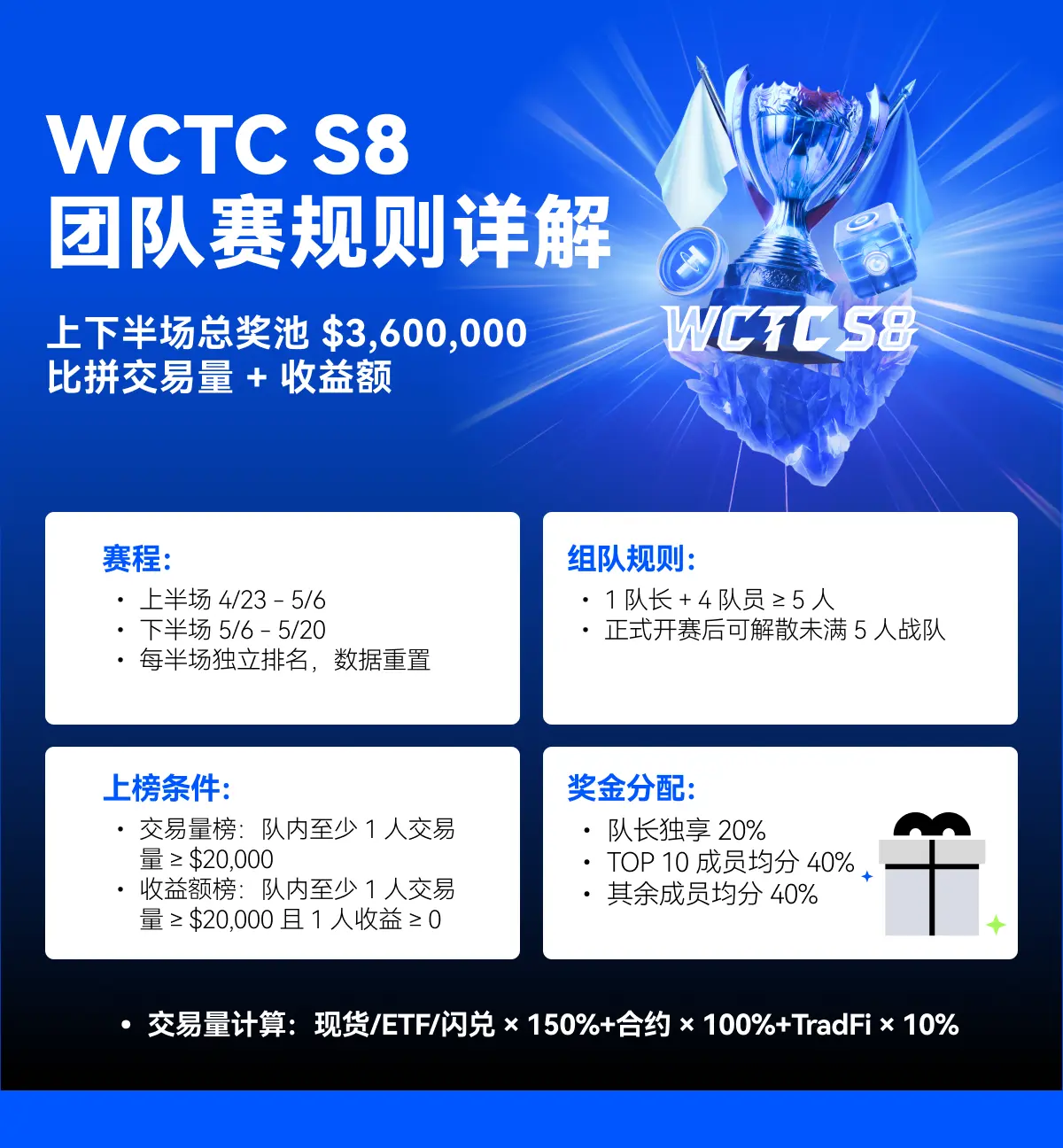
#WCTC交易赛瓜分800万USDT 🔥 WCTC S8 Global Trading Competition Officially Opens Registration!
13th Anniversary Core Event — $8 Million Super Prize Pool, Ready for Your Challenge!
🏆 Team Battle | Individual Competition | 1v1 King PK, Multiple Tracks Simultaneously Launching
🎁 Register now to enjoy a new user 20 USDT experience voucher
👑 The first 30 teams to fill with at least 50 members, team captains share a $3,000 bonus for priority formation
📦 Daily free chests, 100% chance to win a prize!
Pre-registration period: April 14, 2026 16:00:00 -- April 23, 2026 15:59:59 UTC+8
Official
View Original
post-image
  • Reward
  • 8
  • Repost
  • Share
Ryakpanda:
Steadfast HODL💎
View More
Are you bullish or bearish today?
📊 The current market structure is starting to tilt upward—but this is not blindly bullish.
Bitcoin holding above recent levels is the first key signal. The price didn’t keep falling; instead, it quickly reclaimed the liquidity zone. This usually indicates strong buyer absorption rather than distribution.
Meanwhile, Ethereum is outperforming. This is important. When ETH leads, it often reflects risk expansion rather than a defensive setup. Just this shift alone suggests funds are flowing back into higher-beta trading opportunities.
Why does this suppor
BTC3,38%
ETH4,96%
View Original
Ryakpanda
Are you bullish or bearish today?
📊 The current market structure is starting to favor the upside — but it’s not a blind long.
Bitcoin holding above recent breakdown levels is the first key signal. Instead of continuation lower, price reclaimed liquidity zones quickly, which usually indicates strong buy-side absorption rather than distribution.
At the same time, Ethereum is outperforming. This matters. When ETH leads, it often reflects risk expansion, not defensive positioning. That shift alone suggests capital is rotating back into higher-beta plays.
Why this supports upside:
Failed breakdown → often leads to squeeze moves
Strong bounce with momentum → not just passive dip buying
ETH strength → confirms risk-on behavior
No immediate follow-through selling after rebound
But this is not a clean trend yet.
Macro is still a headwind. Sticky inflation expectations and elevated oil prices are limiting how aggressive capital can get. That means rallies are likely to be fragile and headline-sensitive.
What would flip this bearish again:
BTC losing reclaimed levels (especially prior breakdown zones)
ETH failing to hold relative strength
Sudden macro-driven liquidity tightening
My positioning logic:
I’m leaning tactically bullish, because the market is showing inefficiency on the downside — sellers had the chance to push lower and failed.
But until we see acceptance above higher resistance, this remains a rotation-driven bounce, not a confirmed trend reversal.
Trade the reaction, not the narrative.
repost-content-media
  • Reward
  • 10
  • Repost
  • Share
Ryakpanda:
Buy the dip and enter the market 😎
View More
#美军封锁霍尔木兹海峡 The U.S. military's recent actions appear to be "blockading the Strait of Hormuz" on the surface, but more accurately, they are implementing a maritime blockade of shipping related to Iranian ports. The most dangerous point now is not just the military action itself, but that it is pushing the Middle East situation from a "local conflict" to an escalation risk involving "shipping, energy, and finance" resonating on three fronts. Although Reuters reports that the Strait of Hormuz is not completely shut down and some oil tankers are still passing through, the market has already regar
View Original
Ryakpanda
#美军封锁霍尔木兹海峡 The U.S. military’s move this time appears, on the surface, to be “blockading the Strait of Hormuz,” but more accurately, it is imposing a maritime blockade on shipping related to Iranian ports. Now the most dangerous point is not only the military action itself—it is that it further pushes the situation in the Middle East from a “local conflict” toward an escalation risk in which “shipping, energy, and finance” resonate across three fronts. Although Reuters reports that the Strait of Hormuz is not completely shut down and some oil tankers still pass through, the market has already treated it as a major signal of escalation.⚠️🌍⛴️
This kind of action could indeed trigger a broader escalation of conflict because once Iran chooses retaliation, or if nearby ports, routes, and oil tankers suffer more attacks and disruptions, the situation can quickly shift from “pressure” to “out of control.” The UK and multilateral institutions have also recently warned that this conflict lacks a clear off-ramp, and the risk of spillover is rising.🔥🪖
As for oil prices, the conditions for a new round of a blowout surge are already in place, but whether it can evolve into a sustained, crazy rally depends on how long the blockade continues, whether negotiations restart, and whether actual supply losses will keep expanding.
The latest market reaction is very typical: Brent crude briefly surged above 100 US dollars per barrel, but then fell back below 100 due to expectations that the US and Iran may resume talks. This shows that the market has entered a highly sensitive state—so long as the conflict continues to escalate, oil prices could surge again at any time.🛢️📈
In the short term, oil prices are more likely to rise than fall;
In the medium term, as long as the Hormuz risk is not truly eliminated, the energy market will be hard to return to calm. What truly determines whether the next move is a “blowout surge” is not sentiment, but whether more supply is cut off in a substantive way.
One sentence: what the market is trading now is not oil, but “escalation risk.” ⚡🛢️
repost-content-media
  • Reward
  • 10
  • Repost
  • Share
Ryakpanda:
冲冲GT 🚀
View More
Gate $RAVE Contract Trading Competition is now live!
Check in daily to earn 370 USDT, participate now: https://www.gate.com/campaigns/4550
A prize pool of 50,000 USDT is waiting for you to share
🎯 Daily check-in rewards, recharge airdrops, and exclusive benefits for all members, surprises keep coming~
Announcement link: https://www.gate.com/announcements/article/50686
RAVE36,04%
View Original
post-image
  • Reward
  • 12
  • Repost
  • Share
Ryakpanda:
Buy the dip and enter the market 😎
View More
HODLer Airdrop Issue 339: 750,000 $ST Airdrop Pending Collection
🔹 Just hold 1 $GT to receive the airdrop for free. The more $GT you hold, the more generous the $ST rewards
🔹 VIP users enjoy "unlimited" participation privileges End time: April 15th, 17:00 ( UTC+8 )
Claim now: https://www.gate.com/hodler-airdrop/2496?airdrop_name=ST
Become VIP: https://www.gate.com/vip
More details: https://www.gate.com/announcements/article/50697
GT1,48%
View Original
post-image
  • Reward
  • 11
  • Repost
  • Share
Ryakpanda:
冲就完了 👊
View More
🚀 Contract Hong Kong Stock Zone new coins are now available, capturing the world's most sensitive wealth opportunities!
💸 Trade to share 200,000 USDT, with a maximum of 7,330 USDT per person
✅ Get 30 USDT upon your first trade
✅ Check in daily to receive 100 USDT
✅ Trading volume PK, with a maximum of 7,200 USDT per person
Join now 🔗: https://www.gate.com/campaigns/4556
View Original
  • Reward
  • 14
  • Repost
  • Share
Ryakpanda:
Buy the dip and enter the market 😎
View More
New in Traditional Finance Stocks and Forex Zone
Register now and get 30 USDT, with a maximum of 3,130 USDT per person
✅Exclusive for new users, everyone can receive 30 USDT
✅Daily trading check-in, up to 100 USDT
✅Advanced trading rewards, up to 3,000 USDT per person
Join now 🔗: https://www.gate.com/campaigns/4555
View Original
  • Reward
  • 13
  • Repost
  • Share
Ryakpanda:
Get in quickly!🚗
View More
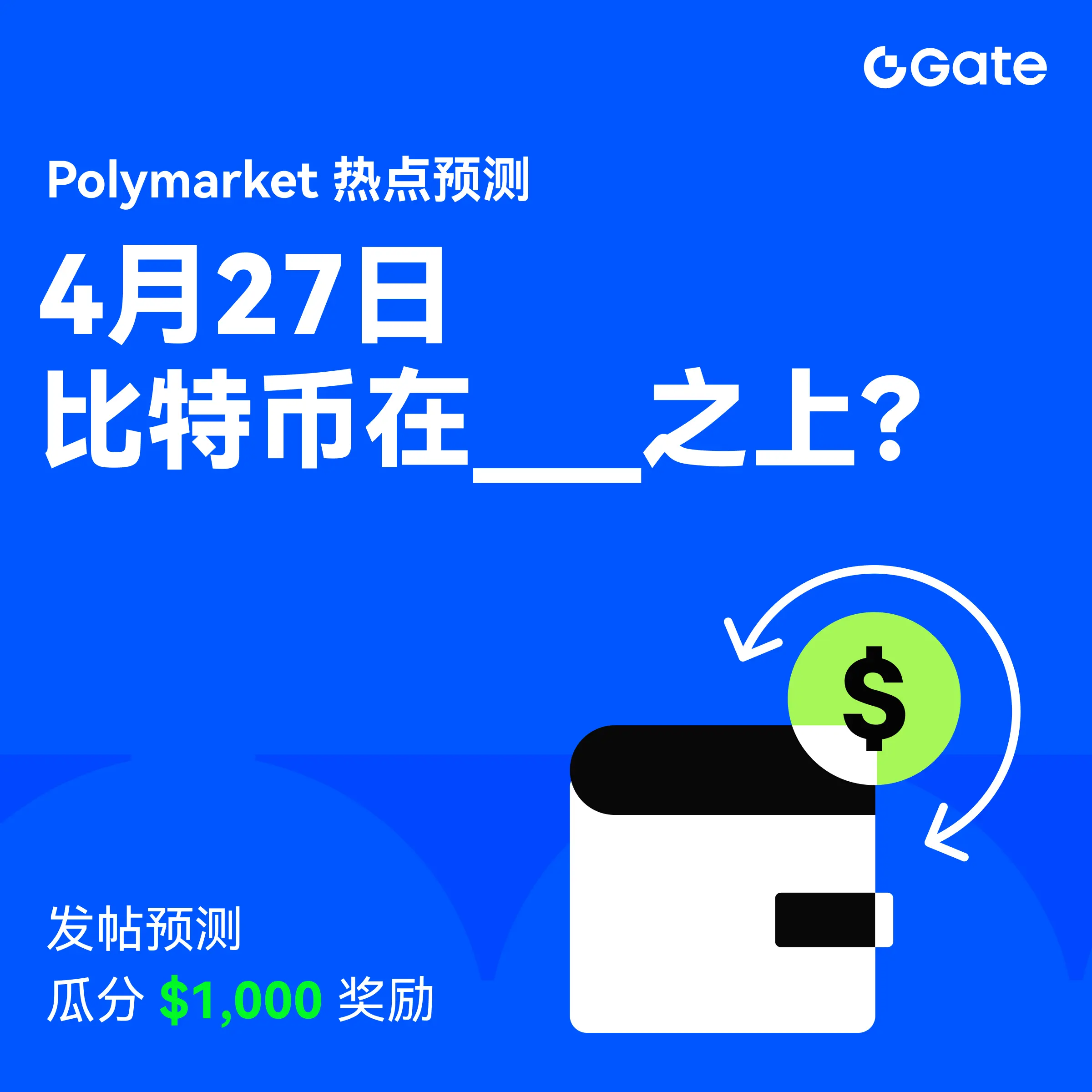
#Gate广场四月发帖挑战 It's exploding! Bitcoin breaks through $75,500, surging over 4,700 in 24 hours, closing positive for three consecutive weeks, aiming for $90k in the future?
The crypto market is entering a frenzy! As of the time of writing, Bitcoin's price has strongly broken through the $75,500 integer level, currently quoted at $75,550.03, with a peak of $75,593.32 in the past 24 hours, and a low of $70,818.57, roughly a 6.68% range increase, with a single-day jump of over $4,700—market conditions are truly crazy. More notably, Bitcoin has closed positive for three weeks in a row, setting the
BTC3,38%
View Original
post-image
post-image
[The user has shared his/her trading data. Go to the App to view more.]
  • Reward
  • 11
  • Repost
  • Share
Ryakpanda:
Rapid return of the bull 🐂
View More
#Gate广场四月发帖挑战 After the Asian market opened on Monday, gold prices plummeted, hitting the intraday low and the lowest level since April 7th.
Failure in negotiations would lead to rising crude oil prices, increasing inflation risks, and also raising the possibility of rate hikes, which would drive the dollar higher. So, the appreciation of the dollar and renewed inflation concerns are the main reasons for the sharp drop in gold prices at the start of the Asian session. After the weekend breakdown of US-Iran peace talks, the market is questioning the outlook for rate cuts.
However, later, n
View Original
post-image
post-image
  • Reward
  • 12
  • Repost
  • Share
Ryakpanda:
Rapid return of the bull 🐂
View More
#Gate广场四月发帖挑战 Cryptocurrencies are generally halved; what is their current position now?
In April, the cryptocurrency market is at a point that makes people both anxious and conflicted. Bitcoin has fallen from its October 2025 all-time high of $126,080 down to around $70,000, a retracement of nearly 47%. Altcoins are even more brutal—Ethereum dropped to about $2,200, Ripple to $1.33, Solana to $82, and the GMCI30 index tracking the top 30 cryptocurrencies worldwide remains at a low level. Faced with this “halving” market, the most pressing question for investors is: Have we reached the botto
BTC3,38%
ETH4,96%
XRP2,31%
View Original
post-image
post-image
post-image
  • Reward
  • 27
  • 1
  • Share
Ryakpanda:
DYOR 🤓
View More
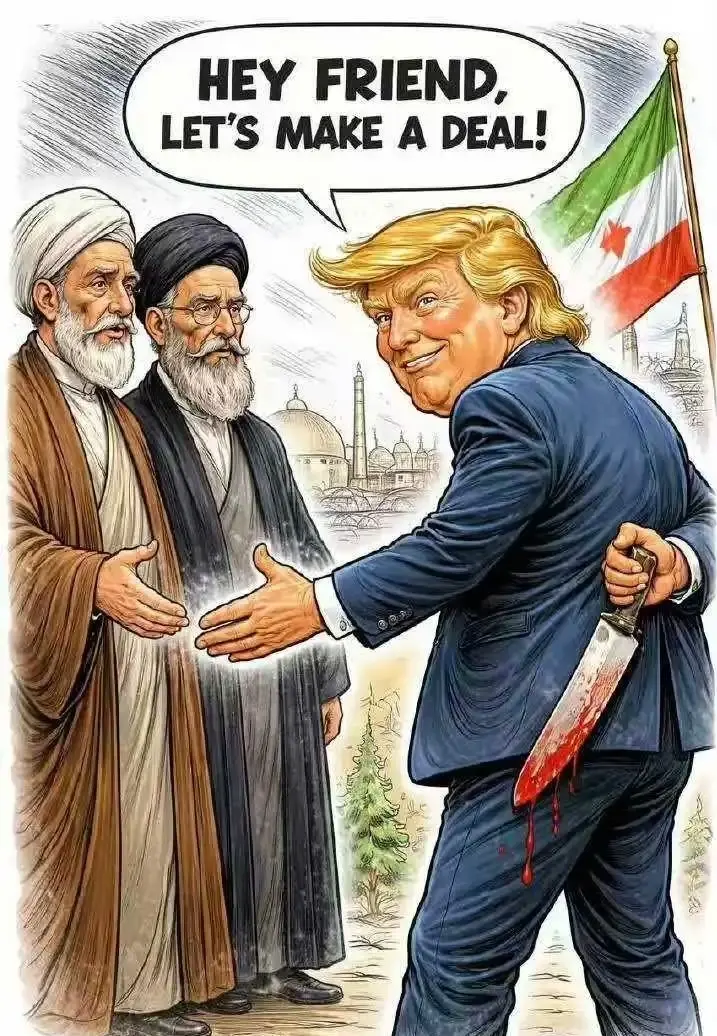
#美军封锁霍尔木兹海峡 What impact would the US blockade of the Strait of Hormuz have on global economic markets
If the US were to block the Strait of Hormuz, it would send a shockwave through the global economy. It carries about one-fifth of the world’s oil and liquefied natural gas shipments, making it the true “world’s oil valve.”
⚡️ Energy markets: Price spikes and supply disruptions
Bottlenecks in passage through the strait have already caused energy prices to surge sharply. After the outbreak of the conflict, Brent crude oil prices briefly rose above $119 per barrel; and after the US announc
View Original
Ryakpanda
#美军封锁霍尔木兹海峡 What is the impact of the U.S. blocking the Strait of Hormuz on the global economic markets
If the United States blocks the Strait of Hormuz, it will send shockwaves through the global economy. It carries about one-fifth of the world's oil and liquefied natural gas shipments and is truly the "world's oil valve."
⚡️ Energy Markets: Price Surge and Supply Disruptions
Disruptions in the passage through the strait have caused sharp increases in energy prices. After the conflict erupted, Brent crude oil prices briefly surged past $119 per barrel, and following the U.S. announcement of a blockade, prices jumped more than 8%, returning above $100. If the blockade lasts more than 25 days, Middle Eastern oil-producing countries may be forced to halt production, and oil prices could break through $200 per barrel. The European natural gas benchmark price also soared by 18%, and there is even a risk of a systemic shortage of aviation fuel.
📉 Global Economy: Stagflation Risks and Recession Shadows
The blockade will impact the global economy through two pathways:
· Rising Inflation: Higher energy prices will increase production and logistics costs, ultimately passed on to consumers. IMF Chief Kristalina Georgieva warned, “All roads lead to rising prices and slowing growth.” · Growth Suppression: Energy is the lifeblood of the economy; its soaring costs will inhibit investment and consumption. The World Food Programme estimates that if oil prices stay above $100, nearly 45 million people worldwide could fall into food crises.
💸 Financial Markets: Increased Volatility and Flight to Safety
Geopolitical risks instantly changed the flow of global funds:
· Stock Market Pressure: U.S. stock futures fell 1.1%-1.3%, and Japanese and Korean stock markets also opened lower. · Commodities and Currencies: Gold prices briefly dropped below $4,700 per ounce, and the dollar index strengthened due to risk aversion. · Bond Markets: Concerns over stagflation intensified, with the U.S. Treasury yield curve flattening, as short-term yields rose faster than long-term yields.
🚢 Supply Chain: Cost Surge and Order Reshuffling
· Freight Costs Surge: Average oil tanker charter rates increased by 30%-60%, with some routes seeing freight costs rise 11 to 12 times. · Insurance Premiums Soar: War risk insurance for single voyages under extremely high risk could reach $500k to $1 million. · Logistics Network Disruptions: Both the Strait of Hormuz and the Red Sea routes are blocked, forcing shipping companies to abandon just-in-time models and shift toward a “safety-first” redundant supply chain approach.
🌏 Impact on Major Economies
· United States: Although claiming to be “energy independent,” its dependence on the Strait of Hormuz is deeper than publicly acknowledged by Trump. The blockade would push up domestic inflation and recession risks, confirmed by the latest Federal Reserve meeting minutes. · China: As the world’s largest crude oil importer, nearly half of China’s oil imports pass through this strait, directly threatening energy security. China has begun to utilize strategic petroleum reserves and accelerate diversification of energy imports to cope. · Europe: Highly dependent on Middle Eastern energy, especially sensitive to soaring energy prices, and has issued urgent warnings of systemic aviation fuel shortages.
💎 Summary
The blockade of the Strait of Hormuz is essentially a global energy crisis triggered by geopolitical tensions. It will evolve into a severe test for the global economy through multiple channels such as energy, finance, and supply chains. If the deadlock persists, the risk of a global recession will sharply increase.
repost-content-media
  • Reward
  • 36
  • Repost
  • Share
CryptoSocietyOfRhinoBrotherIn:
Buy the dip and enter the market 😎
View More
#Gate广场四月发帖挑战 The Strait of Hormuz, How to Leverage the Global Financial Order
In the spring of 2026, a strait less than 50 kilometers wide caused a thrilling “switch game” in the global markets. Between opening and closing, oil prices soared like a roller coaster, gold repeatedly hit new highs, and cracks in the oil dollar system became increasingly visible. This is not just a simple geopolitical conflict but a deep reshaping of the global financial order triggered by a chain reaction.
1 Background
On February 28, 2026, the Islamic Revolutionary Guard Corps of Iran announced the closure
View Original
Ryakpanda
#Gate广场四月发帖挑战 The Strait of Hormuz, How to Leverage the Global Financial Order
In the spring of 2026, a strait less than 50 kilometers wide caused a thrilling “switching game” in the global markets. Between opening and closing, oil prices rollercoastered, gold repeatedly hit new highs, and cracks in the oil dollar system became increasingly visible. This is not just a simple geopolitical conflict but a deep reshaping of the global financial order that affects everything.
1. Background
On February 28, 2026, the Iranian Islamic Revolutionary Guard announced the closure of the Strait of Hormuz, officially triggering a 43-day turbulence cycle in the global energy markets. The Strait of Hormuz, a seemingly insignificant narrow waterway on the map, handles about 20%–30% of global oil trade and 20% of liquefied natural gas (LNG) transportation daily, with over 17 million barrels of oil passing through each day. It is the world’s most critical energy choke point. Once closed, the “vessels” of the global energy system become blocked. Since the blockade, Brent crude oil prices soared from about $73 per barrel to $116, a nearly 60% surge before the conflict, setting a record high.
The International Energy Agency (IEA) warned that if the blockade lasts more than 25 days, the global crude oil supply gap could reach 20 million barrels per day, with oil prices potentially soaring to $200 per barrel, surpassing the impact of the 1973 oil crisis by 2–3 times.
On April 8, under Pakistani mediation, the US and Iran reached a two-week ceasefire agreement, temporarily reopening the Strait. However, the good times did not last—shortly after two oil tankers safely passed, the strait was closed again, with Iran stating “the negotiations are not yet satisfactory.”
On April 10, the US and Iran held their first formal negotiations in Islamabad, with about 2,000 ships still stranded in the Persian Gulf and around 20k sailors caught in a humanitarian crisis. Behind this “switching game” lies a deeper struggle for interests. Iran’s preconditions for negotiations include: full sovereignty over the Strait of Hormuz, the unfreezing of all overseas assets, etc. The White House has denied any agreement to unfreeze Iranian assets so far. Negotiation disagreements are significant, and the situation could reverse at any time.
2. Chain Reactions
The blockade of the Strait of Hormuz is far more than a matter of energy prices—it is triggering a systemic chain reaction in the global economy.
(1) Asia: The most vulnerable victim
Asia is the weakest link in this crisis. Japan relies on 95%, South Korea 70%, and the Philippines 98% of their oil imports directly through the Hormuz route. JPMorgan reports that the Gulf conflict has led to about 2.4 million barrels per day of refinery capacity shutdown. South Korea has imposed vehicle restrictions, the Philippines declared an energy emergency, and Sri Lanka implemented fuel rationing—regional anxiety about energy security is mounting.
(2) Food and Chemicals: Overlooked Disasters
The Middle East is not only an energy hub but also a global fertilizer producer. The closure of the strait has disrupted one-third of global fertilizer shipping, with urea futures prices soaring 50%. Qatar supplies one-third of the world’s helium—used in semiconductor manufacturing and medical equipment—and the supply chain is under threat due to LNG production disruptions. Plastic raw material naphtha prices have increased by 40%, gradually passing costs to consumers.
(3) Shipping: Complete Blockade
About 1,000 ships are trapped in the Strait of Hormuz, including 800 oil tankers. It will take 6–8 weeks for the global shipping network to recover, with weekly losses of up to $50–60 million. European natural gas prices (Dutch TTF) doubled, and Qatar’s LNG export capacity has decreased by 17% (12.8 million tons/year), with a repair cycle of 3–5 years.
3. Some Peculiarities
This crisis is “somewhat peculiar”—why are both the short-term US dollar rally and gold soaring simultaneously? It’s understandable that the dollar rises in chaos due to safe-haven inflows, but gold usually doesn’t rise with it—what does this indicate?
The answer: the three pillars of the oil dollar system are simultaneously weakening.
First, the security guarantee is failing. The oil dollar system was established in 1974 through the US-Saudi agreement, based on the logic that Saudi Arabia settles oil in dollars, and the US provides security protection. But now, US military protection credibility is severely shaken— the Hormuz blockade exposes US “security loopholes,” and Saudi Arabia is accelerating its defense independence, with 85% of Middle Eastern oil now sold to Asia.
Second, the monopoly on settlement is breaking. During the crisis, Iran demanded some ships pay transit fees in RMB, and countries like Pakistan and India responded.
Data shows: Saudi Arabia’s oil settlement with China in RMB has reached 41%, surpassing the US dollar for the first time; Iran’s oil exports to China are 100% settled in RMB; Iraq’s RMB settlement ratio exceeds 60%; the US dollar’s share in global reserves has fallen to 56.8%, decreasing by about 0.6 percentage points annually.
Third, capital outflow disruption. The “petrodollar cycle” operates on: Middle Eastern oil income → US debt purchases → financing US deficits. But now, Middle Eastern sovereign funds are reducing US debt holdings, increasing gold reserves, and withdrawing investments from US AI sectors. Japan has been forced to sell trillions of US debt to stabilize its exchange rate, intensifying pressure on the US bond market—this is a deep reason behind gold reaching new highs. London gold once broke through $5,200 per ounce, reflecting the true price signal during the vacuum period of the old system’s collapse.
4. China’s Perspective
For China, this crisis is both a challenge and a strategic opportunity, but it requires high alertness.
The challenge: China is the world’s largest crude oil importer, and Middle Eastern oil remains vital to China’s economy. Although China has about 20k barrels of strategic oil reserves (supporting roughly 240 days) and can adjust via pipelines from Russia, energy security pressures remain.
The opportunity: The internationalization of the RMB is entering a historic window. CIPS (Cross-border Interbank Payment System) now covers 185 countries, and digital RMB bridge projects are being tested in over 30 countries, reducing cross-border settlement time from 3 days via SWIFT to minutes, with transaction costs cut by over 50%. On April 12, China’s Inner Mongolia Free Trade Pilot Zone was officially unveiled, covering Hohhot, Manzhouli, and Erenhot, with a total area of 119.74 square kilometers. Both Manzhouli and Erenhot are key land ports for Russia and Mongolia, and amid shipping channel pressures, the strategic value of land-based energy and trade routes is rapidly rising.
5. Trend Projections
How should we interpret these negotiations? Will “Uranium” and “Strait” really reach an agreement, or is it just another short-lived ceasefire?
Looking at the historical context, US-Iran negotiations have gone through three major milestones: the 2015 nuclear deal, the first contact in June 2025, and the second in February 2026. The Islamabad talks feature a large US delegation led by Vice President Vance (about 300 people) and an Iranian team led by Parliament Speaker Kalibaf (71 people). The disparity in their size hints at the difficulty of negotiations. No substantial breakthroughs are expected in the short term, for three reasons:
First, Iran’s hardliners will never give up control of the Strait of Hormuz.
Second, Israel continues attacks on Lebanon, and Iran has said it might withdraw from the ceasefire—Israel is a “veto” factor the US cannot ignore.
Third, domestic US inflation driven by high oil prices is pushing the US into a tight spot, and Trump’s eagerness to reach an agreement is being exploited by Iran.
From a broader perspective, three long-term trends are truly reshaping the landscape:
One, diversification of energy settlement currencies—from “petrodollars” to a multi-track system including “petro RMB,” gold, and local currencies.
Two, accelerated energy transition—China’s wind and solar capacity now accounts for over 50% of global capacity.
Three, competition in digital currency infrastructure—who can establish the first global digital financial infrastructure, the digital RMB cross-border system or the US dollar stablecoin system, will hold the initiative in the next 50 years.
The “switching game” of the Strait of Hormuz is fundamentally a deep contest over the dominance of the global financial order. Oil price fluctuations are superficial; the fissures in the petrodollar system are underlying. The internationalization of the RMB and the reshaping of energy transition patterns are the true themes reflected by this crisis. In a world full of variables, what we need is not emotional catharsis but a calm, analytical understanding of the phenomena. Only by understanding the trends can we find our place amid the great changes of the era.
repost-content-media
  • Reward
  • 29
  • Repost
  • Share
CryptoSocietyOfRhinoBrotherIn:
Buy the dip and enter the market 😎
View More
#Gate广场四月发帖挑战 This Week's Market Analysis and Outlook: Bitcoin, Ethereum, Gold, Silver (Issue 20260413)
Recap
On April 11, the US and Iran began negotiations in Pakistan, but after a lengthy 21-hour discussion, no progress was made. US Vice President Vance told Western media that Iran did not agree to the treaty, but according to Iranian Foreign Minister Araghchi’s social media post on the 13th, both sides had already declared and agreed on the negotiation topics before the talks. However, when the agreement was just "one step away," the US demanded too much, with changing demands and threats
BTC3,38%
ETH4,96%
GLDX1,86%
View Original
post-image
post-image
  • Reward
  • 30
  • Repost
  • Share
XiaoXiCai:
Confident HODL💎
View More
#Gate广场四月发帖挑战 The current cryptocurrency market is no longer just about price fluctuations: regulation, governance, and on-chain security are collectively redefining the industry.
Focusing only on whether Bitcoin has stabilized above a certain round number today can cause you to miss more important changes happening in the crypto industry right now.
Looking at several recent news items together reveals that the main market themes are no longer just "price going up or down," but are simultaneously influenced by regulatory expectations, protocol governance, project cash flow, and on-chain secu
BTC3,38%
AAVE4,83%
WLFI2,2%
View Original
post-image
post-image
post-image
  • Reward
  • 27
  • Repost
  • Share
XiaoXiCai:
Hold steady and secure, taking off immediately🛫
View More
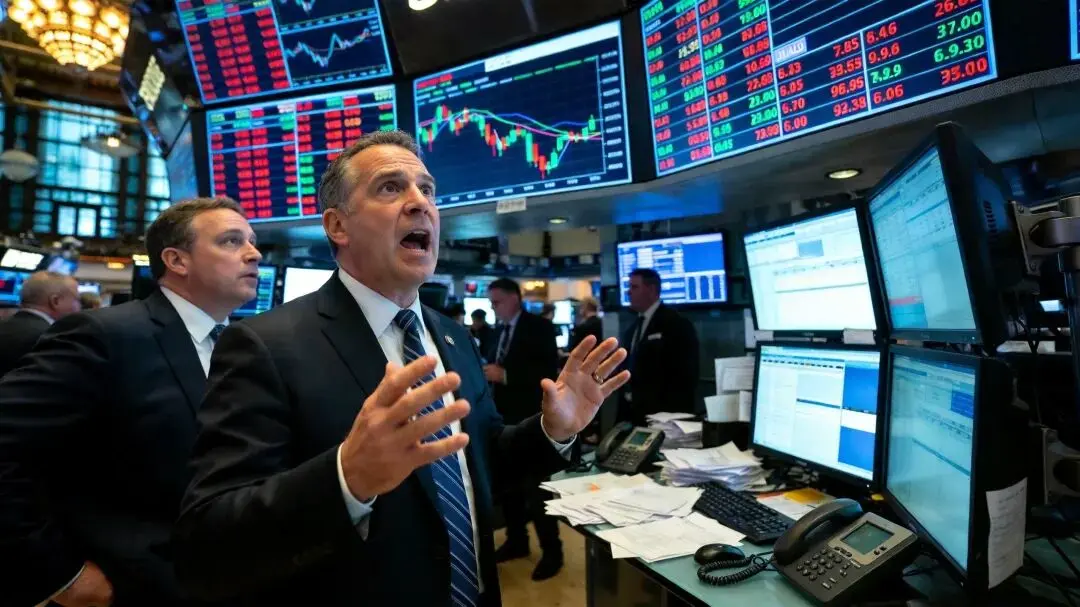
#Gate广场四月发帖挑战 Trump "Blockade of the Strait of Hormuz," Goldman Sachs: The stock market faces the "final showdown"
After the breakdown of US-Iran ceasefire negotiations, the Strait of Hormuz is once again in the spotlight—Goldman Sachs warns that U.S. stocks have been drawn into a "final battle."
According to Wind Trading Platform, on April 13, Goldman Sachs global banking and markets strategist Shreeti Kapa published a market commentary titled "Equities – The Final Battle," analyzing the current geopolitical situation and the direction of U.S. stocks. During this round of Middle East conflict
View Original
post-image
post-image
  • Reward
  • 33
  • Repost
  • Share
XiaoXiCai:
Just charge forward 💪
View More
  • Reward
  • 18
  • Repost
  • Share
Dsybs:
冲就完了 👊
View More
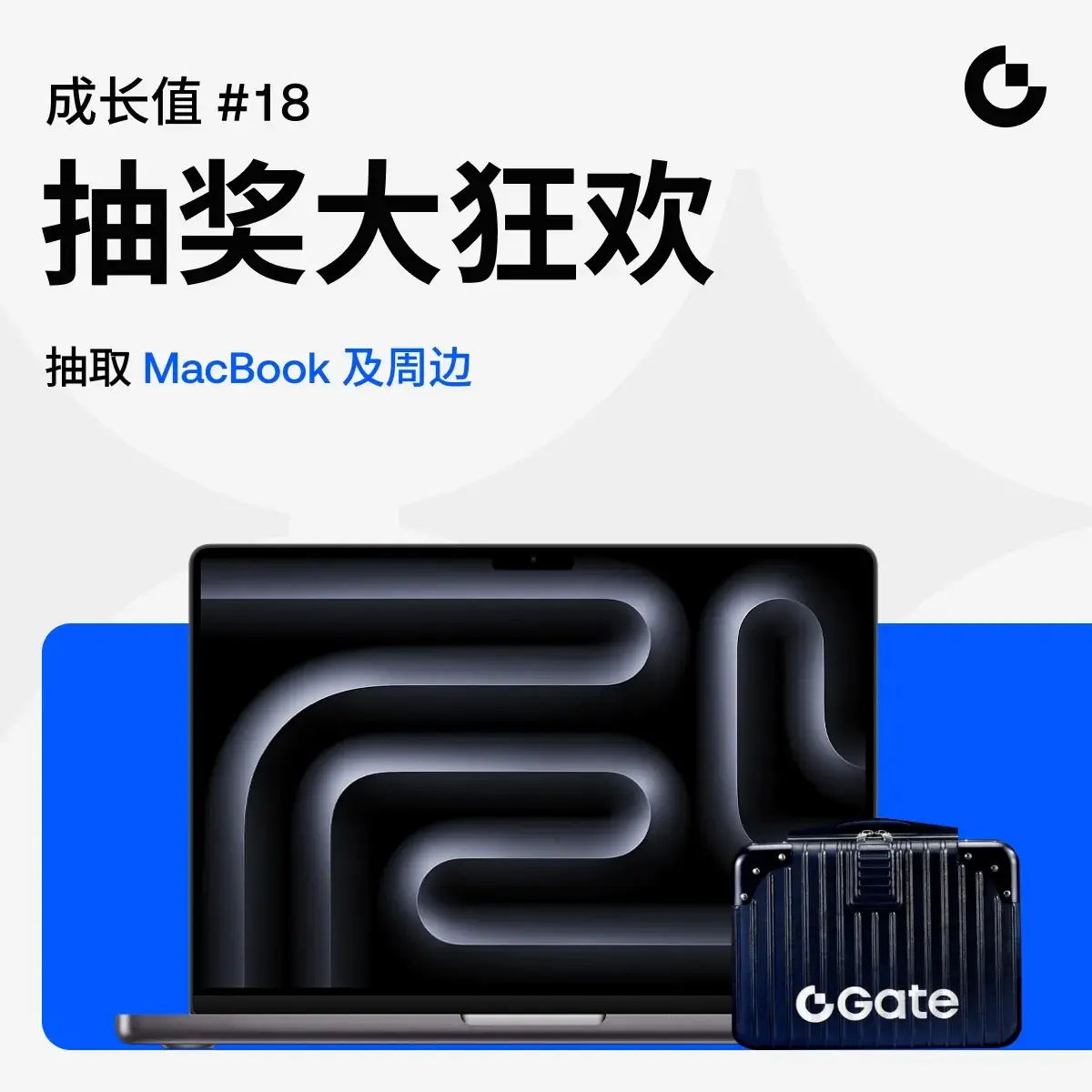
#Gate广场四月发帖挑战 Countdown: 2 days!🧧
Post to earn, daily red envelopes to claim, 100% chance to win for newcomers!
🎁 Benefits Highlights:
✅ Newcomer Gift: Post your first message in the plaza, 100% guaranteed red envelope!
✅ Posting Reward: The more you post, the more interactions, the larger the red envelope!
✅ Sharing King: Share the event link to the plaza or external platforms, get a Gate bottle opener + 200U!
✅ Leaderboard: Top 100 winners, Gate 13th Anniversary limited gift box, Red Bull jacket, and more!
Take action now and post your first April plaza message!
👉️ https://www.gate.com/po
View Original
post-image
post-image
  • Reward
  • 31
  • Repost
  • Share
Ryakpanda:
冲冲GT 🚀
View More
  • Pin