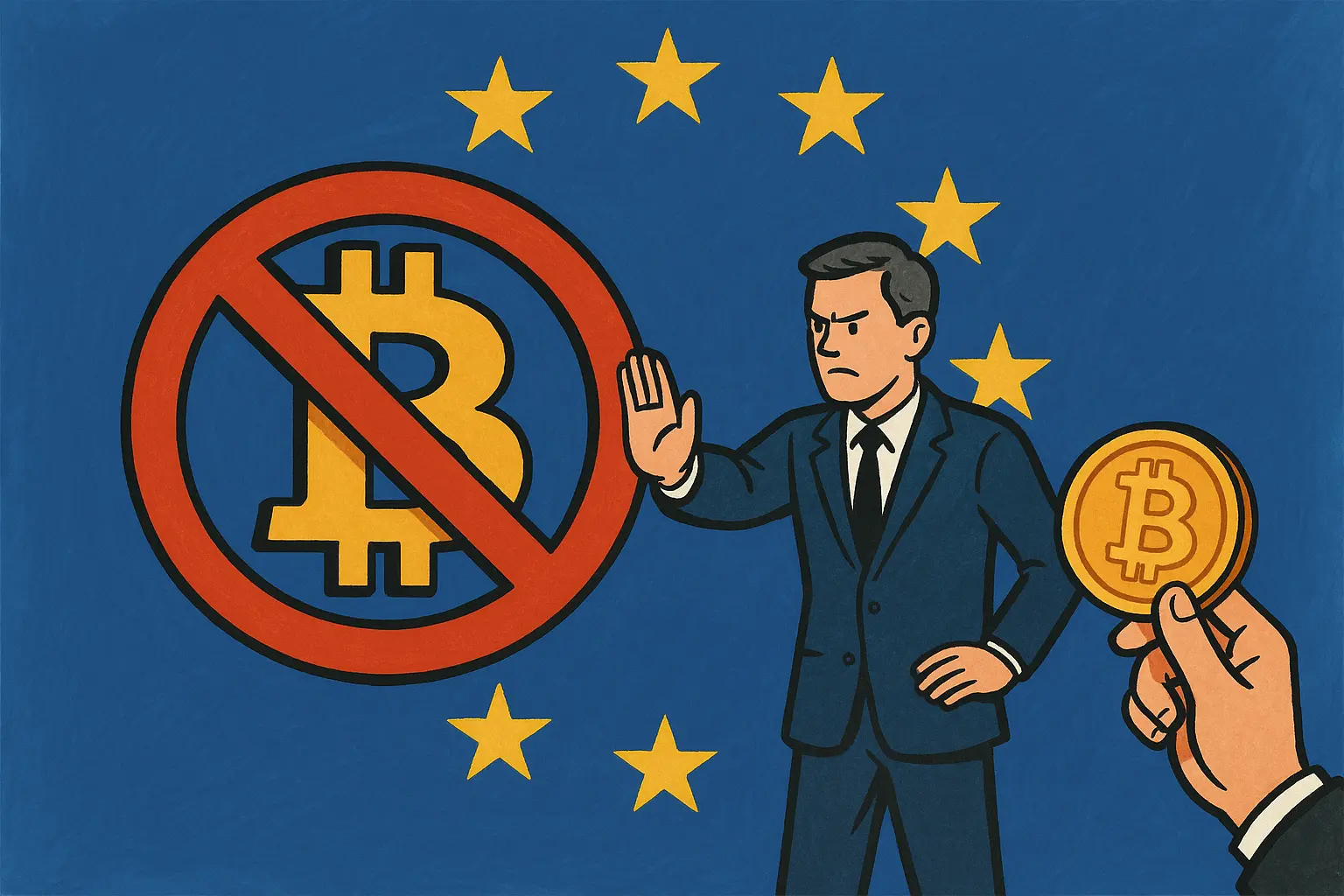
The European Union proposes a comprehensive ban on cryptocurrency transactions with Russia, covering all Russian service providers and digital rubles. Kyrgyzstan’s imports from the EU have increased by 800%, and exports to Russia have surged by 1,200%. The proposal is part of the 20th round of sanctions, expected to be agreed upon before the four-week mark of the Russia-Ukraine war on February 24, requiring unanimous approval from all 27 member states.
Total Ban on Crypto Transactions: EU’s Most Severe Financial Sanctions Against Russia in History
According to a February 10 report by the Financial Times, the EU Commission has proposed a total ban on cryptocurrency transactions with Russia to prevent Moscow from circumventing sanctions through assets outside the traditional banking system. This measure aims to stop Russia from using new platforms to evade existing sanctions, covering all Russian crypto asset service providers and related transfer and trading platforms.
This marks a significant escalation in EU financial sanctions against Russia. Previously, sanctions targeted specific Russian banks, individuals, and entities, but this proposed total ban means any crypto-related activity involving Russia will be considered illegal. This “blanket” approach indicates the EU’s concern that Russia is increasingly using cryptocurrencies to bypass sanctions has reached a critical point.
According to the Financial Times, the EU is seeking to prevent the emergence of “counterfeit crypto entities derived from sanctioned platforms” in Russia, claiming these entities are used to support transactions related to Russia’s war in Ukraine. The measures aim to prevent the rise of successors to the Garantex exchange, which the EU sanctioned last year.
Garantex is one of Russia’s largest cryptocurrency exchanges, handling a significant volume of crypto transactions before sanctions. Blockchain intelligence firm TRM Labs reports that Garantex (along with Iran’s Nobitex exchange) accounted for over 85% of the inflows from sanctioned entities and jurisdictions in 2024. The U.S. also sanctioned Garantex last year and re-listed it on the sanctions list. The U.S. Department of the Treasury’s Office of Foreign Assets Control (OFAC) states that most of the funds flowing into Garantex come from other crypto exchanges used for criminal activities.
After Garantex was sanctioned, the market saw the emergence of several new exchanges with slightly different names and brands, offering nearly identical services and interfaces, widely suspected to be reboots or rebrandings of Garantex. The EU’s total ban aims to cut off this “whack-a-mole” game at its root, prohibiting all crypto services related to Russia rather than targeting individual platforms.
Three Main Areas Covered by the EU’s Total Ban
Russian Crypto Exchanges: All platforms registered in Russia or controlled by Russian entities
Digital Ruble Transactions: Complete ban on transactions involving the digital ruble supported by the Russian central bank
Related Transfer Services: Any intermediary services assisting Russian users in crypto transfers
The proposal also includes adding 20 banks to the sanctions list. These banks may be involved in providing fiat on/off ramps for crypto transactions or serving as channels to evade sanctions. Once blacklisted, any dealings between EU entities and these banks will be prohibited, further severing Russia’s financial links.
Kyrgyzstan’s Trade Surges 1,200%: Central Asian Transit Hub Exposed
The EU also plans to ban exports of certain dual-use goods to Kyrgyzstan, suspected of reselling embargoed items to Russia. According to documents obtained by the Financial Times, data shows that since the war began, Kyrgyzstan’s imports from the EU of key goods have grown nearly 800%, while exports to Russia have increased by 1,200%. This extraordinary growth pattern clearly indicates Kyrgyzstan is acting as a transit hub for EU embargoed goods flowing into Russia.
Kyrgyzstan is an inland Central Asian country with no direct land border with Russia, but it connects via Kazakhstan. Before the Russia-Ukraine war, trade between Kyrgyzstan and the EU was relatively small. However, after the EU imposed comprehensive sanctions on Russia, Kyrgyzstan’s import-export structure changed dramatically. Imports of electronic components, precision machinery, optical equipment, and other goods from the EU surged, then being resold to Russia for use in drones, weapons systems, and military equipment.
Growth rates of 800% and 1,200% are extremely rare in international trade. Typical annual growth rates are 5-10%, even in rapidly developing emerging markets. A thousandfold increase is almost only explainable by sanctions circumvention. These figures provide strong evidence supporting the EU’s allegations.
EU documents state: “Ongoing trade indicates persistent evasion risks, which are particularly high.” This assessment shows that EU sanctions on Kyrgyzstan are not only punitive but also preventive. Even if not every transaction can be definitively proven to be for military purposes, such abnormal trade patterns alone are sufficient to trigger sanctions.
This ban will be part of the 20th round of EU sanctions since Russia’s invasion of Ukraine, marking the first use of anti-evasion measures. “Anti-evasion” is a relatively new tool within EU sanctions law, allowing the EU to impose measures based on trade patterns and risk assessments without direct proof of violations. The use of this preventive sanctions mechanism signifies a further strengthening of EU sanctions policy.
For Kyrgyzstan, this ban will have a significant economic impact. The economic benefits gained from transit trade over the past two years will disappear, affecting businesses and employment. From an international relations perspective, Kyrgyzstan may have little choice. As a small country caught between the EU and Russia, aligning with Russia’s economy may be driven by geopolitical and economic survival considerations.
Digital Ruble Total Ban: Geopoliticization of Central Bank Digital Currencies
The proposal also includes a total ban on transactions involving the digital ruble supported by the Russian central bank. The digital ruble is a central bank digital currency (CBDC) under development by Russia’s central bank, intended as a state-backed digital payment tool. Although not yet fully launched, the EU has preemptively included it in sanctions, highlighting concerns over its potential to facilitate sanctions evasion.
CBDCs differ fundamentally from cryptocurrencies. Issued and controlled by central banks, they are essentially digital forms of fiat currency. Cryptocurrencies are typically decentralized. However, CBDCs could still be used to evade sanctions, as they might bypass traditional SWIFT banking systems. For example, Russia could establish bilateral settlement systems based on the digital ruble with friendly countries, entirely outside Western-controlled financial infrastructure.
EU’s early ban on the digital ruble carries strategic significance. It sends a clear message: any attempt to use technological innovation to evade sanctions will be thwarted in advance. It also warns other countries considering developing CBDCs to circumvent Western financial systems that such efforts will not be tolerated.
27 Countries’ Unanimous Approval: Can the March 24 Deadline Be Met?
The EU aims to finalize this sanctions package by February 24, the fourth anniversary of the Russia-Ukraine war, but requires unanimous approval from all 27 member states. According to the Financial Times, three member states are cautious about the ban. Achieving unanimity is one of the greatest challenges in EU foreign policy.
EU decision-making requires full consensus in foreign and security policy areas, with each member having veto power. This system safeguards small states’ influence but makes decision-making slow. During the Russia-Ukraine conflict, Hungary has repeatedly used its veto to block or delay sanctions proposals due to close economic and energy ties with Russia.
The identities of the three cautious member states have not been disclosed, but Hungary, Cyprus, and Greece are likely candidates, given their significant economic relations with Russia. These countries may worry that a total ban on crypto transactions could harm their citizens’ or businesses’ legitimate interests or damage long-term relations with Russia.
The February 24 date is highly symbolic. Launching the 20th round of sanctions on the war’s anniversary demonstrates EU support for Ukraine. However, reaching full consensus before this political deadline will require intensive diplomatic negotiations and possible compromises.


