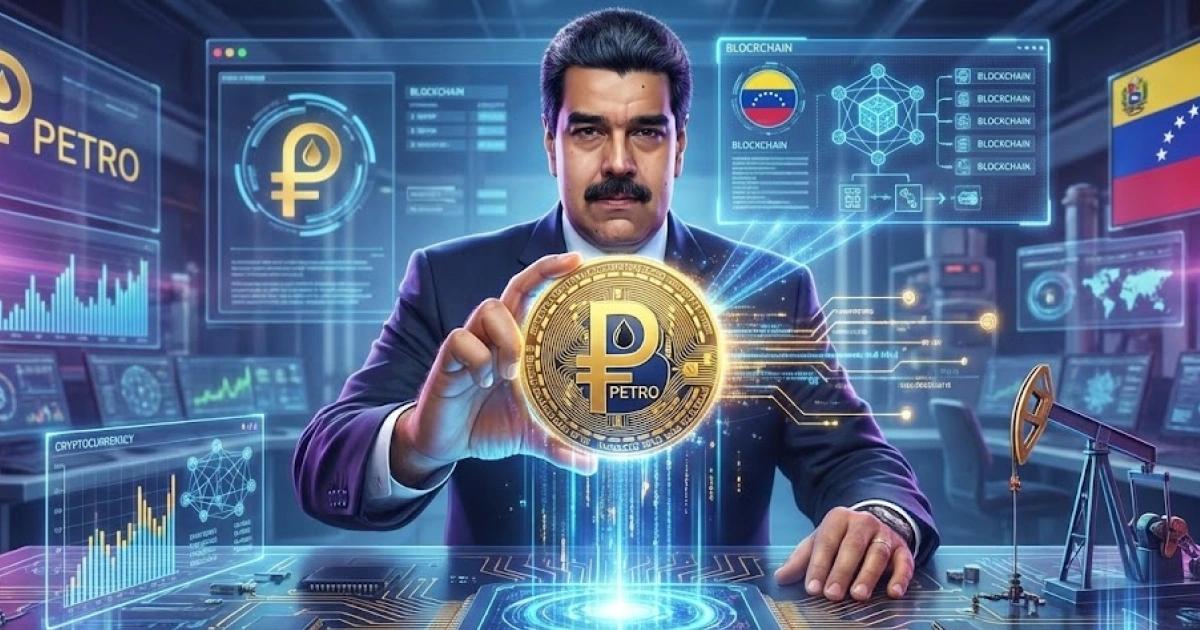
The event of Venezuelan President Maduro’s arrest has refocused the international community on this South American oil-producing country. Venezuela has issued oil-backed digital currencies and used Tether to counter sanctions. After Maduro’s detention, the U.S. desire to control its energy resources may impact the geopolitical landscape involving China, Russia, and Taiwan.
The arrest of Maduro shocked the world—an overview of South America’s oil nation
U.S. special forces raided the Venezuelan presidential residence last weekend, successfully executing a “decapitation” operation that stunned the global audience.
Maduro’s arrest has drawn renewed attention to this South American oil-producing country. Since Maduro took office in 2013, facing increasingly severe U.S. economic sanctions, the Venezuelan government has launched a series of financial experiments and geopolitical maneuvers to resist sanctions.
Venezuela’s Path of Using Cryptocurrency to Counter Sanctions
Oil-backed Digital Currency: From Reserves to a Disappointing End
To combat hyperinflation and capital shortages caused by U.S. sanctions, Venezuela began early to explore cryptocurrencies. The Atlantic Council’s investigation shows that Maduro’s government launched the oil-backed cryptocurrency Petro as early as 2018, attempting to bypass the U.S.-monitored international financial system to address hyperinflation.
The Petro is a cryptocurrency backed by Venezuela’s abundant oil reserves. The government has repeatedly tried to link the Petro to public services, such as requiring citizens to purchase passports to fund social housing projects, and pegging 50% of minimum wages to the Petro.
However, the project faced domestic opposition over alleged illegal debt, lacked practical application scenarios, and was plagued by corruption scandals. It was ultimately declared a failure, and the local government officially terminated the Petro in 2024.
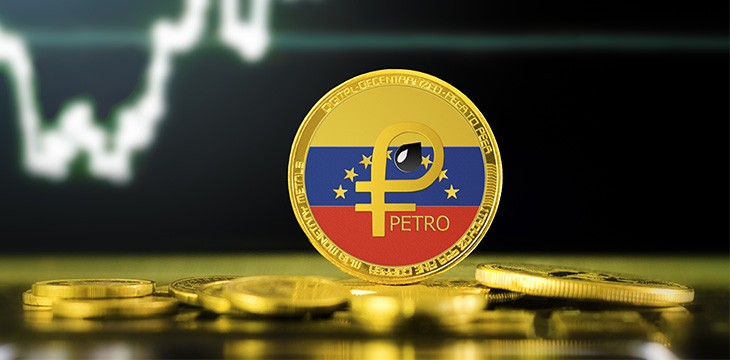
Image source: CoinGeek Venezuela previously launched the Petro
Tether: Trying to Bypass Traditional Channels but Still Under Surveillance
Although the Petro failed, Venezuela has not given up on using cryptocurrencies to resist sanctions.
The Atlantic Council pointed out that Venezuela’s state oil company PDVSA later used the stablecoin Tether (USDT), pegged 1:1 to the dollar, to bypass traditional cross-border payment channels.
Starting in 2024, Venezuela began requiring oil buyers to use crypto wallets and pay with Tether, establishing a parallel payment channel outside the traditional banking system.
However, Tether’s issuer, Tether Limited, did not fully cooperate. The company has worked with U.S. authorities to freeze multiple wallet addresses suspected of helping Venezuela evade sanctions, cutting off some of its funds.
Image source: Flickr, created by Satheesh Sankaran
The Hidden Influence of China and Russia Behind Venezuela
Besides cryptocurrencies, the underground trade of physical oil is also a key part of Venezuela’s sanctions resistance.
The Atlantic Council’s investigation found that Venezuela uses ghost ships or shadow fleets—ships with disabled trackers—to transport oil to places like Malaysia for origin falsification, with the main destination being independent refineries in Shandong, China.
Although Chinese official data shows that China has long ceased importing Venezuelan crude oil, it remains the country’s primary export destination, accounting for about 84% of its exports.
Additionally, Chinese company Huaguan Shipping’s subsidiary, Huaguan Energy (China Concord Resources Corp), recently signed an agreement to invest one billion USD in developing Venezuelan oil fields, indicating that the Chinese government may no longer be concerned about secondary sanctions from the U.S.
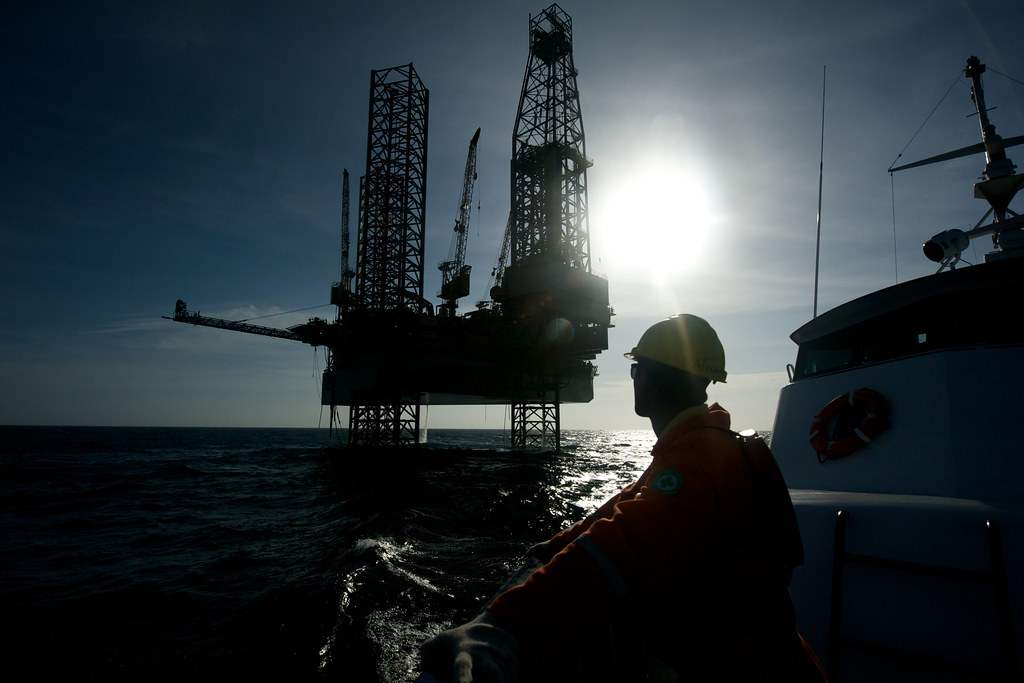
Image source: Flickr, photographed by Repsol
U.S. agencies worry that as Russian oil giants face sanctions, Moscow might imitate Venezuela’s model—using stablecoins and shadow fleets—to conduct energy trade with China outside Western oversight, forming a “sanctions evasion axis” of mutual learning.
Does the U.S. action in Venezuela also affect Taiwan?
Following the decapitation operation, the Trump administration claimed that the arrest of the Venezuelan president was to combat drug trafficking and terrorism. However, Al Jazeera analyzed that Venezuela’s approximately 3.03 trillion barrels of oil reserves, the largest in the world, are the real target of the U.S.
After the operation, Trump openly stated that U.S. companies should take over Venezuela’s oil infrastructure and bring the wealth back to America, demonstrating a desire for energy control.
Time Magazine issued a geopolitical warning, suggesting that the U.S. directly arresting a head of state and planning to seize the country’s resources breaks international norms and could trigger a chain reaction, interpreted by Russia and China as a display of power that disregards national sovereignty.
Journalist Richard Hall expressed concern that Russia might see this as a justification for its military actions in Ukraine, and that it could significantly weaken the long-standing U.S. narrative that emphasizes sovereignty to deter China from taking military action against Taiwan, potentially giving China more excuses to ignore international norms when handling Taiwan issues.
Disclaimer: The information on this page may come from third parties and does not represent the views or opinions of Gate. The content displayed on this page is for reference only and does not constitute any financial, investment, or legal advice. Gate does not guarantee the accuracy or completeness of the information and shall not be liable for any losses arising from the use of this information. Virtual asset investments carry high risks and are subject to significant price volatility. You may lose all of your invested principal. Please fully understand the relevant risks and make prudent decisions based on your own financial situation and risk tolerance. For details, please refer to
Disclaimer.


