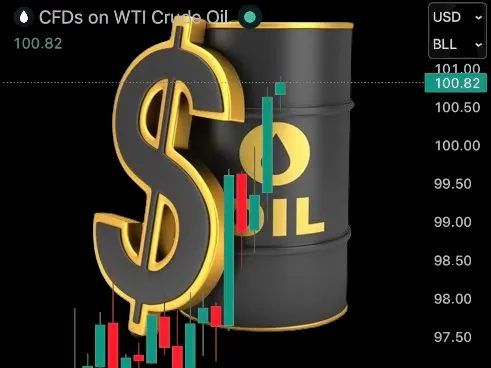
Crude oil prices showed a significant upward trend on April 9, 2026, due to increasing doubts about the fragile ceasefire agreement in the Middle East and supply disruptions in the Strait of Hormuz. West Texas Intermediate (WTI) crude reached $99.25 per barrel, a 5.13% increase from the previous session. Brent crude traded around $98.03 per barrel, supported by a 3.46% increase. This development created momentum consistent with cumulative gains of 18.94% in the last month and 65.23% year-to-date.
This market volatility stems primarily from renewed Israeli military activity in Lebanese territory, creating significant uncertainty about the permanence of the ceasefire. The extensive disruption of tanker traffic in the Strait of Hormuz and Iran's announcement of the suspension of voyages highlighted the risks in this strategic waterway, which represents approximately 20% of the global oil supply. While US Vice President JD Vance's indication of possible reopening negotiations has provided some relief, restrictions on physical flows remain in place.
Supporting factors include a net decline in US crude oil inventories and the cautious stance of the Organization of Petroleum Exporting Countries (OPEC) plus its allies regarding production policies. Geopolitical risk premiums continue to keep prices high, with analyst expectations shaping forecasts of reaching $115.37 per barrel by the end of the second quarter. Institutions like Goldman Sachs have emphasized that Brent oil could remain above $100 throughout 2026 if the Strait of Hormuz closure is extended.
From an economic perspective, these price dynamics clearly demonstrate the intertwining of energy markets with global stability, influencing inflationary pressures and monetary policy decisions. While record levels have been observed in European and African crude oil varieties, importing countries like Japan are considering options to release reserves. Investors and market participants are closely monitoring upcoming data releases and diplomatic developments, and are prepared for short-term volatility. In this context, the oil market continues to function as a barometer that most clearly reflects the economic repercussions of geopolitical developments.
#OilEdgesHigher $XTIUSD
$XBRUSD
















 LIVE
LIVE