As the DeFi ecosystem continues to mature, on chain financial products are expanding beyond simple lending and trading into more advanced yield management and interest rate trading use cases. In particular, with the rapid growth of yield bearing assets such as LSDs and restaking, users no longer just want to earn yield. They also want to lock in rates, trade future returns, or hedge against fluctuations in yield. However, most traditional DeFi protocols only offer floating returns, which makes it difficult to meet these more specialized needs.
Pendle emerged in this context with a yield tokenization mechanism that splits yield bearing assets into PT and YT, giving DeFi users the ability to separate and trade yield. This mechanism gives yield bearing assets characteristics similar to bonds and interest rate derivatives, making Pendle important infrastructure in DeFi fixed income and interest rate markets, with PT and YT at the center of the system.
What Are PT and YT?
In the Pendle protocol, when users deposit yield bearing assets into the platform, the system automatically splits the asset into two parts: PT, or Principal Token, and YT, or Yield Token. PT represents the principal portion, while YT represents the future yield portion. In other words, the principal and yield rights that were originally bundled into a single asset are separated, allowing users to trade them independently.
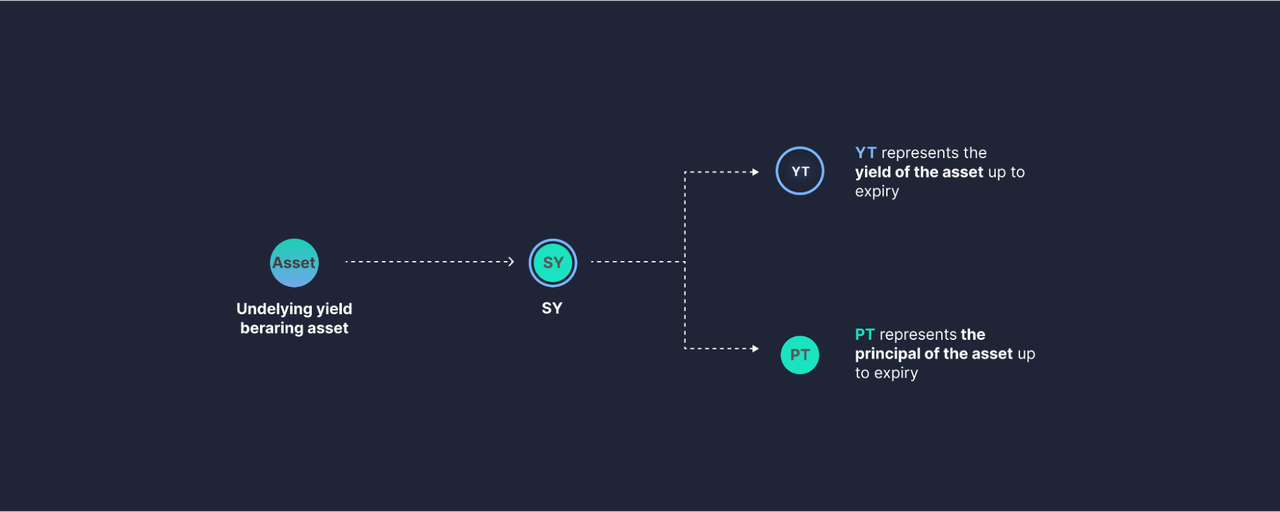
This design allows users to choose yield strategies more flexibly based on their own needs. For example, users with lower risk tolerance can hold PT to lock in fixed returns, while those who want to bet on future yield growth can buy YT to gain exposure to future yield rights. Through this mechanism, Pendle brings the logic of fixed income and interest rate trading from traditional finance into the DeFi market.
Why Does Pendle Split PT and YT?
The main purpose of splitting PT and YT is to make yield bearing assets more flexible. Traditional yield bearing assets can continue generating returns, but because the principal and yield are tied together, users cannot trade future yield separately or lock in a fixed rate of return.
Through this splitting mechanism, Pendle turns principal and yield into two independent assets. As a result, users can buy discounted PT to lock in fixed returns, or trade YT to speculate on changes in yield rates. This flexibility improves capital efficiency and creates new tools for yield management and interest rate speculation, bringing yield bearing assets closer to traditional fixed income products.
What Is PT, and How Does It Work?
PT stands for Principal Token and represents the principal portion of a yield bearing asset. After users deposit a yield bearing asset into Pendle, they receive a corresponding amount of PT. PT holders can redeem the principal at face value on the maturity date.

Because PT does not include the right to future yield, it usually trades at a discount. For example, if an asset will be worth 1 ETH at maturity, but the current market price of PT is below 1 ETH, a user can buy PT and hold it until maturity to earn a fixed return. This mechanism is similar to a zero coupon bond, where users buy at a discount and redeem at face value at maturity, thereby locking in yield.
For this reason, PT is the key tool Pendle uses to deliver fixed returns, and it is also the more stable part of the yield splitting mechanism.
What Is YT, and How Does It Work?
YT stands for Yield Token and represents the right to the future yield generated by a yield bearing asset. Users who hold YT do not receive the principal. Instead, they receive all the yield produced by the underlying asset before maturity.
The value of YT depends mainly on the market’s expectations for future yield rates. If the market expects yields to rise, the value of YT will usually increase. If yields are expected to fall, the value of YT may decline. In this sense, YT functions more like a claim on future yield and is better suited to users who want to speculate on changes in future returns.
Through YT, Pendle turns future yield, which normally cannot be traded on its own, into a tradable asset, allowing users to participate in yield speculation and yield risk management.
PT and YT together represent the full value of the original yield bearing asset. PT represents the value of the principal, while YT represents the value of future yield. Combined, the two correspond to the original yield bearing asset.
This means that when a user holds both PT and YT, it is effectively the same as holding the original yield bearing asset itself. When a user trades only one of the two, they are essentially separating principal risk from yield risk. For example, holding only PT means giving up future yield in exchange for the certainty of fixed returns, while holding only YT means taking on yield volatility in exchange for future upside.
This yield splitting mechanism gives yield bearing assets a more flexible risk return structure, and it is one of Pendle’s core innovations.
What Are the Use Cases for PT and YT?
The PT and YT splitting mechanism allows users to build yield strategies around different goals. Users who want stable returns can buy discounted PT to earn fixed income, which suits lower risk strategies. Users who are optimistic about future yield growth can buy YT to gain potential upside from rising returns.
In addition, users who already hold yield bearing assets can sell YT to lock in returns early and reduce the risk of future yield declining. This capability makes Pendle useful not only for yield enhancement strategies, but also for yield risk management, expanding the role of yield bearing assets in DeFi.
Why Are PT and YT Important?
PT and YT matter because they give yield bearing assets three characteristics for the first time: they can be separated, traded, and actively managed. In the traditional DeFi model, yield bearing assets could only be held as a whole. By separating principal from yield rights, Pendle gives users much greater control over yield risk.
This mechanism not only provides users with tools for fixed income and yield speculation, it also creates the underlying assets needed for on chain interest rate markets, allowing yields to be priced and traded like other financial assets. That is why PT and YT are seen as the foundation of Pendle’s yield market and a key reason it has built an advantage in the DeFi fixed income sector.
Conclusion
Pendle’s PT and YT are the core components of its yield tokenization mechanism. PT represents the principal portion and gives users a fixed income tool. YT represents the future yield portion and allows users to trade expectations around future returns. By splitting yield bearing assets into PT and YT, Pendle transforms yield management from passive holding into active trading and builds an on chain interest rate market for DeFi.
As the scale of yield bearing assets continues to grow, the value of the PT and YT mechanism will become even more evident. As the foundation of Pendle’s yield trading system, this yield splitting mechanism is helping push the DeFi fixed income market toward a more mature stage of development.
FAQs
What are Pendle’s PT and YT?
PT is the principal token and represents the principal of a yield bearing asset. YT is the yield token and represents the right to future yield. Together, they form the complete yield bearing asset.
How does PT help users earn fixed returns?
PT usually trades at a discount and can be redeemed at face value upon maturity, allowing users to earn fixed returns from the price difference.
What determines the value of YT?
The value of YT is mainly determined by the market’s expectations for future yield rates. The higher the expected yield, the higher the value of YT tends to be.
Why does Pendle split PT and YT?
Once split, users can trade principal and yield rights separately, allowing them to lock in returns or bet on changes in future yield.
Why does the PT and YT mechanism matter?
This mechanism makes yield bearing assets far more flexible and makes fixed income and interest rate trading possible in DeFi.