
Futures
Access hundreds of perpetual contracts
TradFi
Gold
One platform for global traditional assets
Options
Hot
Trade European-style vanilla options
Unified Account
Maximize your capital efficiency
Demo Trading
Introduction to Futures Trading
Learn the basics of futures trading
Futures Events
Join events to earn rewards
Demo Trading
Use virtual funds to practice risk-free trading
Launch
CandyDrop
Collect candies to earn airdrops
Launchpool
Quick staking, earn potential new tokens
HODLer Airdrop
Hold GT and get massive airdrops for free
Launchpad
Be early to the next big token project
Alpha Points
Trade on-chain assets and earn airdrops
Futures Points
Earn futures points and claim airdrop rewards


More





OPEC+ conducts symbolic production increases, warning that oil market disruptions will be prolonged!
Ask AI · How can the Strait of Hormuz blockade become a key driver of the spike in oil prices?
Even though OPEC+ has issued symbolic production-increase quotas, damage to infrastructure caused by the U.S.-Iran war and the cutting off of the “main export artery” are pushing the crude oil market into unprecedented, violent turbulence…
OPEC+ warned that even if the Iran war ends, damage to energy assets in the Middle East will have long-term impacts on oil supply. At the same time, the organization approved next month’s production quotas with symbolic significance.
In a statement released after a meeting on Sunday, the organization’s ministerial-level oversight committee said: “Restoring damaged energy assets to full-load operation is not only extremely costly, but also time-consuming.” The committee said that any actions that endanger supply security—whether direct attacks on infrastructure or disruption of export routes—will intensify market turmoil and render OPEC+’s efforts to stabilize the market futile.
In a video conference, the core oil-producing countries led by Saudi Arabia and Russia agreed to raise their May daily output target by about 206k barrels. Given that crude oil exports from the Persian Gulf have been throttled by the war, and that major oil-producing countries in the region have been forced to cut supply, this move by OPEC+ is more of a paper “short-seller’s check”. But it may also send a signal: once hostilities cool down, they intend to quickly restore production capacity.
A five-week conflict has turned the crude oil market upside down. As key energy assets in the Gulf region come under attack—and as Iran has effectively blocked the crucial Strait of Hormuz—last month the oil price surged all the way to nearly $120 per barrel, triggering what the International Energy Agency called the worst supply disruption in the history of the crude oil market.
Jorge Leon, head of geopolitical analysis at Rystad Energy, said: “The real show isn’t actually OPEC+ policy—it’s the Strait of Hormuz. With as much as one-fifth of the world’s oil passing through the market here, the shock caused by a cutoff of the Strait of Hormuz is far more than any production-increase measures OPEC+ can announce.”
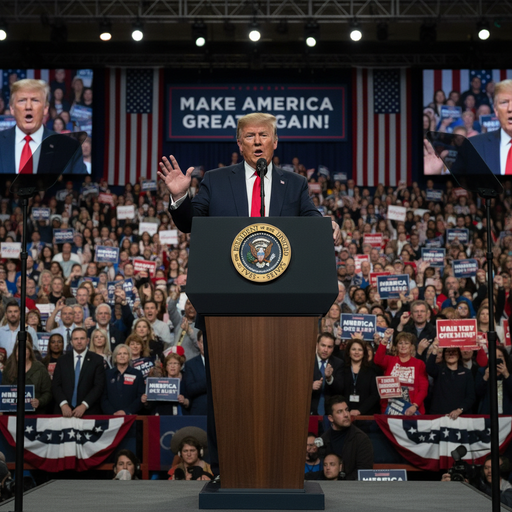
After U.S. President Donald Trump swore to escalate the war, benchmark Brent crude futures closed last week at around $109 per barrel, which could further lengthen the period of energy supply disruption through this key waterway. He then threatened to make Iran experience “hell on earth,” saying that the final 10-day deadline for reaching a peace agreement between Iran and the U.S. is running out.
OPEC’s response plan
Before the outbreak of the conflict, OPEC+ had been gradually restoring capacity that had been paused following the shutdown in 2023. In the first three months of this year, they kept production unchanged, and then, on March 1 (the day after the U.S. and Israel’s first strikes on Iran), they agreed to increase output by 206k barrels per day in April.
Russian Deputy Prime Minister Alexander Novak emphasized in an interview with the state TV channel Rossiya 24 last Sunday: “We will closely monitor the situation and use every necessary means to balance the market. The market is obviously already out of balance. This has caused a massive shock to global demand, affecting not only the energy market but also the wider economy and downstream supply.”
In mid-March, the International Energy Agency disclosed that oil-producing countries around the Persian Gulf have already cut oil production by about 10 million barrels per day**—roughly equivalent to 10% of global total supply.** Because the Strait of Hormuz has essentially become a “no-sail zone,” Saudi Arabia has redirected some crude oil to a terminal along its Red Sea coast, while the UAE has stepped up export efforts from the Port of Fujairah.
The OPEC+ oversight committee praised these self-rescue measures, saying they help cool market volatility.
However, these detour operations simply cannot fill the massive oil gap that normally flows through the Strait of Hormuz. Even though there have been preliminary signs in recent days that seaborne volumes are rising slightly, overall traffic remains painfully low. Iran is tightly controlling this throat: it has set up a toll-charging system and only gives a green light to ships from “friendly countries.”
After the meeting, Novak revealed that OPEC+ oil-producing countries discussed in detail on Sunday the issue that “part of the sea transport routes have been blocked.” “This has had a significant impact on the market’s violent fluctuations.”
Russia’s own backyard is also facing supply interruption problems, because Ukraine has continued to target the country’s energy infrastructure and key export terminals.
With the 206k-barrel-per-day May production-increase plan now finalized, OPEC+ will formally restore about half of the second batch of capacity that was shut down since 2023, meaning member countries still have 827k barrels per day of remaining production capacity waiting to be activated.
The large OPEC+ alliance, made up of 22 countries, is at least on paper still burdened with another set of production cuts dating back to 2022.