
Futures
Access hundreds of perpetual contracts
TradFi
Gold
One platform for global traditional assets
Options
Hot
Trade European-style vanilla options
Unified Account
Maximize your capital efficiency
Demo Trading
Introduction to Futures Trading
Learn the basics of futures trading
Futures Events
Join events to earn rewards
Demo Trading
Use virtual funds to practice risk-free trading
Launch
CandyDrop
Collect candies to earn airdrops
Launchpool
Quick staking, earn potential new tokens
HODLer Airdrop
Hold GT and get massive airdrops for free
Launchpad
Be early to the next big token project
Alpha Points
Trade on-chain assets and earn airdrops
Futures Points
Earn futures points and claim airdrop rewards


More





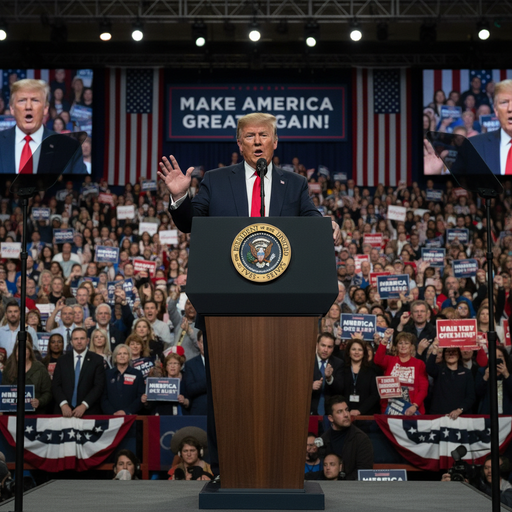
U.S. Stock Preview | The three major stock index futures fluctuate differently; reports suggest the U.S.-Iran ceasefire agreement may take effect on the 6th; Trump plans to hold a press conference
Pre-market Market Developments
Ahead of the U.S. stock market open on April 6 (Monday), U.S. stock index futures were mixed. As of the time of writing, Dow Jones futures were down 0.10%, S&P 500 index futures were up 0.11%, and Nasdaq futures were up 0.38%.
As of the time of writing, Germany’s DAX index was down 0.56%, the UK’s FTSE 100 index was up 0.69%, France’s CAC 40 index was down 0.24%, and Europe’s STOXX 50 index was down 0.70%.
As of the time of writing, WTI crude oil was down 1.47%, at $109.90 per barrel. Brent crude was down 0.45%, at $108.54 per barrel.
A U.S.-Iran ceasefire deal may take effect on the 6th. According to reports, a source said the United States and Iran have received a proposal for a ceasefire agreement, which could take effect on the 6th. The source said Pakistan has drawn up a framework proposal to end the conflict and has communicated with the U.S. and Iran. The proposal is intended to first achieve an immediate ceasefire, reopen the Strait of Hormuz, and then reach a final agreement within 15 to 20 days. The final agreement may include Iran’s commitment not to seek nuclear weapons in exchange for sanctions relief and the unfreezing of frozen assets. On April 6, local time, senior Iranian government officials said they have received the latest ceasefire proposal put forward by Pakistan as a mediator and are currently reviewing the relevant contents. The official said Iran would not accept setting a final deadline or applying pressure to force it into making a decision. Iran would not reopen the Strait of Hormuz on the condition of a “temporary ceasefire.” Iran believes the United States is not yet prepared to achieve a permanent ceasefire.
Trump hints at further delaying the timeline to destroy Iran’s energy facilities and plans to hold a press conference. In a social media post on April 5, U.S. President Trump wrote, “8:00 p.m. Tuesday (the 7th) Eastern Time.” Some media interpreted this as him once again pushing back what he had previously described as the final deadline for the action to destroy Iran’s energy facilities, delaying it by one day. Earlier the same day, he had also posted on social media about a new deadline for this action. In the post, he said, “April 7 will be Iran’s power plant day and bridge day,” implying a fierce bombing of Iran’s power plants and bridges. On April 5, local time, Velayati, a foreign affairs adviser to Iran’s supreme leader, warned the U.S. that if it “makes the same mistake again,” the Iran-led resistance front would respond by blocking the Strait of Malacca as a countermeasure. In addition, on April 5, local time, in an interview, Trump said the U.S. is currently conducting “deep negotiations” with Iran and could reach an agreement before the April 7 final deadline he set. He said if Iran does not reach an agreement with the U.S. soon, he will order to “blow up everything” and “take over oil.” Notably, Trump also said he will hold a press conference with the military at 1:00 p.m. on April 6 (Monday) in the White House’s Oval Office.
Delta Air Lines earnings hit the tape alongside key U.S. inflation data. Besides the Middle East situation drawing heavy attention, U.S. consumer spending and inflation indicators this week will become the market focus. The U.S. February Personal Consumption Expenditures Price Index (PCE) and March Consumer Price Index (CPI) will be released on Thursday and Friday, respectively. As investors try to gauge the impact of the Middle East war on the economy, these two inflation data releases will be among the first real readings measuring how higher commodity prices may pass through to U.S. inflation. Investors will also get signals on market sentiment on Friday from initial data on April consumer confidence, current conditions, and expectations from the University of Michigan. On the earnings front, Delta Air Lines (DAL.US) will report results on Wednesday, which will be a key indicator for assessing how the Iran war and the subsequent spike in airline fuel prices have affected the airline industry—an industry that is highly sensitive to oil-price volatility.
Could the “strongest April” in U.S. stocks be a bust? Three major headwinds strike at once—maybe the rebound road is doomed. After a volatile first quarter, investors had hoped that U.S. stocks could use April—traditionally a “strong month”—to stage a rebound. However, reality may be harsher than historical patterns, as a cluster of negative forces is clouding the outlook for market recovery. Although U.S. stocks saw a brief rebound early in April and historical data shows April is often the second-best month of the year for the S&P 500’s performance, the current macro environment is no longer the same. Empower’s Chief Investment Strategist, Mota Norton, said bluntly that the market’s core anxiety right now is only one thing: “the situation in Iran.” This conflict not only drives up oil prices, but also directly threatens the three pillars that support the stock-market rebound—inflation cooling, expectations for Federal Reserve rate cuts, and resilient corporate earnings.
Hormuz Strait won’t allow all talk and no action! ‘Symbolic’ production increases from eight oil-producing countries can’t resolve the biggest crude supply disruption in history. On the 5th, the Organization of the Petroleum Exporting Countries (OPEC) issued a statement saying that eight “OPEC+” major oil-producing countries have decided to increase crude production by 206k barrels per day on a daily average basis in May. By then, these eight major oil producers will have announced production increases for two consecutive months. However, in the face of a supply disruption that is the largest in history with a gap of as much as 11 million barrels per day, along with continued disruptions to navigation through the Strait of Hormuz, this increase is negligible. With major oil-producing countries in the Middle East already having lost the ability to add supply to the market due to the ongoing fighting in the region, this symbolic production increase can only remain on paper. Consulting firm Energy Aspects said that as long as navigation through the Strait of Hormuz remains disrupted, the decision to increase production “has only academic significance.” OPEC+ sources acknowledged that although this daily increase of 206k barrels is less than 2% of the supply-disruption scale caused by the closure of the Strait of Hormuz, it sends a signal that once the shipping lane reopens, the alliance is prepared to raise output.
Paramount Global (PSKY.US) negotiates with a Gulf sovereign fund—injecting nearly $24 billion to back the acquisition of Warner Bros. Discovery (WBD.US). Reports say Paramount Global is in talks with three sovereign wealth funds led by Saudi Arabia, aiming to secure equity commitments of nearly $24 billion to support its acquisition deal for Warner Bros. Discovery. This U.S. entertainment giant announced in February that it has agreed to acquire a peer company with a total transaction value of $110 billion (of which equity value is $81 billion), and the deal is expected to be completed in the third quarter. The merger would integrate major studios and TV networks such as CNN and CBS, enabling it to compete more effectively in a market environment where streaming continues to siphon traditional linear TV viewers. According to people familiar with the matter, to support the acquisition, Saudi Arabia’s Public Investment Fund (PIF) has agreed to provide about $10 billion. The report said other contributors may include Qatar Investment Authority and L’imad Holding from Abu Dhabi.
UPS (UPS.US) reaches a settlement with truck drivers’ union—7,500 drivers receive $150k in early retirement compensation. UPS said on Sunday that it has reached an agreement with the International Brotherhood of Teamsters (Teamsters). The agreement places a cap on the severance compensation plan offered to 7,500 drivers related to disputes arising from the company’s planned layoffs. Under the agreement, UPS will provide $150k in compensation to drivers who opt for early retirement. The union previously tried to block this package-delivery giant from rolling out its “Driver Choice Plan,” arguing the plan was launched without bargaining and violated the parties’ 2023 labor agreement. The union argued that the relevant contract terms generally prohibit UPS from entering into such individual agreements with its drivers.
Soleno Therapeutics (SLNO.US) rockets higher premarket after being acquired for $2.9 billion by Neurocrine Biosciences (NBIX.US). Neurocrine Biosciences said Monday it will acquire rare-disease drug company Soleno Therapeutics for $2.9 billion in cash, marking the company’s expansion from its focus on neuroscience into metabolic diseases. Neurocrine Biosciences will offer to buy Soleno Therapeutics shares for $53 per share, a premium of about 34% to the stock’s previous session close. The deal will give Neurocrine Biosciences the right to use the drug Vykat XR. Vykat XR is the first approved drug in the U.S. for treating hyperphagia associated with Prader-Willi syndrome. Hyperphagia—strong and persistent feelings of hunger—is a typical symptom of Prader-Willi syndrome and can lead to severe obesity as well as physical, psychological, and behavioral problems. As of the time of writing, Soleno Therapeutics was up nearly 34% in U.S. stock premarket on Monday.
Important Economic Data and Event Calendar
Beijing time 22:00 U.S. March ISM non-manufacturing PMI