

Trade
Basic
Futures
Futures
Hundreds of contracts settled in USDT or BTC
TradFi
Gold
Trade global traditional assets with USDT in one place
Options
Hot
Trade European-style vanilla options
Unified Account
Maximize your capital efficiency
Demo Trading
Futures Kickoff
Get prepared for your futures trading
Futures Events
Participate in events to win generous rewards
Demo Trading
Use virtual funds to experience risk-free trading
Earn
Launch
CandyDrop
Collect candies to earn airdrops
Launchpool
Quick staking, earn potential new tokens
HODLer Airdrop
Hold GT and get massive airdrops for free
Launchpad
Be early to the next big token project
Alpha Points
Trade on-chain assets and enjoy airdrop rewards!
Futures Points
Earn futures points and claim airdrop rewards
Investment
Simple Earn
Earn interests with idle tokens
Auto-Invest
Auto-invest on a regular basis
Dual Investment
Buy low and sell high to take profits from price fluctuations
Soft Staking
Earn rewards with flexible staking
Crypto Loan
0 Fees
Pledge one crypto to borrow another
Lending Center
One-stop lending hub
VIP Wealth Hub
Customized wealth management empowers your assets growth
Private Wealth Management
Customized asset management to grow your digital assets
Quant Fund
Top asset management team helps you profit without hassle
Staking
Stake cryptos to earn in PoS products
Smart Leverage
New
No forced liquidation before maturity, worry-free leveraged gains
GUSD Minting
Use USDT/USDC to mint GUSD for treasury-level yields

More






"Once on the highway, I realized everyone was smart." Someone even brought a pot of rice...
Source: CCTV.com, Central Youth League, Qianjiang Evening News, Guangzhou Daily,潮新闻, China Weather Network
Today is the seventh day of the Lunar New Year
The Spring Festival holiday is nearing its end
Are you ready to go back to work?
Currently, the peak of return trips continues with high traffic
According to Qianjiang Evening News
A citizen returned to Hangzhou from Hunan on the fifth day of the Lunar New Year
Highways are showing heavy congestion
A trip that normally takes 10 hours
Took a full 15 hours
Arriving home after more than three hours past midnight
On social media
Some netizens posted photos showing
“Left at 7 PM, got home at 5 AM”
“Every service area was so congested I doubted life”
According to Guangzhou Daily
Someone drove back from Guangxi to Dongguan
Took 16.5 hours
A netizen commented
“Drove for 7 hours
Looked up and still had half the journey to go…”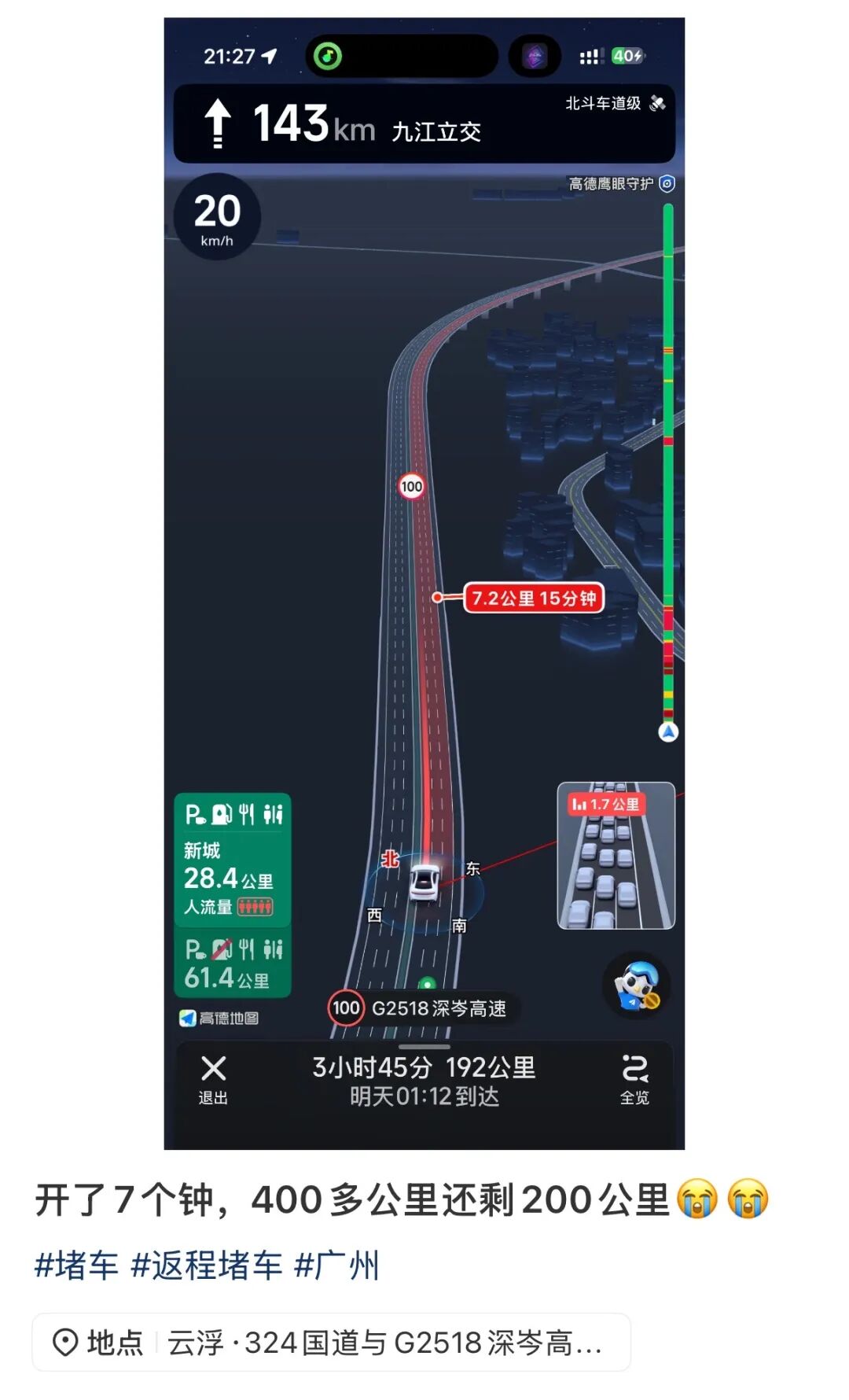
On the way home
What to do when you’re hungry during long-distance driving?
Ms. Huang from Zhejiang used a steaming hot rice cooker to cook rice on the road
And gave the answer
This isn’t a spur-of-the-moment idea
They’ve been bringing cooked meals on the road for the third year in a row
Pre-cooked pumpkin, chestnut, sausage rice
Golden, soft, fragrant with cured meat aroma
Keeps warm for four or five hours, still hot
The rice cooker has a keep-warm function
You can enjoy hot food throughout the trip
Making the journey a little warmer
Besides bringing food for the return trip
Weather and other factors also need consideration
Strong winds, temperature drops, rain, snow, and dust storms will affect many areas
Whether you’re driving yourself, taking the train, or flying
Here’s a travel guide for you
Road Travel
Harsh weather combined with peak travel times makes road conditions more complex. It’s recommended to pay attention to weather changes before departure and plan your trip accordingly. On the way back, remember these safety tips to ensure a safe and smooth return.
Before driving yourself, check these:
Ensure the vehicle’s engine oil, antifreeze, windshield washer fluid are sufficient, and check voltage and battery charge.
Gently press the brake to see if it responds effectively.
Check tires for bulges, excessive tread wear, etc. If any issues are found, replace tires promptly to ensure safety.
What to do in extreme weather?
In rain or snow, icy roads test driving skills. No matter how urgent, drive slowly and carefully.
In strong wind conditions, vehicle stability decreases due to wind force, and flying dust can obscure vision, affecting the driver’s judgment. Remember these points when driving in high winds:
Drive slowly to prevent vehicle drift: Shorter sight distance in high winds requires slow driving. Recognize wind direction correctly, maintain lateral stability, and avoid overtaking when possible.
Avoid large vehicles: Overloaded, over-height, over-wide vehicles, trailers, tankers, hazardous materials vehicles, etc.
Keep windows closed and switch to internal circulation mode: When driving in strong wind, keep windows shut. Use internal air circulation for the air conditioning.
How to handle accidents on the highway?
As traffic volume increases during the return trip, in case of a road traffic accident, remember “Pull over, evacuate, and call 911” to avoid secondary accidents and danger to yourself and others:
Pull over: Turn on hazard lights immediately, take photos, and move the vehicle to a safe place like the emergency lane if possible. If unable to move, keep hazard lights on and set warning signs 150 meters ahead.
Evacuate: All personnel should move outside the guardrail, do not stay on the driving lane.
Call for help: Dial 12122 (highway emergency rescue). If there are injuries, call 120 immediately.
Rail Travel
Tips for waiting and boarding:
Wait inside the safety line: When trains arrive, a “narrow tube effect” creates strong airflow on the platform. Standing too close to the train can be dangerous as you may be “sucked” toward the train. Be especially cautious with children near gaps between train and platform.
Do not open umbrellas on high-speed rail platforms: During rain or snow, opening umbrellas on the platform can increase the risk of being “sucked” toward the train due to airflow and pressure changes. Air currents may also carry umbrellas onto the tracks or contact wires, affecting train safety.
What items are prohibited on return trips?
After a Spring Festival holiday, your luggage might be heavier with “love” items. But be careful: when returning by train, some items are allowed with quantity limits and clear markings, while others are strictly prohibited from carrying or shipping.
In addition, fireworks, firecrackers, and other pyrotechnics, special kitchen knives, gasoline (including methanol, ethanol gasoline), and similar items are prohibited from carrying or shipping.
Air Travel
When flying, follow the “Three Earlys”:
Early security check: Plan your time to arrive at the airport, complete check-in and baggage procedures early.
Early boarding preparation: Have your boarding pass, ID, and other valid documents ready.
Early handling of prohibited items: Ensure cosmetics are within limits, and power banks have clear 3C certification marks.
Additionally, before flying, travelers should stay updated on weather alerts at departure and arrival airports.
Safe travels, and have a smooth journey
Source: China Fund Report
Risk Warning and Disclaimer
Market risks exist; invest cautiously. This article does not constitute personal investment advice and does not consider individual users’ specific investment goals, financial situations, or needs. Users should evaluate whether any opinions, viewpoints, or conclusions herein are suitable for their circumstances. Investment is at your own risk.