


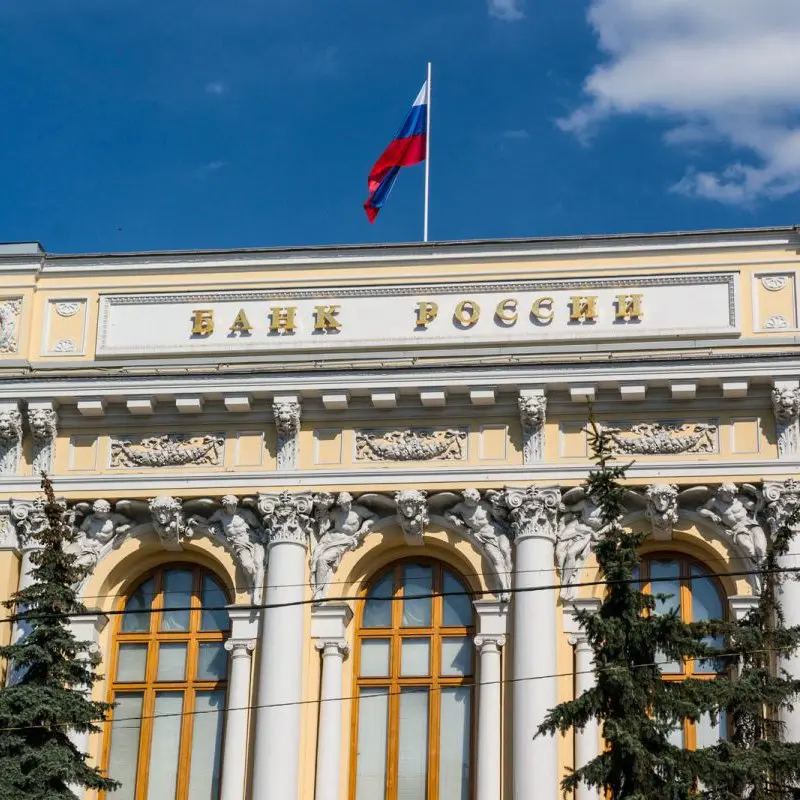

Russia's digital ruble project is a system designed with high security standards. The Central Bank (Bank of Russia) frequently emphasizes that it offers "the highest level of protection." In its simplest form, the security details are as follows:
Central Bank provides direct guarantee → The digital ruble is not held in a private bank account, but directly on the Central Bank's platform. Even if the bank fails or imposes restrictions, your money remains unaffected (it is protected like cash).
Secure blockchain-like structure → Transactions are tracked using digital units called "tokens." Each transaction is recorded transparently but subject to confidentiality rules. This makes fraud and double spending impossible.
Cryptographic protection → All transactions are signed with an electronic digital signature. Domestic (FSS-certified) cryptographic tools are used. Data transmission passes through encrypted channels, and message integrity is constantly checked. High standards of cybersecurity → The platform operates with domestic software and hardware. There are continuous monitoring systems; attacks are responded to quickly. Special modules (embedded in mobile applications) are used for information security. Bank participation requires mandatory standards → Participating banks must comply with strict rules set by the Central Bank: identity verification, device information collection, encryption, and intrusion detection, etc. Personal data and balances are protected at the bank secrecy level.
Additional advantage against fraud → Since the transaction is on a single platform, it is instantly clear who the money went to. Because there are no interbank jumps, fraud is easily traced, and measures such as account freezing can be implemented quickly.
Preparation for offline use → It is being designed to allow transactions even without internet in the future (security tests are ongoing).
In short: The digital ruble is described as "very difficult to hack" because it is more centralized and state-guaranteed than traditional bank cards or cryptocurrencies. But of course, no system is 100% invincible; user error (e.g., sending money to a fraudster oneself) still carries a risk. The Central Bank says it "cannot be simply stolen as in Ukraine" and states that they are using the strongest layers of protection. It will be tested in daily life with its widespread adoption in 2026!
#RussiaStudiesNationalStablecoin
Central Bank provides direct guarantee → The digital ruble is not held in a private bank account, but directly on the Central Bank's platform. Even if the bank fails or imposes restrictions, your money remains unaffected (it is protected like cash).
Secure blockchain-like structure → Transactions are tracked using digital units called "tokens." Each transaction is recorded transparently but subject to confidentiality rules. This makes fraud and double spending impossible.
Cryptographic protection → All transactions are signed with an electronic digital signature. Domestic (FSS-certified) cryptographic tools are used. Data transmission passes through encrypted channels, and message integrity is constantly checked. High standards of cybersecurity → The platform operates with domestic software and hardware. There are continuous monitoring systems; attacks are responded to quickly. Special modules (embedded in mobile applications) are used for information security. Bank participation requires mandatory standards → Participating banks must comply with strict rules set by the Central Bank: identity verification, device information collection, encryption, and intrusion detection, etc. Personal data and balances are protected at the bank secrecy level.
Additional advantage against fraud → Since the transaction is on a single platform, it is instantly clear who the money went to. Because there are no interbank jumps, fraud is easily traced, and measures such as account freezing can be implemented quickly.
Preparation for offline use → It is being designed to allow transactions even without internet in the future (security tests are ongoing).
In short: The digital ruble is described as "very difficult to hack" because it is more centralized and state-guaranteed than traditional bank cards or cryptocurrencies. But of course, no system is 100% invincible; user error (e.g., sending money to a fraudster oneself) still carries a risk. The Central Bank says it "cannot be simply stolen as in Ukraine" and states that they are using the strongest layers of protection. It will be tested in daily life with its widespread adoption in 2026!
#RussiaStudiesNationalStablecoin

 :
: