

Trade
Basic
Futures
Futures
Hundreds of contracts settled in USDT or BTC
TradFi
Gold
Trade global traditional assets with USDT in one place
Options
Hot
Trade European-style vanilla options
Unified Account
Maximize your capital efficiency
Demo Trading
Futures Kickoff
Get prepared for your futures trading
Futures Events
Participate in events to win generous rewards
Demo Trading
Use virtual funds to experience risk-free trading
Earn
Launch
CandyDrop
Collect candies to earn airdrops
Launchpool
Quick staking, earn potential new tokens
HODLer Airdrop
Hold GT and get massive airdrops for free
Launchpad
Be early to the next big token project
Alpha Points
Trade on-chain assets and enjoy airdrop rewards!
Futures Points
Earn futures points and claim airdrop rewards
Investment
Simple Earn
Earn interests with idle tokens
Auto-Invest
Auto-invest on a regular basis
Dual Investment
Buy low and sell high to take profits from price fluctuations
Soft Staking
Earn rewards with flexible staking
Crypto Loan
0 Fees
Pledge one crypto to borrow another
Lending Center
One-stop lending hub
VIP Wealth Hub
Customized wealth management empowers your assets growth
Private Wealth Management
Customized asset management to grow your digital assets
Quant Fund
Top asset management team helps you profit without hassle
Staking
Stake cryptos to earn in PoS products
Smart Leverage
New
No forced liquidation before maturity, worry-free leveraged gains
GUSD Minting
Use USDT/USDC to mint GUSD for treasury-level yields

More


Trending Topics
View More78.28K Popularity
5.63K Popularity
1.66K Popularity
2.53K Popularity
6.92K Popularity



Pin
Gate Square | 2/5 Today's Hot Topic: #BuyTheDipOrWaitNow?
🎁 [Community Perk] Post with the topic or #BTC, 10 lucky users * $100 position Voucher.
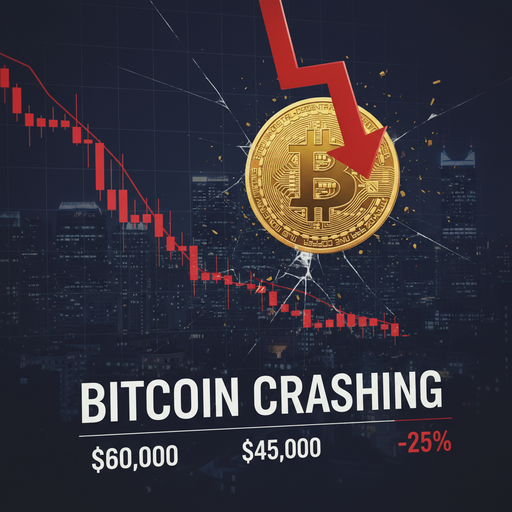
Market volatility continues as BTC breaks below the $74,000 key support level, with altcoins pulling back in sync. Are you buying the dip in batches or waiting for a better entry point?
💬 Today’s Discussion:
1️⃣ Bottom Signals: Where do you see BTC’s bottom — $70,000 or lower?
2️⃣ Market Drivers: Which recent macroeconomic news or rumors are influencing the market?
3️⃣ Dark Horses: Are there any resilient or outperforming tokens worth watching?
ShTap to Trade in Gate Square, Win up to 50 GT & Merch!
Click the trading widget in Gate Square content, complete a transaction, and take home 50 GT, Position Experience Vouchers, or exclusive Spring Festival merchandise.
Click the registration link to join
https://www.gate.com/questionnaire/7401
Enter Gate Square daily and click any trading pair or trading card within the content to complete a transaction. The top 10 users by trading volume will win GT, Gate merchandise boxes, position experience vouchers, and more.
The top prize: 50 GT.
 can function more efficiently. In my opinion, these developments are far more important than short-term speculative trends and will define Ethereum’s long-term trajectory.
From a strategic standpoint, my advice regarding Layer 2 exposure is to prioritize projects with proven utility, strong developer ecosystems, and measurable adoption rather than hype-driven narratives. Not all L2s will succeed—some may fail, consolidate, or lose relevance—but the ones that continue to deliver real value, attract users, and maintain developer engagement will become the backbone of Ethereum’s scaling strategy. Exposure should be measured, patient, and selective, with a focus on the long-term viability and real-world use cases of the L2 network rather than temporary incentives.
It is also important to consider how L2 adoption impacts Ethereum itself. While some fear that migration to L2s may reduce activity or fees on the base layer, the opposite is likely. As more users and applications migrate to Layer 2s, demand for Ethereum settlement and security actually increases. ETH becomes more valuable as the final settlement layer supporting multiple scalable networks. This reinforces Ethereum’s economic and security model and strengthens its position as the dominant programmable blockchain over time.
Macro and market conditions are also relevant. During periods of high volatility, selective accumulation of Layer 2 exposure can be more advantageous than chasing short-term price spikes. Layer 2s provide a way to participate in Ethereum’s scaling and adoption story without being overly exposed to base-layer congestion or transaction cost inefficiencies. This is particularly relevant for investors who are looking for projects with strong fundamentals and measurable activity rather than narrative-driven speculation.
Furthermore, I view Layer 2s as a testing ground for Ethereum’s future capabilities. L2s introduce new protocols, innovative tokenomics, and novel user experiences that are not always possible on the base layer. The lessons learned from L2 adoption both successes and failures will feed back into Ethereum’s long-term development, influencing future upgrades, ecosystem strategy, and scalability decisions. In that sense, L2s are not just a short-term solution; they are an incubator for innovation that strengthens Ethereum as a whole.
In conclusion, my outlook on Ethereum Layer 2s is cautiously optimistic but grounded in fundamentals. Short-term price fluctuations should not distract from the structural progress that is happening quietly but meaningfully. L2 adoption is increasing transaction efficiency, lowering costs, attracting developers, and preparing Ethereum for mass adoption. For investors, developers, and users willing to take a long-term perspective, Layer 2s represent a critical opportunity to engage with the ecosystem in a measured and strategic way. Patience, selective exposure, and focus on utility over hype are the keys to positioning successfully in this evolving landscape. Layer 2s are shaping Ethereum’s next chapter, and ignoring this transformation risks missing the core story behind the network’s future growth.