Vortex_King

vip
Airdrop Hunter
Crypto Market Researcher
Peak Tier 5
"Stay happy, let others stay happy too."
The Crude Oil Futures Trading Challenge is now live on Gate. Check in daily and share 200,000 USDT in total rewards. https://www.gate.com/campaigns/4442?ref=XlNDU1sM&ref_type=132
post-image
  • Reward
  • 5
  • Repost
  • Share
KatyPatyvip:
To The Moon 🌕
View More
The Global Core Tech Assets Futures Challenge is now live on Gate. Check in daily and share 200,000 USDT in total rewards. Simple trading, exciting airdrops – don't miss out. https://www.gate.com/campaigns/4457?ref=XlNDU1sM&ref_type=132
post-image
  • Reward
  • 2
  • Repost
  • Share
EagleEyevip:
good work thanks for sharing
View More
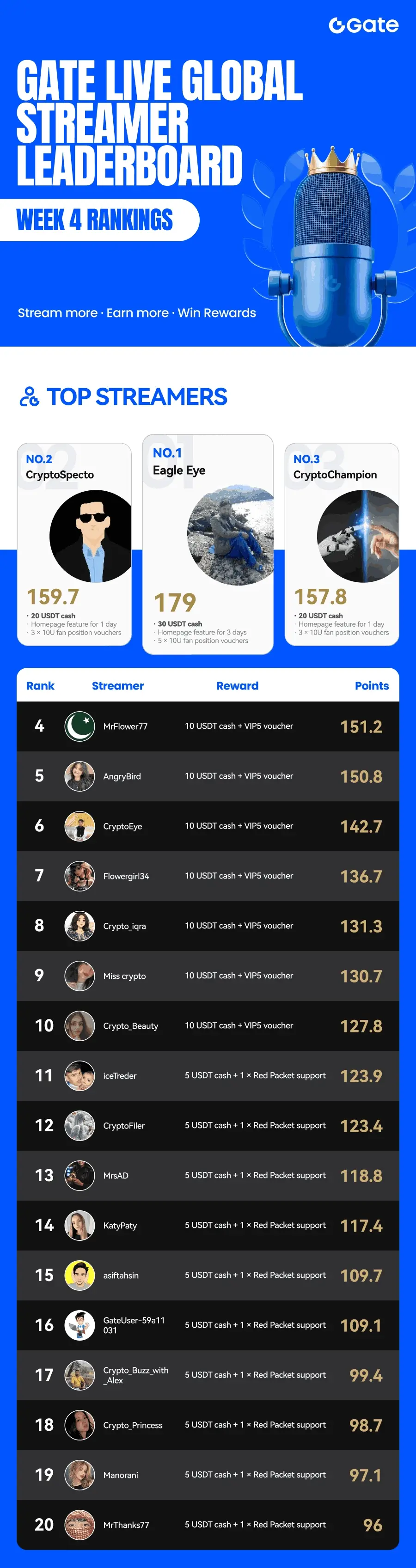
💥 Gate Live Global Streamer Campaign — April Restart
🚀 https://www.gate.com/live?type=apply
📊 March Week 4 results are out
Rewards will be distributed within 3 business days
🔥 April is LIVE — Week 1 (Apr 6–12) now open
Leaderboard reset — early entry advantage
Join now for a better shot at Top
📊 Go live ≥3 sessions/week to qualify
Win $30 cash + USDT + featured exposure
Share $5,000 position voucher pool
👉 Start early · Rank higher · Win more
🔗 Event Details: https://www.gate.com/announcements/article/50128
GateLivevip
💥 Gate Live Global Streamer Campaign — April Restart
🚀 https://www.gate.com/live?type=apply
📊 March Week 4 results are out
Rewards will be distributed within 3 business days
🔥 April is LIVE — Week 1 (Apr 6–12) now open
Leaderboard reset — early entry advantage
Join now for a better shot at Top
📊 Go live ≥3 sessions/week to qualify
Win $30 cash + USDT + featured exposure
Share $5,000 position voucher pool
👉 Start early · Rank higher · Win more
🔗 Event Details: https://www.gate.com/announcements/article/50128
repost-content-media
  • Reward
  • 8
  • Repost
  • Share
discoveryvip:
LFG 🔥
View More
  • Reward
  • 7
  • Repost
  • Share
discoveryvip:
To The Moon 🌕
View More
Smart Leverage Challenge: Subscribe for $100, Get $100, Unlock Up to $1,200 https://www.gate.com/campaigns/4397?ch=1716&ref=XlNDU1sM&ref_type=132
post-image
  • Reward
  • 8
  • Repost
  • Share
discoveryvip:
To The Moon 🌕
View More
  • Reward
  • 6
  • Repost
  • Share
discoveryvip:
To The Moon 🌕
View More
#GateSquareAprilPostingChallenge April 2026 has seen the GateSquare community light up like never before! The April Posting Challenge is proving to be more than just a contest—it’s become a hub for creativity, strategy, and community-driven growth. Across the platform, creators are pushing the limits of engagement, showcasing their ability to blend high-quality content with interactive experiences that keep audiences coming back for more.
This month, the challenge highlights a mix of emerging talent and veteran creators who are redefining the standards of content creation. Whether it’s through
ShainingMoonvip
#GateSquareAprilPostingChallenge April 2026 has seen the GateSquare community light up like never before! The April Posting Challenge is proving to be more than just a contest—it’s become a hub for creativity, strategy, and community-driven growth. Across the platform, creators are pushing the limits of engagement, showcasing their ability to blend high-quality content with interactive experiences that keep audiences coming back for more.
This month, the challenge highlights a mix of emerging talent and veteran creators who are redefining the standards of content creation. Whether it’s through insightful analyses of crypto trends, visually stunning posts, or polls that spark conversation, participants are showing how consistent effort and innovative ideas translate into measurable influence on the leaderboard.
A key takeaway from the challenge is that engagement now matters more than ever. Creators who actively respond to comments, participate in discussions, and encourage user interaction are seeing their content outperform simple broadcast-style posts. The leaderboard shows that a combination of frequency, quality, and interactivity is the formula for success this month.
For newcomers, the April challenge is a golden opportunity to learn from top performers. By observing which posts gain traction—whether it’s breaking news coverage, market insights, or community polls—new creators can adapt strategies that resonate with the GateSquare audience. The emphasis is not just on posting often but posting smart, leveraging data insights and audience feedback to refine content approaches.
From a broader perspective, the challenge underscores a shift in the digital creator economy. GateSquare is moving toward a merit-based ecosystem where consistency, originality, and engagement are rewarded. The platform’s analytics tools provide real-time feedback, enabling creators to understand which topics resonate most and which formats drive interaction. In this way, the April Posting Challenge acts as both a competition and a learning platform, preparing creators for long-term success beyond the contest.
As April progresses, the energy on GateSquare shows no signs of slowing. Top performers are setting new benchmarks in community engagement, while newcomers are finding their voice and building momentum. It’s a reminder that in the fast-paced world of digital creation, those who combine creativity, consistency, and strategy are the ones who thrive.
For everyone participating, the challenge is not just about climbing the leaderboard—it’s about showcasing your unique perspective, connecting with your community, and learning from every post. April 2026 is shaping up to be a landmark month for GateSquare, and the April Posting Challenge is at the heart of it.
Keep posting, keep innovating, and watch your influence grow. The leaderboard isn’t just a scoreboard—it’s a reflection of your creativity, persistence, and impact.
SHAININGMOON ✨
repost-content-media
  • Reward
  • 9
  • 1
  • Share
discoveryvip:
To The Moon 🌕
View More
#Web3SecurityGuide The rise of Web3 has unlocked unprecedented possibilities in decentralized finance, NFT ecosystems, and blockchain-based applications. However, with innovation comes new risks, and security has become a critical concern for developers, investors, and everyday users. Understanding and implementing best practices in Web3 security is no longer optional—it’s essential for safeguarding assets, data, and trust.
1. Smart Contract Security:
At the heart of Web3 are smart contracts, self-executing programs that manage digital assets. Vulnerabilities in these contracts can lead to cat
ShainingMoonvip
#Web3SecurityGuide The rise of Web3 has unlocked unprecedented possibilities in decentralized finance, NFT ecosystems, and blockchain-based applications. However, with innovation comes new risks, and security has become a critical concern for developers, investors, and everyday users. Understanding and implementing best practices in Web3 security is no longer optional—it’s essential for safeguarding assets, data, and trust.
1. Smart Contract Security:
At the heart of Web3 are smart contracts, self-executing programs that manage digital assets. Vulnerabilities in these contracts can lead to catastrophic losses, as seen in past DeFi exploits. Developers must prioritize rigorous testing, formal verification, and regular audits by reputable security firms. Using standardized libraries and frameworks like OpenZeppelin can reduce human error and minimize attack surfaces.
2. Private Key Management:
Private keys are the gateways to digital wallets and decentralized accounts. If a key is compromised, assets can be irreversibly stolen. Users should adopt hardware wallets, encrypted key storage, and multi-signature solutions. Never store keys in plain text or online without proper security measures. Educating users about phishing attempts, fake wallet apps, and malicious links is equally critical.
3. Decentralized Application (dApp) Security:
dApps must ensure that front-end and back-end communications are secure. This includes using HTTPS protocols, verifying smart contract interactions, and preventing unauthorized code injection. Regular penetration testing can identify potential entry points for hackers. Additionally, developers should provide transparency in code and contract logic so users can independently verify operations.
4. Network-Level Security:
Web3 operates on peer-to-peer networks, making nodes and infrastructure targets for attacks. Employing encryption, distributed denial-of-service (DDoS) protections, and secure node configurations helps prevent network compromise. Decentralized or redundant infrastructure can also mitigate the impact of individual node failures or targeted attacks.
5. Community Awareness and Governance:
The strength of Web3 comes from community trust. Security is not only a technical challenge but also a social one. Communities should foster a culture of reporting vulnerabilities, voting on protocol updates cautiously, and encouraging responsible disclosure. Governance frameworks need to include security protocols to prevent malicious actors from exploiting voting mechanisms or protocol loopholes.
Conclusion:
Web3 promises a decentralized, transparent, and user-controlled digital future, but the path forward demands vigilance. Smart contract audits, secure key management, robust dApp security, network protections, and active community governance are all pillars of a resilient Web3 ecosystem. By prioritizing these practices, developers and users can navigate the decentralized frontier safely, reducing risks while maximizing the transformative potential of blockchain technology.
SHAININGMOON
repost-content-media
  • Reward
  • 9
  • Repost
  • Share
discoveryvip:
To The Moon 🌕
View More
#GateSquareAprilPostingChallenge April 2026 has marked an extraordinary chapter for the GateSquare community, and the April Posting Challenge has proven to be more than just a routine competition—it has become a dynamic hub for creativity, collaboration, and community-driven engagement. This month, the challenge has drawn in creators from all corners of the platform, each bringing their unique voice, innovative strategies, and high-quality content that is setting new standards for what it means to engage an online audience.
At the heart of the challenge is the spirit of participation and innov
ShainingMoonvip
#GateSquareAprilPostingChallenge April 2026 has marked an extraordinary chapter for the GateSquare community, and the April Posting Challenge has proven to be more than just a routine competition—it has become a dynamic hub for creativity, collaboration, and community-driven engagement. This month, the challenge has drawn in creators from all corners of the platform, each bringing their unique voice, innovative strategies, and high-quality content that is setting new standards for what it means to engage an online audience.
At the heart of the challenge is the spirit of participation and innovation. Unlike conventional posting contests, GateSquare has emphasized not only quantity but quality, encouraging creators to craft content that resonates, informs, and inspires. Participants are exploring diverse formats—ranging from analytical deep dives on crypto trends to visually compelling infographics, interactive polls, and short-form storytelling—all designed to capture attention while adding real value to the community. This blend of content types has helped foster an environment where creativity meets strategy, and engagement goes beyond simple likes and shares.
One of the most exciting aspects of the April challenge is the rise of collaborative projects. Many creators are teaming up, pooling ideas, and cross-promoting content to reach wider audiences. These collaborations have resulted in a richer, more interconnected ecosystem where insights are shared freely, and every post contributes to the collective knowledge of the GateSquare community. This collaborative energy has also encouraged newcomers to participate, knowing that their contributions can gain visibility alongside more experienced creators, leveling the playing field and driving a sense of inclusivity.
Data from the challenge already highlights interesting trends: posts that incorporate interactive elements, such as quizzes, prediction polls, or discussion threads, are seeing higher engagement rates. Creators who leverage a narrative-driven approach, combining informative content with storytelling, are gaining traction quickly. This demonstrates that in 2026, the online community is rewarding thoughtful, high-quality engagement over purely transactional content.
The challenge has also sparked a wave of experimentation in terms of topics and presentation styles. From deep technical analyses of blockchain protocols to lifestyle-focused crypto guides, and from market trend forecasts to opinion pieces, the diversity is impressive. Each post not only showcases the creator’s expertise but also reinforces the idea that GateSquare is a place where ideas flourish, discussions thrive, and the community grows stronger with each contribution.
As the month progresses, it’s clear that the April Posting Challenge is redefining the standards of online engagement on GateSquare. Creators are not only competing—they are building a living, breathing ecosystem of knowledge, innovation, and community connection. For anyone observing the platform this month, it is evident that the synergy between creativity, strategy, and collaboration is producing results that extend far beyond the leaderboard. The April 2026 challenge has truly become a milestone for GateSquare, demonstrating the power of a motivated community and the limitless possibilities of digital content when approached with passion, skill, and vision.
This April, GateSquare is not just hosting a challenge; it is shaping the future of community-driven content creation, and the posts emerging from this contest will influence strategies, trends, and collaborations well into the rest of 2026. SHAININGMOON marks another remarkable month in GateSquare’s journey of growth, creativity, and innovation.
  • Reward
  • 9
  • Repost
  • Share
discoveryvip:
To The Moon 🌕
View More
🌿 #GateSquareAprilPostingChallenge | My Holiday Holding Guide
With the Qingming holiday here, everyone is choosing between relaxing outdoors or watching the market. Here’s my balanced, research-based approach to staying calm while keeping my positions safe and productive.
1️⃣ Holiday Mindset: Stay Relaxed, Not Reactive
Instead of watching charts nonstop, I follow a simple routine:
Check markets every 2–3 hours
Use alerts for key price levels
Avoid emotional decision-making
This helps me enjoy the holiday without missing important moves.
2️⃣ Smart “Set-and-Forget” Strategy
For holidays, automa
BTC-1.06%
ETH-2.29%
DragonFlyOfficialvip
🌿 #GateSquareAprilPostingChallenge | My Holiday Holding Guide
With the Qingming holiday here, everyone is choosing between relaxing outdoors or watching the market. Here’s my balanced, research-based approach to staying calm while keeping my positions safe and productive.
1️⃣ Holiday Mindset: Stay Relaxed, Not Reactive
Instead of watching charts nonstop, I follow a simple routine:
Check markets every 2–3 hours
Use alerts for key price levels
Avoid emotional decision-making
This helps me enjoy the holiday without missing important moves.
2️⃣ Smart “Set-and-Forget” Strategy
For holidays, automated tools are my best friend:
✔ DCA – Perfect for long-term building
✔ Grid Trading – Makes profit from sideways moves
✔ Passive Yield Products – Earn while staying offline
These options keep the portfolio active even when I’m not.
3️⃣ April Outlook: Sectors With Momentum
Based on recent trends and ecosystem updates, I’m watching:
Layer-2 projects showing strong development
AI-related tokens gaining user traction
Major assets (BTC/ETH) for stability and recovery potential
Spring often brings fresh momentum — let’s see which assets bloom next.
💬 Your Turn
How are you managing your portfolio this holiday?
Fully offline or checking charts between meals?
Share your vibe below 👇
🌐 https://www.gate.com/post
repost-content-media
  • Reward
  • 8
  • Repost
  • Share
discoveryvip:
LFG 🔥
View More
#BitcoinMiningIndustryUpdates
📉 Network & Mining Economics
The Bitcoin network hashrate fell ~4% in Q1 2026, marking the first quarterly drop since 2020, largely due to higher energy costs, geopolitical tensions (including Iran/U.S. conflict), and shrinking mining margins.
Hashrate reductions have forced difficulty changes and squeezed profitability — many smaller or high-cost operations are struggling to stay online.
Broader industry research confirms rising production costs, lower hash prices, and a structural shift toward fees and efficiency following the 2024 halving.
🏭 Operations &
BTC-1.06%
CORE-1.73%
DragonFlyOfficialvip
#BitcoinMiningIndustryUpdates
📉 Network & Mining Economics
The Bitcoin network hashrate fell ~4% in Q1 2026, marking the first quarterly drop since 2020, largely due to higher energy costs, geopolitical tensions (including Iran/U.S. conflict), and shrinking mining margins.
Hashrate reductions have forced difficulty changes and squeezed profitability — many smaller or high-cost operations are struggling to stay online.
Broader industry research confirms rising production costs, lower hash prices, and a structural shift toward fees and efficiency following the 2024 halving.
🏭 Operations & Strategic Shifts
Major publicly traded miners like Riot Platforms sold a significant portion of their Bitcoin holdings (3,778 BTC for ~$289.5M) in Q1 2026 as part of broader market repositioning and capital management strategies.
Many mining firms are pivoting toward AI/data-center infrastructure or selling BTC to fund diversification, reflecting tighter margins and shifting demand for compute capacity.
Solo mining still rewards occasional large payouts — one independent miner recently captured a ~$210K block reward, highlighting that small operators can still succeed under certain conditions in today’s environment.
📈 Market Sentiment & Secondary Signals
Some positive signs are emerging in mining-related equities and ETFs, with certain funds showing strong performance early in 2026 — suggesting investor belief in longer-term infrastructure value.
📌 Key Industry Themes in 2026
⚡ Profitability Under Pressure
Mining revenues are depressed as hashprices sit near multi-year lows and energy input costs climb. Many small or inefficient miners are financially challenged or shutting down rigs.
Difficulty adjustments continue to reflect an unstable mining cycle, fluctuating with slower block production and hashrate dynamics.
🤖 Strategic Diversification: Crypto → AI
A notable pivot toward AI/HPC infrastructure is underway within previously pure-play mining firms, leveraging data center power contracts and capacity to capture newer revenue streams. This trend is accelerating and reshaping traditional mining business models.
🧠 Broader Market & Structural Forces
The cumulative impact of the 2024 halving, BTC price movements, and macroeconomic headwinds have forced miners to invest in efficiency, economies of scale, and alternate revenue such as colocation deals or hash extraction services.
🚀 If You’re Tracking This Space
What to Watch Next:
Bitcoin price action (strong rallies tend to improve mining economics)
Difficulty & hashrate trends (miners’ profitability barometer)
Corporate earnings from major miners (Riot, Marathon, CleanSpark, Core etc.)
Infrastructure shifts (AI contracts, power costs, grid access)
repost-content-media
  • Reward
  • 11
  • Repost
  • Share
ybaservip:
To The Moon 🌕
View More
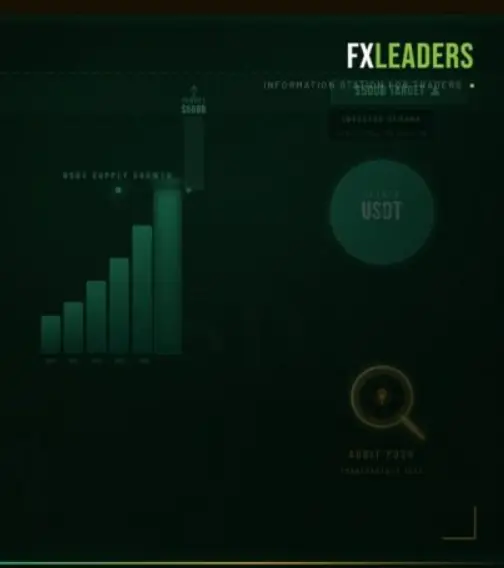
#TetherEyes$500BFundraising
📊 What’s Happening Now
Tether Limited, the issuer of the world’s biggest stablecoin USDT, is actively pursuing a fundraising round aimed at achieving a $500 billion valuation. If successful, this would put Tether in the same league as the largest financial firms globally.
The company has reportedly set a ~14-day window for investor commitments — indicating urgency but also the high-stakes nature of the round.
Tether warned the fundraising could be delayed or scaled back if investor demand doesn’t match its valuation ambitions, highlighting some skepticism among
DragonFlyOfficialvip
#TetherEyes$500BFundraising
📊 What’s Happening Now
Tether Limited, the issuer of the world’s biggest stablecoin USDT, is actively pursuing a fundraising round aimed at achieving a $500 billion valuation. If successful, this would put Tether in the same league as the largest financial firms globally.
The company has reportedly set a ~14-day window for investor commitments — indicating urgency but also the high-stakes nature of the round.
Tether warned the fundraising could be delayed or scaled back if investor demand doesn’t match its valuation ambitions, highlighting some skepticism among institutional investors.
💼 Current Context & Metrics
USDT itself is the dominant stablecoin with a market cap of roughly $184 billion — the core driver behind Tether’s valuation case.
Historically, Tether explored raising $15–20 billion at a potential $500 billion valuation through private placements that could involve selling a ~3 % stake — showing scope and scale of investor talks.
The fundraising initiative coincides with Tether’s push for its first full audit and broader expansion into AI, commodity trading, energy and other financial services, which it is using to justify the $500 billion target.
📈 Why It Matters
Achieving a $500 billion valuation would be a major milestone for a stablecoin-focused company, potentially surpassing the market caps of many traditional banks and placing Tether among global financial heavyweights.
Strong fundraising and valuation depend on institutional confidence in stablecoins and crypto markets — but investor caution around such a high valuation signals both risk and transformative growth potential.
⚠️ Risks & Market Signals
There’s investor reticence around committing at this scale — meaning the final deal could come in below the headline $500 billion target or proceed in phased rounds.
Stablecoin regulation (e.g., the U.S. GENIUS Act and other frameworks) and macroeconomic shifts also play into investor sentiment.
Summary Snapshot
Target Valuation: ~$500 B
Fundraising Goal: Raising capital (possibly $15–$20 B, private placement)
Timeframe: ~14-day investor window
Driver: Dominance of USDT, expanding product suite, audit push
Risk: Investor skepticism, regulatory scrutiny
repost-content-media
  • Reward
  • 9
  • Repost
  • Share
ybaservip:
2026 GOGOGO 👊
View More
The possibility of a large-scale military operation between the United States and Iran is considered a scenario that could profoundly affect not only regional security balances but also the fundamental dynamics of the global economic system. The effects of such a development would have multifaceted and cascading consequences, ranging from energy supply and financial markets to trade routes and investor behavior.
Firstly, from a global economic perspective, Iran's geopolitical position is of critical importance. Energy trade passing through the Persian Gulf and especially the Strait of Hormuz c
BTC-1.06%
User_anyvip
The possibility of a large-scale military operation between the United States and Iran is considered a scenario that could profoundly affect not only regional security balances but also the fundamental dynamics of the global economic system. The effects of such a development would have multifaceted and cascading consequences, ranging from energy supply and financial markets to trade routes and investor behavior.
Firstly, from a global economic perspective, Iran's geopolitical position is of critical importance. Energy trade passing through the Persian Gulf and especially the Strait of Hormuz constitutes a significant portion of the world's oil supply. A disruption of this route in the event of a military conflict could lead to sudden and sharp increases in oil and natural gas prices. This increase in energy costs would trigger cost inflation in many sectors, primarily industrial production, and would increase inflationary pressures on a global scale.
From a financial markets perspective, such a crisis would create high uncertainty, likely leading to a significant decrease in investor risk appetite. This would generally increase the demand for assets considered safe havens. While traditional safe assets such as gold and US Treasury bonds are expected to appreciate in value, capital outflows from emerging market economies could accelerate. Sharp sell-offs and increased volatility in global stock markets are among the main impacts.
Trade balances and logistics routes are also directly affected by such a scenario. Increased military activity in the Middle East could raise maritime transport insurance costs and lead to disruptions in supply chains. This situation could increase current account deficit pressure, especially for economies dependent on energy imports, and cause a contraction in global trade volume.
From the perspective of crypto assets, the impact is more complex and multifaceted. Cryptocurrencies have reacted differently in recent years, both as risky assets and as alternative safe havens. Therefore, the response of crypto markets to such a geopolitical shock will not be one-sided.
In the short term, increased uncertainty and risk aversion could lead investors to seek liquidity, creating selling pressure on crypto assets. Sharper declines may be observed, particularly in altcoin markets with high volatility. However, if systemic risk deepens and trust in the traditional financial system is damaged, assets like Bitcoin, due to their decentralized nature, could emerge as alternative store of value.
However, the impact of rising energy prices on cryptocurrency mining must also be considered. Rising electricity costs, especially in proof-of-work systems, can increase production costs and suppress mining activities. This situation may affect supply dynamics in the long term, indirectly playing a role in price formation.
From a macroeconomic perspective, the responses of central banks will also be critical. If inflationary pressures increase, maintaining tight monetary policies could tighten liquidity, creating pressure on both traditional and cryptocurrency markets. Conversely, if the risk of economic contraction becomes prominent, a return to expansionary policies could become a supportive factor for risky assets, including cryptocurrencies.
In conclusion, a large-scale military operation between the US and Iran could create a shock effect on the global economy characterized by a combination of high inflation, low growth, and increased uncertainty. Cryptocurrency markets, in this process, may exhibit a hybrid response, fluctuating between risky asset behavior and an alternative financial system role. Therefore, it is critical for investors to evaluate geopolitical developments not only in terms of short-term price movements but also in the context of long-term structural transformations.
#OilPricesRise
#CryptoMarketSeesVolatility
#AreYouBullishOrBearishToday?
#CreatorLeaderboard
#GateSquareAprilPostingChallenge
  • Reward
  • 8
  • Repost
  • Share
Yusfirahvip:
To The Moon 🌕
View More
#Gate广场四月发帖挑战 The Persian Gulf conflict continues, and a global financial storm is imminent—keep enough cash on hand and wait for the bottoming opportunity.
【Market Overview】
The Israel-Iran conflict remains tense, with Brent crude oil rising above $111. Meanwhile, the US dollar index has broken through 100 points, and various financial assets are experiencing increased volatility. Rumors suggest that former President Trump has been hospitalized or even "gone," and the international financial markets are anxious as they wait.
【Gold and Silver Performance Remains Stable】 Currently, gold and sil
BTC-1.06%
ShizukaKazuvip
#Gate广场四月发帖挑战 The Persian Gulf conflict continues, and a global financial storm is imminent—keep enough cash on hand and wait for the bottoming opportunity.
【Market Overview】
The Israel-Iran conflict remains tense, with Brent crude oil rising above $111. Meanwhile, the US dollar index has broken through 100 points, and various financial assets are experiencing increased volatility. Rumors suggest that former President Trump has been hospitalized or even "gone," and the international financial markets are anxious as they wait.
【Gold and Silver Performance Remains Stable】 Currently, gold and silver still stay above key support levels, with no major issues. From the monthly chart, gold and silver have experienced a significant correction after several months of sharp gains. Although this is driven by the US Treasury Department and the aggressive suppression by the five major Jewish Wall Street firms, the technical patterns have not deteriorated. If there is another sharp decline, it could be a good opportunity to buy the dip.
【The Biggest Risk Point: Yen Collapse】 It must be emphasized again: Will the Persian Gulf war trigger a yen and Japanese bond market collapse, leading to a domino effect on the dollar, US bonds, and US stocks, and potentially ignite a century-long global financial storm that has been brewing for over a decade or two? This is a black swan event we must guard against.
【Main Trading Strategy: Keep Enough Cash】 Therefore, the current main strategy is very clear: reduce positions on rallies, keep 30%–50% cash, and wait for the bottoming opportunity brought by this century-long financial storm. Don’t focus too much on short-term gains or losses; risk prevention is the top priority.
【Gold and Silver Rhythm】 Gold and silver are attractive, but the capital invested in them has been highly profitable over the past two years, and liquidity is the best. During the initial phase of a financial crisis, they will face a fierce sell-off (capital cash-out for survival), potentially dropping 30%–40%, followed by a V-shaped reversal, and then reaching new highs amid global chaos.
Conclusion: Be cautious in the short term, keep enough cash; be optimistic in the long term, with no upper limit.
【Other Assets】 International crude oil is likely to continue rising and can be accumulated on dips. The RMB remains steadily appreciating, and the yen collapse is only a matter of time. Bitcoin is also unlikely to escape this impact. The US Coffee Index is currently at 295, rebounding after four consecutive months of decline, but the medium- to long-term trend remains unclear.
【Ultimate Risk: Global Hyperinflation】 Some financial bigwigs warn that after the Persian Gulf war causes oil prices to surge, global inflation will spiral out of control. From the second half of this year to the end of the year, food prices may skyrocket, and next year the world could face hyperinflation. If it comes to this, physical gold and silver will be the best investments.
These views are personal analyses and do not constitute any investment advice.
  • Reward
  • 9
  • Repost
  • Share
discoveryvip:
To The Moon 🌕
View More
#MarchNonfarmPayrollsIncoming
#三月非农数据来袭
The United States Bureau of Labor Statistics released the March 2025 Non-Farm Payrolls report on April 4, and the headline number came in at 228,000 new jobs added for the month. This significantly outpaced the Dow Jones consensus estimate of 140,000, and also represented a dramatic recovery from February's downwardly revised figure of 117,000. The unemployment rate ticked slightly higher. Average hourly earnings rose0.3% on the month, in line with expectations, while the year-over-year pace of wage growth slowed to 3.8%, the lowest reading since July
Yusfirahvip
#MarchNonfarmPayrollsIncoming
#三月非农数据来袭
The United States Bureau of Labor Statistics released the March 2025 Non-Farm Payrolls report on April 4, and the headline number came in at 228,000 new jobs added for the month. This significantly outpaced the Dow Jones consensus estimate of 140,000, and also represented a dramatic recovery from February's downwardly revised figure of 117,000. The unemployment rate ticked slightly higher. Average hourly earnings rose0.3% on the month, in line with expectations, while the year-over-year pace of wage growth slowed to 3.8%, the lowest reading since July 2024. On the surface, these numbers paint a picture of a labor market that remains resilient. But the context surrounding this release makes it one of the most complicated and layered NFP reports in recent memory, and reading the signals correctly requires looking well beyond the headline figure.
Understanding what the Non-Farm Payrolls report actually measures is the starting point for understanding its market significance. The NFP data captures net job creation across the entire U.S. economy excluding farm workers, government employees at certain levels, private household employees, and non-profit organization workers. It is published on the first Friday of each month by the Bureau of Labor Statistics and is considered one of the single most important economic releases on the global calendar. The reason it carries so much weight is straightforward: employment is the foundation of consumer spending, and consumer spending accounts for roughly two-thirds of U.S. economic output. When jobs are being created at a healthy pace, households earn, spend, and invest. When job growth slows or reverses, the entire chain of economic activity begins to weaken.
The March 2025 data reveals a labor market that added jobs at a pace nearly double what economists expected, and roughly 60% above the recent monthly average. Health care and social assistance sectors were among the primary contributors, continuing a multi-year trend of outperformance in that segment. Government hiring also contributed positively at the margin. The breadth of job creation across sectors suggests that the underlying demand for labor did not fundamentally deteriorate in March, even as other economic indicators have shown mounting stress. The softening in year-over-year wage growth to 3.8% is meaningful because it tells the Federal Reserve that employment strength is not necessarily translating into accelerating wage-driven inflation. That combination of strong payrolls and cooling wage growth is theoretically the most favorable scenario for policy calibration, as it suggests the economy is generating work without overheating on the cost side.
However, the report does not exist in isolation, and the backdrop against which it was released introduces a level of complexity that makes the headline number far less straightforward to interpret. President Trump's sweeping tariff announcement earlier in the week, which markets quickly labeled Liberation Day, immediately overshadowed the labor data for many analysts and investors. The tariffs cover a wide range of imports from major U.S. trading partners including China, Vietnam, Japan, and the European Union. The scale of the announcement exceeded what most participants had modeled, and the immediate market reaction was severe across equities, currencies, and risk assets broadly. The NFP report reflects the labor market as it existed in March, before these tariffs were announced. What happens to employment in April, May, and June as businesses begin adjusting hiring plans, supply chains restructure, and consumer confidence responds to higher prices, is a question the March data simply cannot answer. This creates a forward-looking problem: a strong jobs report tells us where we have been, but not where we are going in an economy that just received a significant external shock.
From the Federal Reserve's perspective, this report presents a genuine dilemma. The central bank has been navigating between its dual mandate of maximum employment and price stability, and the data it now has to work with is pulling in different directions. Strong job creation argues against immediate rate cuts, as it suggests the economy does not urgently need monetary stimulus. Cooling wage growth argues that inflation pressures are not accelerating from the labor side, which removes one argument for keeping rates elevated. But the tariff shock introduces a new dimension entirely, because tariffs are inherently inflationary in the near term. They raise the cost of imported goods, which gets passed through to consumers in the form of higher prices. If the Fed sees inflation re-accelerate in the coming months because of tariff-driven cost increases, cutting rates to support growth would risk exacerbating price pressures. If the Fed holds rates steady or raises them in response to tariff-driven inflation, it risks tightening financial conditions into an economy that is simultaneously absorbing a trade war shock. This is the precise definition of a stagflationary risk scenario, and it is one of the most difficult environments any central bank can face. The March NFP data, taken alone, would suggest no urgency for rate cuts. Taken together with the tariff reality, the calculus becomes far less clear.
For the cryptocurrency market, the ripple effects of this macro environment are already visible and likely to persist. Bitcoin and the broader digital asset market declined significantly in the days immediately following the tariff announcements, with Bitcoin dropping roughly 12% and total crypto market capitalization shedding approximately9%, falling from around2.72 trillion dollars to approximately 2.47 trillion dollars. This behavior confirms what has become a consistent pattern since the beginning of 2025: crypto is trading as a risk asset, closely correlated with equity market sentiment and responsive to the same macro drivers that move technology stocks and growth-oriented investments. The days when Bitcoin was widely described as an uncorrelated or safe-haven asset are clearly not the current reality. When institutional and retail investors reduce risk exposure in response to macro uncertainty, crypto positions are among the assets that get sold.
The relationship between NFP data and crypto markets operates through several distinct channels. The most direct channel is the interest rate expectation pathway. When employment data is strong and suggests the Fed has room to keep rates elevated, risk-free returns on government bonds and money market instruments remain attractive. This reduces the relative appeal of speculative assets including crypto, as capital can earn meaningful returns without taking on volatility risk. When employment data weakens and rate cut expectations rise, the opposite dynamic takes hold. Cheaper money and lower opportunity costs tend to push capital toward higher-returning and higher-risk assets, and crypto has historically been a beneficiary of that environment. The March data, by beating expectations, temporarily reduced the probability that the Fed would rush to cut rates, which is net negative for crypto valuations in the short term, everything else being equal.
The second channel is liquidity and dollar strength. A strong NFP report typically supports the U.S. dollar, as it signals that the American economy is healthy and that the Fed need not weaken the dollar through lower rates. A stronger dollar generally creates headwinds for crypto assets that are priced in dollars, because it effectively makes those assets more expensive in local currency terms for international buyers and reduces the purchasing power flow into the market from outside the United States. The interplay between dollar dynamics and Bitcoin pricing is not perfectly consistent, but the general directional relationship has held during periods of significant dollar movement.
The third and perhaps most nuanced channel is market sentiment and risk appetite. Non-Farm Payrolls releases are scheduled events, and markets begin positioning before the data is released based on expectations and forward-looking analysis. When the actual number deviates significantly from consensus, whether to the upside or downside, the resulting surprise creates volatility. Volatility itself can be disruptive to crypto markets, which operate around the clock and are particularly sensitive to sudden shifts in positioning by leveraged participants. The March 2025 release delivered a substantial upside surprise relative to the140,000 estimate, and in a more stable macro environment, that might have triggered a relief rally in risk assets. In the current environment, however, the tariff overhang has suppressed the traditional positive response to labor market strength.
Looking at the current situation with a broader lens, what this NFP report most clearly signals is that the U.S. economy entered April with labor market momentum intact. That is a fundamentally positive underlying condition. But momentum is not the same as immunity, and the coming months will reveal how much of the tariff shock gets absorbed by corporate margins, how much gets passed to consumers, and how much eventually flows through to hiring decisions. If businesses begin slowing hiring in anticipation of weaker demand and higher input costs, future NFP reports will tell a different story. The Federal Reserve will be watching those subsequent releases very carefully, and so will crypto markets.
For participants in digital asset markets, the current environment argues for maintaining a clear-eyed view of the macro dependency that now defines crypto pricing dynamics. The era of treating Bitcoin as a macro-immune asset is over, at least for now. NFP data matters, Fed decisions matter, dollar strength matters, and global risk appetite matters. Those who track these indicators with the same discipline they apply to on-chain metrics and crypto-specific developments will be better positioned to navigate the periods of elevated uncertainty that the intersection of trade policy shock, central bank deliberation, and labor market evolution is likely to generate over the coming months.
repost-content-media
  • Reward
  • 9
  • Repost
  • Share
discoveryvip:
To The Moon 🌕
View More
#MarchNonfarmPayrollsIncoming
#三月非农数据来袭
The United States Bureau of Labor Statistics released the March 2025 Non-Farm Payrolls report on April 4, and the headline number came in at 228,000 new jobs added for the month. This significantly outpaced the Dow Jones consensus estimate of 140,000, and also represented a dramatic recovery from February's downwardly revised figure of 117,000. The unemployment rate ticked slightly higher. Average hourly earnings rose0.3% on the month, in line with expectations, while the year-over-year pace of wage growth slowed to 3.8%, the lowest reading since July
Yusfirahvip
#MarchNonfarmPayrollsIncoming
#三月非农数据来袭
The United States Bureau of Labor Statistics released the March 2025 Non-Farm Payrolls report on April 4, and the headline number came in at 228,000 new jobs added for the month. This significantly outpaced the Dow Jones consensus estimate of 140,000, and also represented a dramatic recovery from February's downwardly revised figure of 117,000. The unemployment rate ticked slightly higher. Average hourly earnings rose0.3% on the month, in line with expectations, while the year-over-year pace of wage growth slowed to 3.8%, the lowest reading since July 2024. On the surface, these numbers paint a picture of a labor market that remains resilient. But the context surrounding this release makes it one of the most complicated and layered NFP reports in recent memory, and reading the signals correctly requires looking well beyond the headline figure.
Understanding what the Non-Farm Payrolls report actually measures is the starting point for understanding its market significance. The NFP data captures net job creation across the entire U.S. economy excluding farm workers, government employees at certain levels, private household employees, and non-profit organization workers. It is published on the first Friday of each month by the Bureau of Labor Statistics and is considered one of the single most important economic releases on the global calendar. The reason it carries so much weight is straightforward: employment is the foundation of consumer spending, and consumer spending accounts for roughly two-thirds of U.S. economic output. When jobs are being created at a healthy pace, households earn, spend, and invest. When job growth slows or reverses, the entire chain of economic activity begins to weaken.
The March 2025 data reveals a labor market that added jobs at a pace nearly double what economists expected, and roughly 60% above the recent monthly average. Health care and social assistance sectors were among the primary contributors, continuing a multi-year trend of outperformance in that segment. Government hiring also contributed positively at the margin. The breadth of job creation across sectors suggests that the underlying demand for labor did not fundamentally deteriorate in March, even as other economic indicators have shown mounting stress. The softening in year-over-year wage growth to 3.8% is meaningful because it tells the Federal Reserve that employment strength is not necessarily translating into accelerating wage-driven inflation. That combination of strong payrolls and cooling wage growth is theoretically the most favorable scenario for policy calibration, as it suggests the economy is generating work without overheating on the cost side.
However, the report does not exist in isolation, and the backdrop against which it was released introduces a level of complexity that makes the headline number far less straightforward to interpret. President Trump's sweeping tariff announcement earlier in the week, which markets quickly labeled Liberation Day, immediately overshadowed the labor data for many analysts and investors. The tariffs cover a wide range of imports from major U.S. trading partners including China, Vietnam, Japan, and the European Union. The scale of the announcement exceeded what most participants had modeled, and the immediate market reaction was severe across equities, currencies, and risk assets broadly. The NFP report reflects the labor market as it existed in March, before these tariffs were announced. What happens to employment in April, May, and June as businesses begin adjusting hiring plans, supply chains restructure, and consumer confidence responds to higher prices, is a question the March data simply cannot answer. This creates a forward-looking problem: a strong jobs report tells us where we have been, but not where we are going in an economy that just received a significant external shock.
From the Federal Reserve's perspective, this report presents a genuine dilemma. The central bank has been navigating between its dual mandate of maximum employment and price stability, and the data it now has to work with is pulling in different directions. Strong job creation argues against immediate rate cuts, as it suggests the economy does not urgently need monetary stimulus. Cooling wage growth argues that inflation pressures are not accelerating from the labor side, which removes one argument for keeping rates elevated. But the tariff shock introduces a new dimension entirely, because tariffs are inherently inflationary in the near term. They raise the cost of imported goods, which gets passed through to consumers in the form of higher prices. If the Fed sees inflation re-accelerate in the coming months because of tariff-driven cost increases, cutting rates to support growth would risk exacerbating price pressures. If the Fed holds rates steady or raises them in response to tariff-driven inflation, it risks tightening financial conditions into an economy that is simultaneously absorbing a trade war shock. This is the precise definition of a stagflationary risk scenario, and it is one of the most difficult environments any central bank can face. The March NFP data, taken alone, would suggest no urgency for rate cuts. Taken together with the tariff reality, the calculus becomes far less clear.
For the cryptocurrency market, the ripple effects of this macro environment are already visible and likely to persist. Bitcoin and the broader digital asset market declined significantly in the days immediately following the tariff announcements, with Bitcoin dropping roughly 12% and total crypto market capitalization shedding approximately9%, falling from around2.72 trillion dollars to approximately 2.47 trillion dollars. This behavior confirms what has become a consistent pattern since the beginning of 2025: crypto is trading as a risk asset, closely correlated with equity market sentiment and responsive to the same macro drivers that move technology stocks and growth-oriented investments. The days when Bitcoin was widely described as an uncorrelated or safe-haven asset are clearly not the current reality. When institutional and retail investors reduce risk exposure in response to macro uncertainty, crypto positions are among the assets that get sold.
The relationship between NFP data and crypto markets operates through several distinct channels. The most direct channel is the interest rate expectation pathway. When employment data is strong and suggests the Fed has room to keep rates elevated, risk-free returns on government bonds and money market instruments remain attractive. This reduces the relative appeal of speculative assets including crypto, as capital can earn meaningful returns without taking on volatility risk. When employment data weakens and rate cut expectations rise, the opposite dynamic takes hold. Cheaper money and lower opportunity costs tend to push capital toward higher-returning and higher-risk assets, and crypto has historically been a beneficiary of that environment. The March data, by beating expectations, temporarily reduced the probability that the Fed would rush to cut rates, which is net negative for crypto valuations in the short term, everything else being equal.
The second channel is liquidity and dollar strength. A strong NFP report typically supports the U.S. dollar, as it signals that the American economy is healthy and that the Fed need not weaken the dollar through lower rates. A stronger dollar generally creates headwinds for crypto assets that are priced in dollars, because it effectively makes those assets more expensive in local currency terms for international buyers and reduces the purchasing power flow into the market from outside the United States. The interplay between dollar dynamics and Bitcoin pricing is not perfectly consistent, but the general directional relationship has held during periods of significant dollar movement.
The third and perhaps most nuanced channel is market sentiment and risk appetite. Non-Farm Payrolls releases are scheduled events, and markets begin positioning before the data is released based on expectations and forward-looking analysis. When the actual number deviates significantly from consensus, whether to the upside or downside, the resulting surprise creates volatility. Volatility itself can be disruptive to crypto markets, which operate around the clock and are particularly sensitive to sudden shifts in positioning by leveraged participants. The March 2025 release delivered a substantial upside surprise relative to the140,000 estimate, and in a more stable macro environment, that might have triggered a relief rally in risk assets. In the current environment, however, the tariff overhang has suppressed the traditional positive response to labor market strength.
Looking at the current situation with a broader lens, what this NFP report most clearly signals is that the U.S. economy entered April with labor market momentum intact. That is a fundamentally positive underlying condition. But momentum is not the same as immunity, and the coming months will reveal how much of the tariff shock gets absorbed by corporate margins, how much gets passed to consumers, and how much eventually flows through to hiring decisions. If businesses begin slowing hiring in anticipation of weaker demand and higher input costs, future NFP reports will tell a different story. The Federal Reserve will be watching those subsequent releases very carefully, and so will crypto markets.
For participants in digital asset markets, the current environment argues for maintaining a clear-eyed view of the macro dependency that now defines crypto pricing dynamics. The era of treating Bitcoin as a macro-immune asset is over, at least for now. NFP data matters, Fed decisions matter, dollar strength matters, and global risk appetite matters. Those who track these indicators with the same discipline they apply to on-chain metrics and crypto-specific developments will be better positioned to navigate the periods of elevated uncertainty that the intersection of trade policy shock, central bank deliberation, and labor market evolution is likely to generate over the coming months.
repost-content-media
  • Reward
  • 7
  • Repost
  • Share
discoveryvip:
To The Moon 🌕
View More
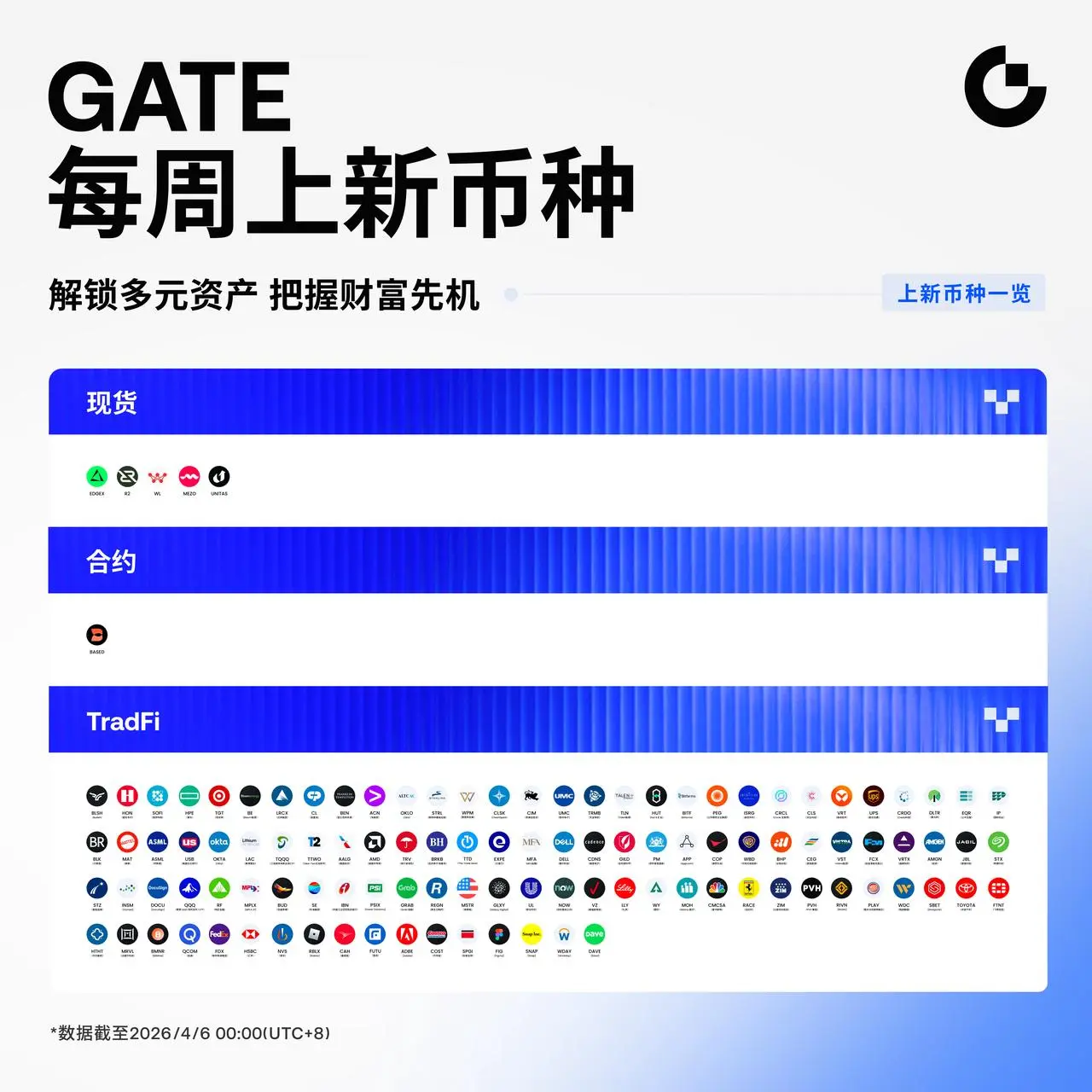
Gate Coin Listing Weekly Report: March 30, 2026 - April 5, 2026
Spot: $EDGEX, #R2, $WL, $MEZO, $UNITAS
🔹 Contracts: $BASED
🔹 TradFi: $BLSH (Bullish), $HON (Honeywell), $SOFI (Sofi Technologies), $HPE (Hewlett Packard Enterprise), $TGT (Target), $BE (Bloom Energy), $LRCX (Lam Research), $CL (Colgate) and more
Participate in $XAUT #CandyDrop activities, 53 ounces of gold rewards waiting to be claimed
Join now: https://www.gate.com/candy-drop/detail/XAUT-305
EDGEX20.16%
R2-6.5%
WL-1.4%
MEZO-13.23%
Gate广场_Officialvip
Gate Coin Listing Weekly Report: March 30, 2026 - April 5, 2026
Spot: $EDGEX, #R2, $WL, $MEZO, $UNITAS
🔹 Contracts: $BASED
🔹 TradFi: $BLSH (Bullish), $HON (Honeywell), $SOFI (Sofi Technologies), $HPE (Hewlett Packard Enterprise), $TGT (Target), $BE (Bloom Energy), $LRCX (Lam Research), $CL (Colgate) and more
Participate in $XAUT #CandyDrop activities, 53 ounces of gold rewards waiting to be claimed
Join now: https://www.gate.com/candy-drop/detail/XAUT-305
repost-content-media
  • Reward
  • 8
  • Repost
  • Share
discoveryvip:
To The Moon 🌕
View More
#GateSquareAprilPostingChallenge
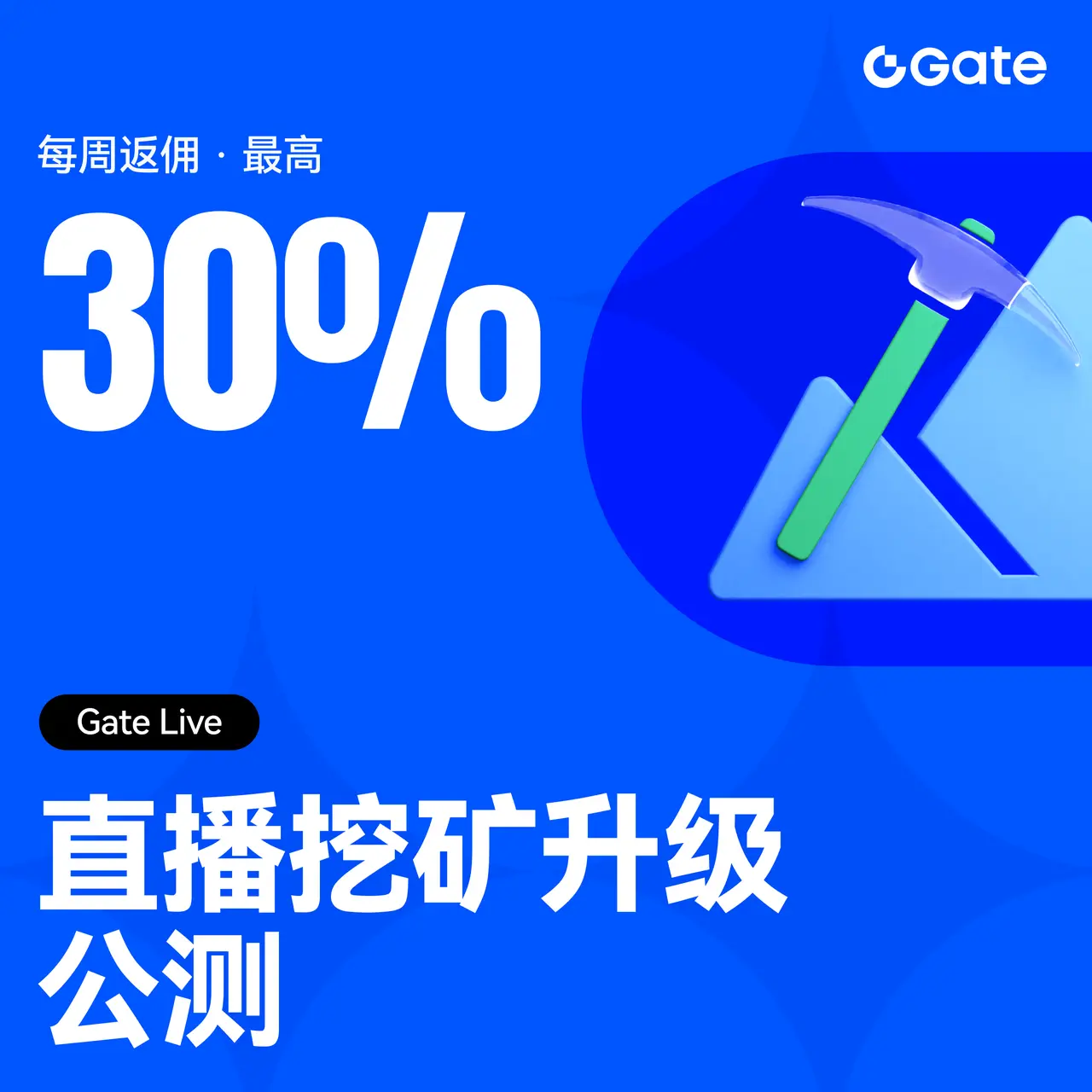
🔥 Gate Live Live Mining Boost — This is a window of opportunity
Trading = compounded gains
Rebates + Tips + Activity incentives, multiple income streams simultaneously
💰 Up to 30% trading rebate
🚀 New hosts limited-time +10% bonus
🏆 Weekly maximum of 2,000 USDT
📊 Content → Trading → Earnings, a seamless process
Just add components to monetize, start earning as soon as you go live
👉 Go live now: https://www.gate.com/live?type=apply
👉 Activity rules: https://www.gate.com/announcements/article/49565
HighAmbitionvip
#GateSquareAprilPostingChallenge
🔥 Gate Live Live Mining Boost — This is a window of opportunity
Trading = compounded gains
Rebates + Tips + Activity incentives, multiple income streams simultaneously
💰 Up to 30% trading rebate
🚀 New hosts limited-time +10% bonus
🏆 Weekly maximum of 2,000 USDT
📊 Content → Trading → Earnings, a seamless process
Just add components to monetize, start earning as soon as you go live
👉 Go live now: https://www.gate.com/live?type=apply
👉 Activity rules: https://www.gate.com/announcements/article/49565
repost-content-media
  • Reward
  • 8
  • Repost
  • Share
discoveryvip:
To The Moon 🌕
View More
#GateSquareAprilPostingChallenge
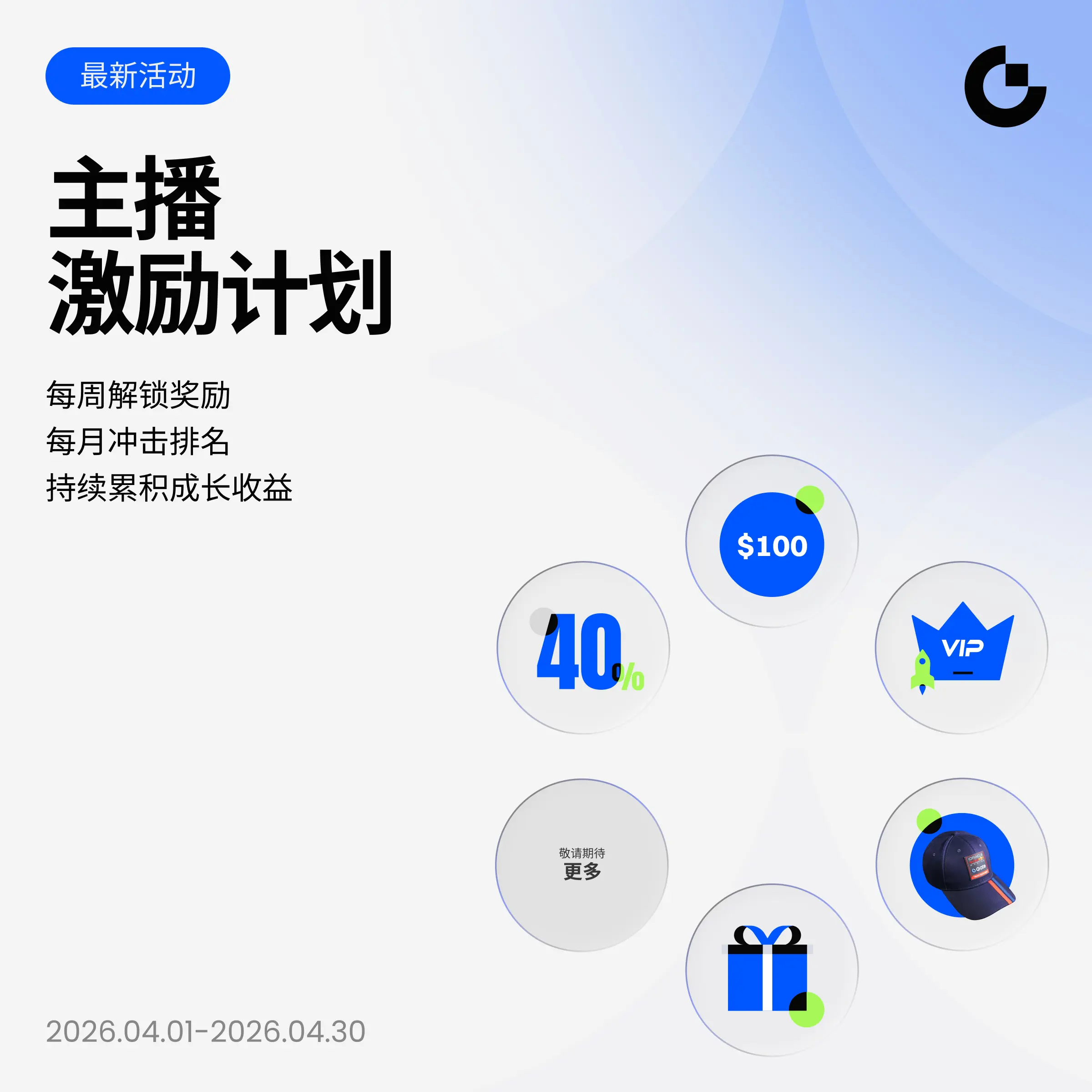
📣 April Streamer Incentive Program is ongoing. Rewards will automatically start accumulating after registration.
🎯 Live ≥3 sessions: Share a $1,000 prize pool
🎯 Live ≥5 sessions: Receive VIP5 experience voucher (Unlock subscription features)
🎯 Live ≥5 sessions + online ≥200: Share a $2,000 prize pool
🎯 Live ≥7 sessions + 2 weekend sessions + online ≥300: Share a $5,000 prize pool + limited merchandise + 10% monthly points bonus
🏆 Monthly TOP 3: $100 GT / $50 GT / $30 GT + traffic vouchers
⏱ Weekdays ≥30 minutes | Weekends ≥15 minutes
👉 Live data w
GT-0.61%
HighAmbitionvip
#GateSquareAprilPostingChallenge
📣 April Streamer Incentive Program is ongoing. Rewards will automatically start accumulating after registration.
🎯 Live ≥3 sessions: Share a $1,000 prize pool
🎯 Live ≥5 sessions: Receive VIP5 experience voucher (Unlock subscription features)
🎯 Live ≥5 sessions + online ≥200: Share a $2,000 prize pool
🎯 Live ≥7 sessions + 2 weekend sessions + online ≥300: Share a $5,000 prize pool + limited merchandise + 10% monthly points bonus
🏆 Monthly TOP 3: $100 GT / $50 GT / $30 GT + traffic vouchers
⏱ Weekdays ≥30 minutes | Weekends ≥15 minutes
👉 Live data will only be counted after registration
https://www.gate.com/campaigns/4429
👉 Start streaming directly
https://www.gate.com/live
repost-content-media
  • Reward
  • 9
  • Repost
  • Share
discoveryvip:
To The Moon 🌕
View More
Visibility in Crypto Is Not Luck. It Is Consistency.
The most-followed voices in the crypto space did not go viral once. They showed up every week.
Consistency compound — in markets and in content.
The #GateSquareAprilPostingChallenge is a 30-day framework for building exactly that habit.
———
There is a version of content creation in crypto that chases the news cycle. Price spikes, post. Project drama, post. Macro shock, post. This approach generates noise. It rarely generates trust.
The creators who build lasting audiences in this space operate differently. They post when there is nothing obv
xxx40xxxvip
Visibility in Crypto Is Not Luck. It Is Consistency.
The most-followed voices in the crypto space did not go viral once. They showed up every week.
Consistency compound — in markets and in content.
The #GateSquareAprilPostingChallenge is a 30-day framework for building exactly that habit.
———
There is a version of content creation in crypto that chases the news cycle. Price spikes, post. Project drama, post. Macro shock, post. This approach generates noise. It rarely generates trust.
The creators who build lasting audiences in this space operate differently. They post when there is nothing obvious to react to. They develop a consistent voice, a recognizable analytical framework, and a willingness to be wrong publicly — because being wrong publicly and updating your view is how credibility is actually built.
Gate Square's April challenge rewards this approach. Quality and originality are the stated criteria. Not speed. Not volume. Not the most sensational take.
———
For participants approaching this challenge strategically, the 30-day structure is the asset.
One post per day, consistently produced, each one adding a distinct perspective — by the end of April, that is a body of work. Not just content, but a documented record of how you read a full month of market conditions in real time. That record has value beyond the challenge itself.
The crypto market does not reward passive observation over long time horizons. At some point, the investors who have formed and articulated real views — who have tested those views against market reality and adjusted — are simply better positioned than those who have only watched.
Gate.io's platform, and this challenge specifically, is designed to accelerate that development for every participant willing to take it seriously.
The month is already running. Every day without a post is a day of compounding lost.
What are you building this April? Start with one post. Let the platform do the rest.
#GateSquareAprilPostingChallenge #GateSquare #Gate广场四月发帖挑战
repost-content-media
  • Reward
  • 7
  • Repost
  • Share
discoveryvip:
To The Moon 🌕
View More
  • Pin