How Does Lagrange (LA) Zero-Knowledge Proof Network Drive Web3 Infrastructure Innovation by 2026?

How Does Lagrange (LA) Zero-Knowledge Proof Network Drive Web3 Infrastructure Innovation by 2026?

Lagrange represents a transformative zero-knowledge proof infrastructure layer backed by $17.2 million investment and supported by 85+ institutional validators. With 140,000+ active users and 11 million proofs generated, it addresses critical Web3 challenges: scalability, privacy, and computational efficiency. The platform integrates three foundational pillars—ZK-database services for data verification, AI rollups for machine learning computations, and cross-chain verification for interoperability—creating a unified infrastructure framework. By 2026, Lagrange deploys compliant DeFi middleware bridging decentralized innovation with institutional regulatory requirements, positioning LA token as the core settlement asset. The expert team's cryptography and distributed systems expertise enables verifiable AI applications meeting emerging governance mandates. This architecture eliminates trust-based intermediaries while supporting complex financial operations, making Lagrange essential infrastructure for Web3's ev
2026-02-08 09:03:28
What is DFYN: A Comprehensive Guide to the Decentralized Finance Platform and Its Features

What is DFYN: A Comprehensive Guide to the Decentralized Finance Platform and Its Features

Dfyn Network is a multi-chain AMM decentralized exchange launched in 2021 to solve liquidity fragmentation across blockchains. This comprehensive guide explores Dfyn's technical architecture, market performance, and ecosystem applications. Originally deployed on Polygon, Dfyn operates through automated market maker mechanisms, enabling decentralized trading and cross-chain liquidity provision via Router Protocol integration. As of 2026, with a circulating supply of 192.5 million tokens and market capitalization of $211,737, Dfyn demonstrates active community engagement with 4,052 token holders. The platform supports multiple blockchain networks including BSC, Solana, and Avalanche, positioning itself as critical DeFi infrastructure. Users can participate by purchasing DFYN on Gate.com, providing liquidity, or contributing to development. Despite facing market volatility and competitive pressures, Dfyn's multi-chain vision and strategic partnerships solidify its role in connecting diverse blockchain ecosystems
2026-02-08 09:01:23
Types of Cryptocurrencies and Tokens: A Comprehensive Guide

Types of Cryptocurrencies and Tokens: A Comprehensive Guide

This comprehensive guide explores the diverse cryptocurrency and token ecosystem, covering fundamental concepts and multiple classification frameworks. The article examines key categories including payment-oriented cryptocurrencies like Bitcoin and Litecoin, privacy coins such as Monero and Zcash, and stablecoins designed for price stability. It also analyzes exchange tokens, utility tokens enabling decentralized services, and DeFi tokens powering decentralized finance protocols. Readers will understand how different cryptocurrencies operate on blockchain networks, from Proof of Work and Proof of Stake mechanisms to governance models. The guide addresses investor needs by explaining use cases, market characteristics, and practical purchasing considerations across major cryptocurrency exchanges like Gate, helping both beginners and experienced users navigate this complex digital asset landscape.
2026-02-08 08:56:22
2026 DFYN Price Prediction: Expert Analysis and Market Forecast for the Decentralized Finance Token

2026 DFYN Price Prediction: Expert Analysis and Market Forecast for the Decentralized Finance Token

This comprehensive guide offers expert analysis and market forecasts for DFYN (Dfyn Network), a multi-chain AMM DEX token operating on Polygon and expanding across multiple blockchains. As of February 2026, DFYN trades at $0.00113 with a market cap of $217,511, having experienced significant decline from its $8.38 peak in 2021. The article examines core price drivers including supply dynamics, institutional positioning, macroeconomic conditions, and ecosystem development. Price predictions range from $0.001-$0.00162 for 2026, with long-term outlooks reaching $0.00247 by 2031 under favorable conditions. The guide provides actionable investment strategies for different investor profiles, comprehensive risk management frameworks emphasizing position sizing and secure storage via Gate Web3 Wallet, and addresses critical challenges including low liquidity, regulatory uncertainty, and technical complexity. Ideal for investors seeking DeFi exposure with clear understanding of associated risks and market opportunitie
2026-02-08 08:54:39
2026 POWERLOOM Price Prediction: Expert Analysis and Market Forecast for the Next Generation of Data Infrastructure

2026 POWERLOOM Price Prediction: Expert Analysis and Market Forecast for the Next Generation of Data Infrastructure

This comprehensive analysis examines POWERLOOM price trends from 2026 to 2031, providing expert forecasts and investment guidance for Web3 data infrastructure investors. The article reviews POWERLOOM's current market position, trading at $0.0006942 with extreme fear sentiment, and analyzes historical price movements from its $0.36 peak in January 2025. Core factors influencing future price include token supply mechanisms, institutional adoption dynamics, macroeconomic conditions, and ecosystem development. Price predictions range from $0.00048-$0.00081 in 2026 to $0.00093-$0.00164 by 2031, representing potential 73% growth over the forecast period. The guide offers differentiated investment strategies for beginners, experienced, and institutional investors, emphasizing risk management through portfolio diversification and secure storage on Gate. Despite addressing valuable blockchain data infrastructure needs, POWERLOOM faces challenges including high volatility, limited liquidity, and low market adoption req
2026-02-08 08:53:51
What is TRIA coin market overview: price, market cap, trading volume and liquidity analysis

What is TRIA coin market overview: price, market cap, trading volume and liquidity analysis

This comprehensive TRIA coin market overview analyzes key metrics essential for cryptocurrency investors and traders. The article covers TRIA's current trading price of $0.02178527 with 3.85% daily volatility, $46.99M market capitalization ranking at #468, and robust 24-hour trading volume of $338.52M across multiple exchange platforms on Gate and other venues. The analysis examines supply dynamics with 2.15B circulating tokens against 10B maximum supply, highlighting substantial growth potential. Readers will discover detailed liquidity assessment, multi-chain accessibility across Ethereum and BNB Smart Chain, and trading pair distribution across 93 active markets. The article concludes with comprehensive FAQ addressing pricing history, market positioning, volatility trends, and competitive advantages within the DeFi ecosystem, providing complete market intelligence for informed investment decisions.
2026-02-08 08:53:03
How do derivatives market signals impact crypto trading strategies in 2026: futures open interest, funding rates, and liquidation data explained

How do derivatives market signals impact crypto trading strategies in 2026: futures open interest, funding rates, and liquidation data explained

This guide explores how derivatives market signals—futures open interest, funding rates, and liquidation data—shape crypto trading strategies in 2026. Learn to interpret open interest as a trend confirmation tool and funding rates as sentiment indicators signaling overleveraged positions. Understand how extreme long-short ratios predict liquidation cascades and volatility events, enabling proactive risk management. Analyze call-put ratios and options expiration data to gauge institutional positioning. By integrating these metrics holistically across Gate derivatives markets, traders identify turning points before cascades accelerate reversals, optimize stop-losses using liquidation heatmaps, and align strategies with institutional behavior for enhanced decision-making during volatile market cycles.
2026-02-08 08:51:41
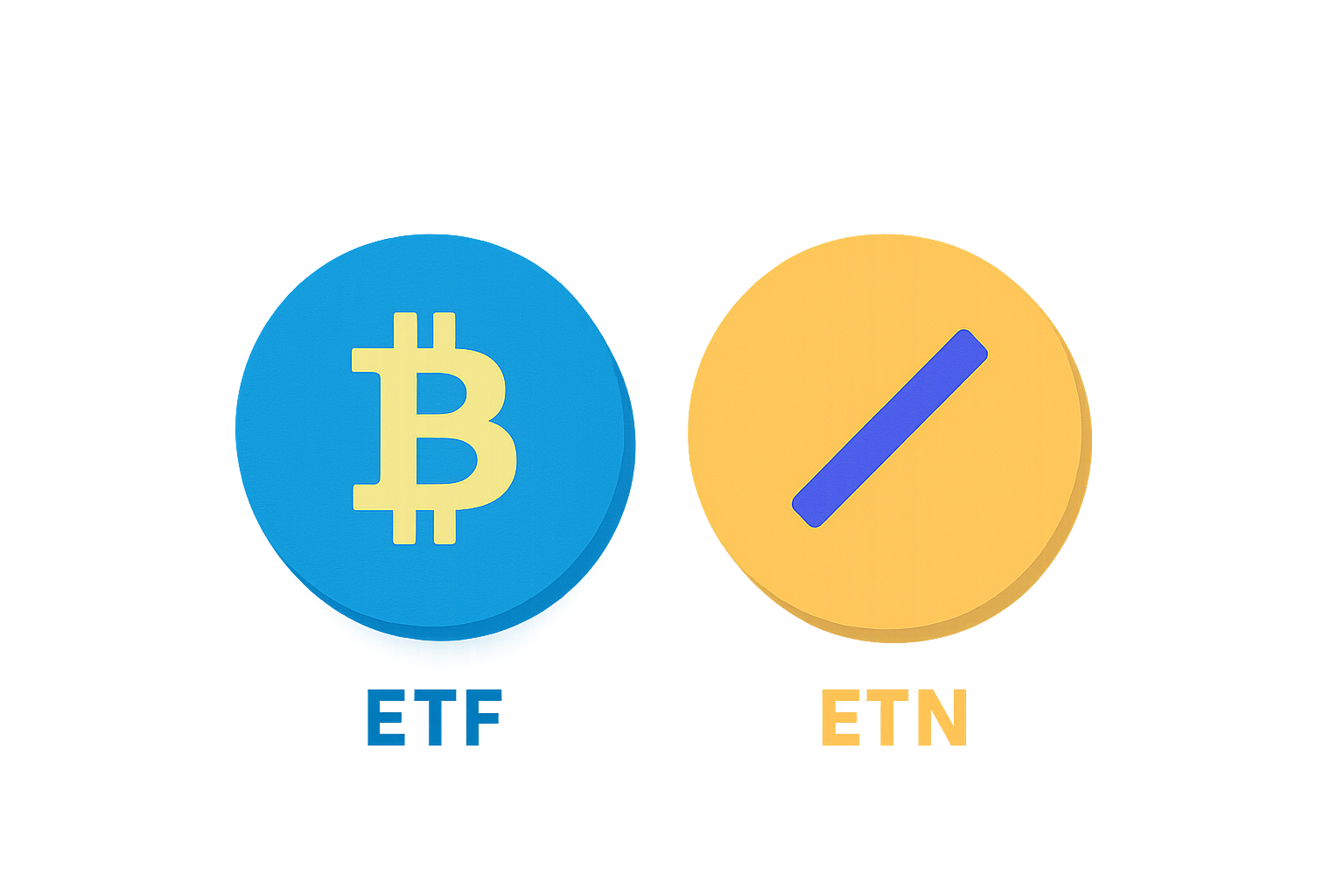
What distinguishes ETNs from ETFs in the cryptocurrency market?

What distinguishes ETNs from ETFs in the cryptocurrency market?

A clear and concise overview of the differences between ETNs and ETFs. Tailored for those new to cryptocurrency investing, this guide thoroughly compares their structure, risks, costs, and liquidity. It supports you in selecting the product that best matches your investment strategy.
2026-02-08 08:48:51
Is Fly.trade (FLY) a good investment?: A Comprehensive Analysis of Token Fundamentals, Market Potential, and Risk Factors

Is Fly.trade (FLY) a good investment?: A Comprehensive Analysis of Token Fundamentals, Market Potential, and Risk Factors

This comprehensive analysis evaluates Fly.trade (FLY) as a decentralized finance investment, examining whether this multichain liquidity aggregator represents a viable opportunity. FLY currently trades at $0.01579 with a market capitalization of $206,608.66 on Gate exchange, serving traders, protocols, and agents through optimized cross-chain swap functionality. The article addresses critical investment considerations including token fundamentals with 100,000,000 total supply and only 13.08% in circulation, technical infrastructure on SONIC blockchain, and market potential within the growing DeFi infrastructure sector. Price projections range from $0.0112 to $0.0394 through 2031, depending on adoption scenarios, though the token experienced significant volatility with -97.85% decline over one year. Investment strategies tailored to beginners, experienced traders, and institutional investors are presented alongside comprehensive risk assessment covering market volatility, regulatory uncertainty, and technical
2026-02-08 08:46:29
What is token economics model: how do crypto token distribution, inflation mechanisms, burn mechanisms and governance rights work?

What is token economics model: how do crypto token distribution, inflation mechanisms, burn mechanisms and governance rights work?

This comprehensive guide explores token economics models, a critical framework determining cryptocurrency project sustainability. The article examines four fundamental pillars: token allocation architecture distributing initial supply across teams (15-25%), investors (20-30%), and communities (40-50%); inflation mechanisms utilizing vesting periods and staged supply releases over 12-48 months to prevent market shocks; burn mechanisms that reduce circulating supply while rewarding governance participation; and governance rights integration empowering token holders through voting power, fee discounts, and multi-source staking rewards. Through real-world examples like MSVP token implementations on Gate, readers learn how well-designed tokenomics creates sustainable economic cycles, aligns stakeholder incentives, and strengthens decentralized decision-making. Whether you're an investor evaluating projects or a developer designing token systems, this guide provides actionable insights for understanding and assessi
2026-02-08 08:45:42
How active is Mubarak's community and ecosystem with 1.5 million followers and 500+ daily interactions in 2025?

How active is Mubarak's community and ecosystem with 1.5 million followers and 500+ daily interactions in 2025?

Mubarak demonstrates impressive community engagement with 1.5 million followers and 500+ daily interactions across multiple platforms, supported by 25,703 token holders achieving healthy ecosystem decentralization. The project's DApp ecosystem showcases 50+ active applications with 30% growth in development activity, indicating strong developer confidence and diverse blockchain use cases from DeFi to gaming. However, significant market valuation challenges emerge from the token's peak of $0.22078 (market cap $20.79M) in March 2025 to current levels of $0.01415 ($14.15M) by February 2026, representing a 32% decline. Trading volume averaging $377k daily reveals liquidity constraints relative to market cap, with 30-day performance showing -30.29% decline, highlighting the critical gap between community participation metrics and actual token value sustainability. This analysis examines whether Mubarak's robust community foundation and developer ecosystem can establish fundamental support for long-term market reco
2026-02-08 08:40:14
How do competing cryptocurrencies compare in market cap, performance, and user adoption in 2026?

How do competing cryptocurrencies compare in market cap, performance, and user adoption in 2026?

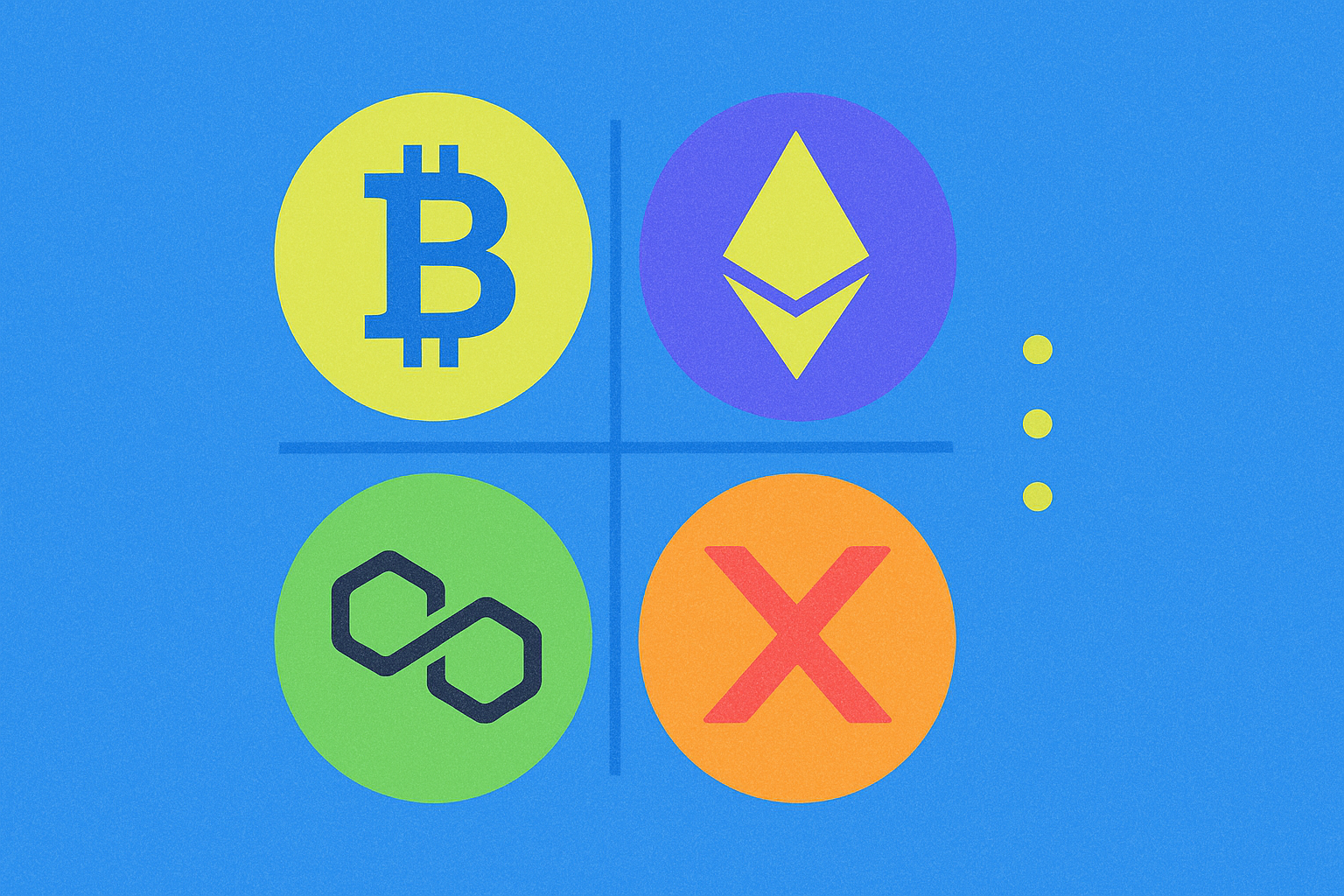
This article provides a comprehensive analysis of cryptocurrency competition in 2026, examining market cap concentration, performance metrics, and user adoption trends. Bitcoin and Ethereum maintain 60-70% combined market dominance through institutional-grade ETF infrastructure, systematically disadvantaging altcoins despite their technological innovations. Layer-2 solutions and alternative L1 chains drive 300-500% transaction growth, with Polygon and Immutable X leading adoption through superior scalability and reduced fees. Competitive differentiation centers on three factors: staking yields, transaction speed, and developer ecosystems—exemplified by projects like MAGIC demonstrating integrated DeFi-NFT-gaming models. The market bifurcates sharply: altcoins gain institutional traction via diversified portfolio allocations (5-10% satellite positions), while meme coins face regulatory headwinds despite speculative interest. Institutional investors now employ structured frameworks allocating 60-80% to Bitcoin,
2026-02-08 08:38:33
What is token economy: understanding token allocation, inflation mechanisms, and governance rights in crypto projects?

What is token economy: understanding token allocation, inflation mechanisms, and governance rights in crypto projects?

This comprehensive guide explores token economy fundamentals essential for crypto project sustainability. It examines three critical pillars: token allocation mechanisms that balance team, investor, and community stakes through vesting schedules and staking systems; inflation and deflation design strategies that preserve long-term value through supply caps and emission schedules; and governance rights combined with burn mechanisms that enable decentralized control. Using GMX as a primary case study, the article demonstrates how minimal team allocation (under 2%) signals founder confidence while community participation captures 30% of protocol fees. The guide addresses investor concerns about token dilution, valuation sustainability, and decision-making transparency. Perfect for crypto enthusiasts, project builders, and investors seeking to understand tokenomics design principles and evaluate project sustainability on Gate exchange and beyond.
2026-02-08 08:28:47
What are the major security risks and vulnerabilities in BEAM's smart contracts and exchange custody systems?

What are the major security risks and vulnerabilities in BEAM's smart contracts and exchange custody systems?

This article examines critical security vulnerabilities in BEAM's smart contract infrastructure and exchange custody systems, examining real-world threats including phishing attacks, unauthorized access, and data leaks. The piece analyzes how the $1.44 billion BEAM token theft exposed fundamental gaps in network defenses and highlights key vulnerabilities such as improper authentication controls, configuration errors, and centralization risks in custodial arrangements. It compares risks between centralized exchanges like Gate and decentralized custody solutions, demonstrating that both models present distinct security challenges. Readers will understand smart contract vulnerabilities, the dangers of single-point-of-failure custody systems, and best practices for asset protection. The article addresses how BEAM implements multiparty computation and multisignature controls to mitigate institutional risks while acknowledging user responsibility in self-custody scenarios. Essential guidance for traders, developer
2026-02-08 08:25:38
What is DUSK Network: Privacy-Focused Blockchain Fundamentals, Technology Innovation & Roadmap Progress

What is DUSK Network: Privacy-Focused Blockchain Fundamentals, Technology Innovation & Roadmap Progress

DUSK Network is a Layer 1 privacy-focused blockchain designed for regulated financial institutions and real-world asset tokenization. Built on zero-knowledge proofs and the innovative Succinct Attestation consensus mechanism, DUSK enables confidential transactions while maintaining regulatory compliance through its Citadel identity system and XSC security token standard. The platform uniquely combines institutional-grade privacy infrastructure with deterministic finality, addressing the tension between data protection and regulatory oversight. The Creator Pad ecosystem incentivizes developers to build privacy-preserving applications for tokenized securities, bonds, and equities across multiple blockchain networks. Trading on Gate exchange reflects growing market recognition of DUSK's value proposition. With mainnet launched in April 2024 and continued roadmap execution, DUSK positions itself as essential infrastructure bridging traditional finance and decentralized finance through privacy-first design that se
2026-02-08 08:23:58