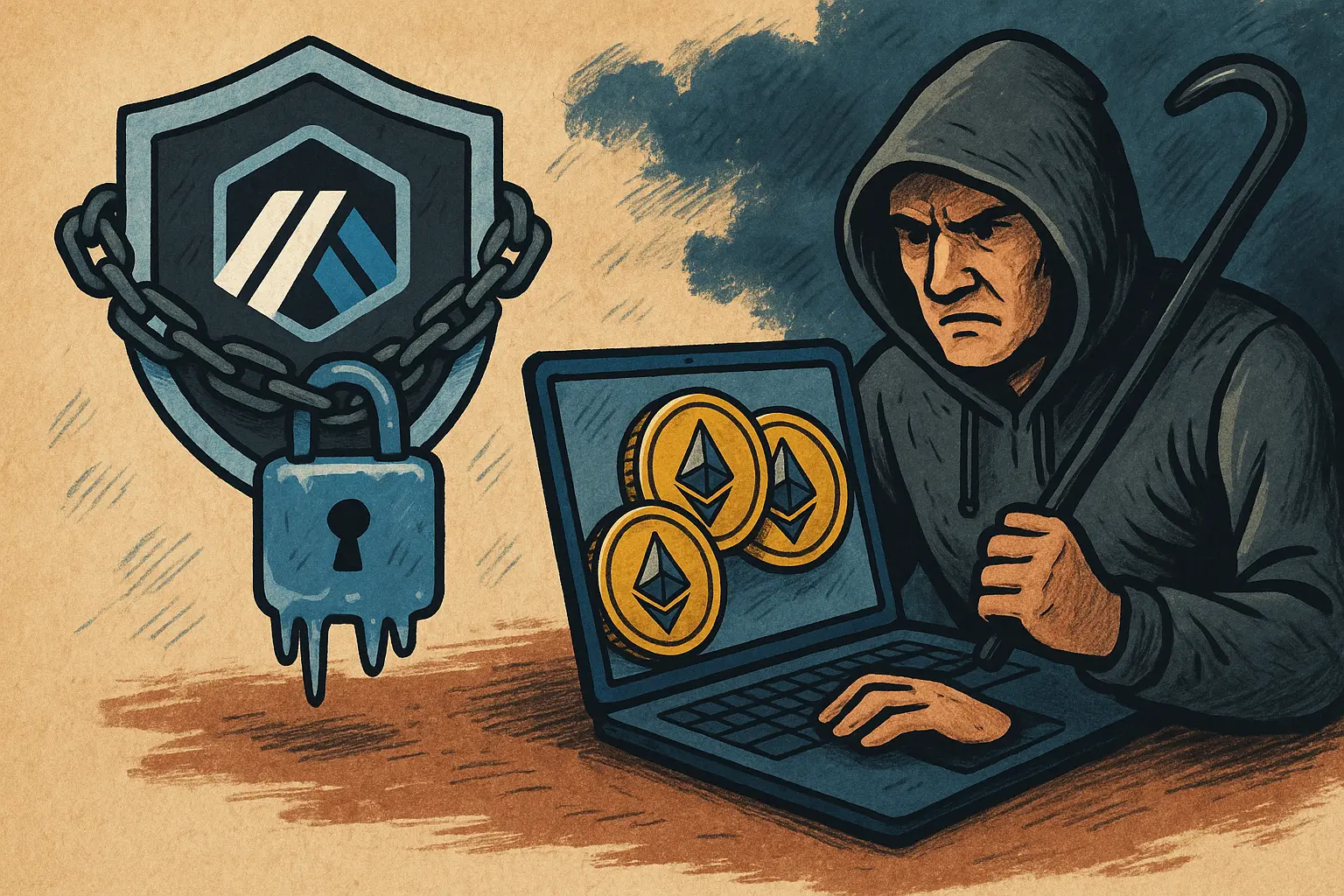
On April 21, the Arbitrum Security Committee announced that it had taken emergency action to freeze 30,766 ETH on the Arbitrum One chain that is associated with the KelpDAO hacker attack. With the assistance of law enforcement agencies, the Security Committee confirmed the attacker’s identity and designed a technical plan to transfer the funds to an interim freeze wallet without affecting any other chain status or Arbitrum users.
Action Details: How to precisely freeze funds without affecting other users
The Arbitrum Security Committee’s statement emphasized the high precision of this action—throughout the process, it does not affect “any other chain status or Arbitrum users,” nor does it affect the normal operation of any Arbitrum application.
According to the announcement, before taking action, the Security Committee conducted “a large amount of technical investigation and deliberation” to confirm a viable technical solution, and, with the assistance of law enforcement agencies, identified the attacker’s identity. The frozen 30,766 ETH is currently held in an interim freeze wallet; only Arbitrum’s governing entities can take further actions to transfer these funds, and any subsequent operations must be coordinated with the relevant parties (including law enforcement agencies).
The Ripple Effects of the KelpDAO Attack: Aave TVL Shrinks from $26.4B to $18.6B
The source of the frozen ETH was the KelpDAO vulnerability attack on April 18. The attacker stole 116,500 rsETH, resulting in losses of about $293 million. The attacker then deposited the stolen rsETH as collateral into the Aave V3 platform and borrowed a large amount of wETH, creating roughly $195 million in bad debt on Aave’s books.
The Aave protocol subsequently suffered severe cascading impacts: nearly $8 billion in funds exited the protocol, the AAVE token fell by about 20% in a single day, and TVL shrank from about $26.4 billion to $18.6 billion, causing Aave to temporarily lose its leading position among DeFi platforms.
Broader Implications: The Discussion on the Boundaries of Law Enforcement on Decentralized Networks
This freeze action represents a precedent worth broad discussion for decentralized governance: an L2 security committee, with the assistance of law enforcement agencies, proactively intervened and froze assets tied to specific on-chain addresses. While efficiently intercepting stolen funds, it has also reignited industry debate about how much ability decentralized networks should have to intervene—when, by whom, and against what standards on-chain fund freezes should be authorized and executed will be a governance challenge that the entire industry will need to continually face going forward.
Frequently Asked Questions
How did the Arbitrum Security Committee freeze funds without affecting other users?
The Security Committee used a technical solution targeted at specific addresses, transferring funds from addresses associated with the attacker to an interim freeze wallet, while keeping all other status on the Arbitrum One chain unchanged and without affecting the normal operations of any other users, contracts, or applications. Specific technical details have not been fully disclosed yet.
How will the next steps be handled for the 30,766 ETH that were frozen?
These funds are currently held in an interim freeze wallet that only Arbitrum’s governing entities can access. Any subsequent transfers of funds can be executed only after coordinating with the relevant parties (including law enforcement agencies). The specific plan for returning the funds has not yet been announced and is expected to be determined based on investigation progress and legal procedures.
What are the subsequent impacts of this freeze action on the KelpDAO vulnerability incident?
Freezing this batch of ETH effectively limits the attacker’s ability to access certain stolen funds, reducing the risk of the funds being further transferred or laundered. However, the full subsequent developments of the Kelp DAO incident—including the handling of Aave bad debt, the legal accountability of the attacker, and compensation plans for losses across agreements—are still ongoing.
Disclaimer: The information on this page may come from third parties and does not represent the views or opinions of Gate. The content displayed on this page is for reference only and does not constitute any financial, investment, or legal advice. Gate does not guarantee the accuracy or completeness of the information and shall not be liable for any losses arising from the use of this information. Virtual asset investments carry high risks and are subject to significant price volatility. You may lose all of your invested principal. Please fully understand the relevant risks and make prudent decisions based on your own financial situation and risk tolerance. For details, please refer to
Disclaimer.
Related Articles
Bitmine bought 101627 ETH last week! Tom Lee: Crypto winter is nearing its end
Bitmine Immersion Technologies (BMNR) announced on April 20 that it purchased 101,627 Ethereum (ETH) last week, the largest week-over-week purchase since 2026, bringing its total ETH holdings to 4,976,000. Bitmine chairman Tom Lee said publicly that the crypto winter is closer to ending than the market expects.
MarketWhisper2h ago
4-Week-Old Wallet Withdraws 80,000 ETH Worth $184.7M from Centralized Exchange
Gate News message, a wallet created four weeks ago has withdrawn 80,000 ETH valued at $184.7 million from a centralized exchange. The wallet address is 0x32E11a20337ebC79Abd0EEab2d91BAFBd9591149.
GateNews2h ago
KelpDAO Exploiter Burns $70.94M Worth of ETH on Arbitrum
Gate News message, the KelpDAO exploiter has burned 30,766 ETH valued at $70.94 million on Arbitrum network.
GateNews3h ago
Curve Founder: DeFi’s single point of failure harms the industry; urges Ethereum to set security standards
Curve Finance founder Michael Egorov published a long post on the X platform on April 21, 2026, pointing out that several preventable attacks have recently occurred in the DeFi space. He said the root cause is centralized failure points that are harming the entire DeFi industry. In the post, Egorov proposed to the Ethereum Foundation that it develop principles, rules, and recommendations for building DeFi security.
MarketWhisper4h ago
Ethereum Spot ETFs Post $67.77M Net Inflows, BlackRock ETHA Leads
Ethereum spot ETFs experienced significant net inflows of $67.77 million on April 20, led by BlackRock's ETHA. In contrast, Grayscale's ETHE and other products faced notable outflows.
GateNews4h ago
Whale Sells 497.73 ETH, Buys 3.845 Billion ASTEROID in Two Days
A whale address sold 497.73 ETH for about $1.14 million while acquiring 3.845 billion ASTEROID tokens at $0.00029 each. It now holds 369.27 ETH and may keep selling ETH to increase ASTEROID tokens.
GateNews6h ago


