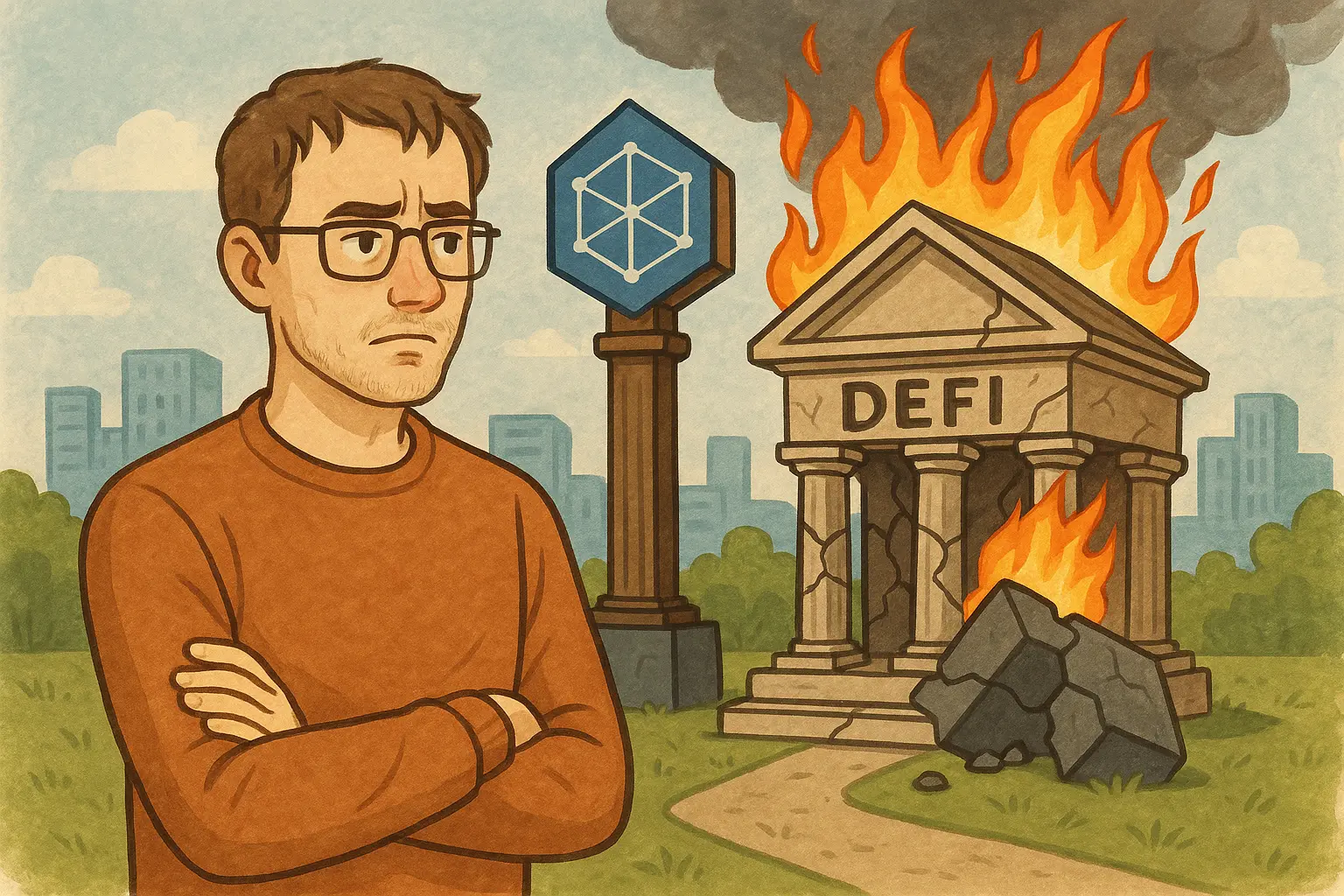
Curve Finance founder Michael Egorov published a long post on the X platform on April 21, 2026, pointing out that multiple avoidable attacks have recently occurred in the DeFi space, and that the root cause is centralized points of failure that are harming the entire DeFi industry. In the post, Egorov proposed to the Ethereum Foundation that it call for the development of principles, rules, and recommendations for building DeFi security.
Egorov’s criticism: a responsibility vacuum and everyone passing the buck
According to Michael Egorov’s post on the X platform, he used as an example the incident in which, after rsETH was attacked, users were unable to withdraw from Aave. He pointed out that the parties are passing responsibility to one another: Aave claimed that the protocol was operating normally and that only rsETH had been attacked; rsETH said the code was safe and that only the LayerZero bridge had been compromised; LayerZero (which Egorov said in the post safeguards $250 billion in funds) claimed that everything was fine; but users still couldn’t withdraw.
In the post, Egorov wrote, “All these kinds of problems should be prevented before they happen, rather than fixed afterward. The number of single points of failure should be reduced, not increased. When these failure points are unavoidable, trust should be distributed. If we rely on infrastructure, then we should share best practices for how to configure the infrastructure.”
Core request: jointly develop DeFi security standards
Based on the specific demands Egorov listed in his X platform post, he proposed that the DeFi industry jointly develop security standards covering the following areas:
· How to securely build DeFi protocols and how to verify security
· Project teams, auditors, and risk assessment teams should jointly contribute best practices and understand each other
· Best practices for sharing infrastructure configuration, not limited to the scope of smart contract code audits
Egorov also pointed out that lessons can be drawn from traditional finance’s experience in dealing with its centralized points of failure, and applied to protect DeFi against the small number of centralized points of failure that still exist.
Frequently asked questions
What is the core argument in Egorov’s criticism of recent DeFi attacks?
According to Michael Egorov’s post on the X platform on April 21, 2026, he said the root cause of recent DeFi attacks is centralized points of failure; the problem should be prevented in advance rather than fixed after the fact; the number of single points of failure should be reduced; and when failure points are unavoidable, trust should be distributed.
What issue did Egorov illustrate with the Aave incident?
According to Egorov’s post on the X platform, he used the example of users being unable to withdraw from Aave after rsETH was attacked, pointing out that Aave, rsETH, and LayerZero passed responsibility to one another—showing the problem that DeFi lacks a clear accountability mechanism for centralized points of failure.
Which institutions does Egorov propose to lead the development of DeFi security standards?
According to Egorov’s post on the X platform, he directly called on the Ethereum Foundation and the Solana Foundation to convene projects across each ecosystem and jointly develop the principles, rules, and recommendations for building DeFi security.
Disclaimer: The information on this page may come from third parties and does not represent the views or opinions of Gate. The content displayed on this page is for reference only and does not constitute any financial, investment, or legal advice. Gate does not guarantee the accuracy or completeness of the information and shall not be liable for any losses arising from the use of this information. Virtual asset investments carry high risks and are subject to significant price volatility. You may lose all of your invested principal. Please fully understand the relevant risks and make prudent decisions based on your own financial situation and risk tolerance. For details, please refer to
Disclaimer.
Related Articles
ETH and Altcoins Could See Parabolic Surge Upon Following Bullish Russell 2000 ATH Path
ETH and altcoins coils see parabolic surge upon following a bullish indicators.
The Russell 2000 just set a new ATH at 2,798 for the first time.
This new ATH indicator is a bullish signal for altcoins.
The crypto community is pleased to see that both BTC and ETH are trading at higher
CryptoNewsLand45m ago
Bitmine’s weekly net accumulation exceeds 100k ETH, moving even closer to the “5% of total Ethereum supply” target
Bitmine increases its weekly holdings by 101,627 ETH, bringing its total holdings to nearly 5 million ETH. This article breaks down the logic behind institutional-grade ETH accumulation of staking returns, the trend toward institutionalization, and its impact on Ethereum’s supply structure.
GateInstantTrends1h ago
Arbitrum Security Council Freezes 30,766 ETH From KelpDAO Exploit, 9 of 12 Members Vote in Favor
Arbitrum froze 30,766 ETH from the KelpDAO hack, worked with law enforcement, and recovered about a quarter of assets, while locking funds pending governance amid decentralization versus security debates.
Abstract: This article reports that the Arbitrum Security Council froze 30,766 ETH (about $70 million) tied to the KelpDAO exploit, with nine of twelve votes, and moved funds to a secure wallet in coordination with law enforcement. The operation targeted only affected assets to minimize network disruption. The exploiter is suspected to be DPRK-associated. The breach began April 18 via a LayerZero-powered bridge, draining 116,500 rsETH (~$292 million). About a quarter of stolen assets have been recovered. The frozen funds will remain locked until governance and legal authorities decide the next steps, prompting debate over decentralization versus security.
GateNews2h ago
Tether Mints 1 Billion USDT on Ethereum
Gate News message, April 21 — According to Onchain Lens, Tether minted 1 billion USDT on Ethereum eight minutes ago.
GateNews2h ago
OCBC Launches GOLDX Tokenized Gold Fund on Ethereum and Solana
OCBC launches GOLDX, a tokenized physical gold fund on Ethereum and Solana with Lion Global Investors and DigiFT, targeting institutions and Web3 participants; tokenized RWAs reach $29B on chains.
OCBC, with Lion Global Investors and DigiFT, introduced GOLDX, a tokenized version of the LionGlobal Singapore Physical Gold Fund on Ethereum and Solana. The product targets institutional investors and high‑net‑worth individuals, allowing purchases with stablecoins or fiat and delivery to blockchain wallets, providing on‑chain exposure to about $525 million in gold assets. OCBC views GOLDX as a milestone linking traditional finance with the decentralized finance ecosystem to attract Web3 participants. The broader context shows rapid growth in tokenized real‑world assets, with RWAs on public blockchains exceeding $29 billion by mid‑April 2026, while gold prices traded in a tight range around $4,775–$4,831 per ounce.
GateNews2h ago
Bitmine bought 101627 ETH last week! Tom Lee: Crypto winter is nearing its end
Bitmine Immersion Technologies (BMNR) announced on April 20 that it purchased 101,627 Ethereum (ETH) last week, the largest week-over-week purchase since 2026, bringing its total ETH holdings to 4,976,000. Bitmine chairman Tom Lee said publicly that the crypto winter is closer to ending than the market expects.
MarketWhisper5h ago


