
A 2026 digital asset institutional investor survey by Nomura Securities (Nomura) and its crypto subsidiary, Laser Digital, shows that nearly four-fifths of surveyed institutional investors plan to allocate 2% to 5% of their total assets under management (AUM) to the crypto market. Most institutions say they plan to do so within the next year rather than investing immediately.
Institutional Crypto Asset Allocation Intentions and Key Barriers
According to the Nomura Securities survey, 65% of respondents currently view cryptocurrencies as a diversification investment tool, alongside stocks, bonds, and commodities. Nomura Securities notes in its report: “Clear regulation, deeper understanding, and more robust security and risk management frameworks are key to expanding investment.”
The same survey also recorded three major existing barriers: a lack of clear asset valuation methodologies, the ongoing volatility of crypto assets, and uncertainty in the regulatory environment. Nomura Securities also said adoption is accelerating due to “a wider range of investment products, improvements in risk management practices, regulatory reforms, and increased participation.”
Institutional Demand Breakdown for DeFi Protocols, Lending, and Tokenized Assets
According to the Nomura Securities survey, institutional investors’ crypto asset allocation demand is concentrated on yield strategies, rather than simply seeking token price appreciation. The specific figures are as follows:
· More than two-thirds of respondents want to participate in decentralized finance (DeFi) mechanisms, such as staking
· 65% of respondents want to pursue strategies related to lending and tokenized assets
· 63% of respondents are exploring crypto derivatives and stablecoins
Nomura Securities states in its report: “This reflects the growing demand in the market for income-generation and asset-utilization strategies,” and notes that institutional interest in investment approaches has “expanded from exchange-traded funds to private funds, staking, and lending.”
Practical Use Cases for Stablecoins and Institutional Issuer Preferences
 (Source: DefiLLlama)
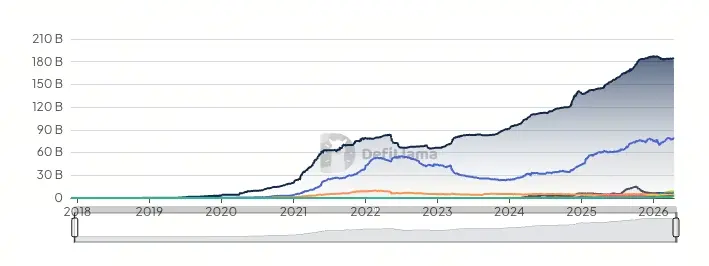
According to the Nomura Securities survey, 63% of respondents believe stablecoins have real-world utility, mainly covering cash management, cross-border payments, currency trading, and investing in crypto currencies and tokenized assets. Respondents show clear preferences for stablecoin issuers: regardless of whether they are denominated in Japanese yen, U.S. dollars, or euros, stablecoins issued by major financial institutions are seen as the most trustworthy option. Nomura Securities notes: “Demand for stablecoins in real-world terms is strong, especially for issuance by large financial institutions, highlighting the importance of trust in issuers.”
Common Questions
What are the core statistics from Nomura Securities’ 2026 survey?
Based on the 2026 digital asset institutional investor survey released by Nomura Securities and Laser Digital, nearly four-fifths of surveyed institutions plan to allocate 2% to 5% of AUM to the crypto market; 65% view cryptocurrencies as diversified tools; more than two-thirds want to participate in DeFi staking; and 63% believe stablecoins have practical value.
What is the scale of institutional investors covered in this survey?
According to Nomura Securities, the survey covers institutional investors with more than $60 billion in assets under management, as well as family offices and public institutions with asset sizes ranging from the tens of millions to the tens of billions of dollars.
What are the main barriers for institutional investors to expand their allocation to crypto assets?
According to the Nomura Securities survey, the main barriers include the lack of clear asset valuation methodologies, ongoing volatility of crypto assets, and uncertainty in the regulatory environment. The report states that clear regulatory frameworks and well-developed risk management mechanisms are key prerequisites for institutions to expand allocations.
Disclaimer: The information on this page may come from third parties and does not represent the views or opinions of Gate. The content displayed on this page is for reference only and does not constitute any financial, investment, or legal advice. Gate does not guarantee the accuracy or completeness of the information and shall not be liable for any losses arising from the use of this information. Virtual asset investments carry high risks and are subject to significant price volatility. You may lose all of your invested principal. Please fully understand the relevant risks and make prudent decisions based on your own financial situation and risk tolerance. For details, please refer to
Disclaimer.
Related Articles
a16z latest report: Why blockchain is the missing infrastructure piece that AI agents need?
a16z crypto’s latest report says that AI agents are evolving from support tools into economic actors, yet there are still major gaps in core infrastructure such as identity, payments, and cross-platform collaboration. The report emphasizes that as AI becomes involved in governance and transactions, verification mechanisms become the key to trust, and blockchain technology can provide verifiable infrastructure to address these challenges. The future will require cryptographic mechanisms to ensure that AI agents truly represent users’ intent and to change traditional payment systems.
ChainNewsAbmedia8h ago
Three Major Platforms Control 75% of Stock Perpetual Futures Market in Q1 2026
TokenInsight’s Q1 2026 report reveals that the stock perpetual futures market is dominated by a few top platforms, which collectively hold about 75% market share. Major exchanges are increasingly offering U.S. stock and finance products to enhance cross-asset trading.
GateNews14h ago
Cross-Asset Hedging Emerges as Mainstream Strategy, Q1 Report Shows
A report by Block Scholes reveals rising correlations between crypto assets and traditional markets, noting increased demand for unified trading platforms as traders manage diverse assets. Trading volumes have surged, reflecting a shift towards multi-asset strategies.
GateNews15h ago
Digital Asset Investment Products Record $1.4B Net Inflows Last Week, Highest Since January
CoinShares reported $1.4 billion in net inflows for digital asset investment products last week, marking the largest increase since January. Bitcoin led with $1.116 billion, while Ethereum saw $328 million inflow. The U.S. contributed significantly, though Switzerland experienced outflows.
GateNews15h ago
DeFi hackers stole $600 million in April; Kelp DAO and Drift accounted for 95% of the monthly losses
In April 2026, within just 20 days, cryptocurrency protocols suffered losses of more than $606 million due to hacker attacks, becoming the worst single-month loss record since the February 2025 exchange incident in which $1.4 billion in data was leaked. The two attacks by KelpDAO and Drift Protocol accounted for 95% of April’s losses, and 75% of the total $771.8 million losses as of now in 2026.
MarketWhisper19h ago
Moody's: Stablecoin Market Exceeds $315.8B, but Near-Term Bank Threat Remains Limited
Moody's report shows stablecoins have reached a market value of $315.8 billion, primarily dominated by USDT. While near-term risks to banks are limited due to narrow adoption and regulation, long-term growth may challenge traditional banking.
GateNews20h ago


