

Trade
Basic
Futures
Futures
Hundreds of contracts settled in USDT or BTC
TradFi
Gold
Trade global traditional assets with USDT in one place
Options
Hot
Trade European-style vanilla options
Unified Account
Maximize your capital efficiency
Demo Trading
Futures Kickoff
Get prepared for your futures trading
Futures Events
Participate in events to win generous rewards
Demo Trading
Use virtual funds to experience risk-free trading
Earn
Launch
CandyDrop
Collect candies to earn airdrops
Launchpool
Quick staking, earn potential new tokens
HODLer Airdrop
Hold GT and get massive airdrops for free
Launchpad
Be early to the next big token project
Alpha Points
Trade on-chain assets and enjoy airdrop rewards!
Futures Points
Earn futures points and claim airdrop rewards
Investment
Simple Earn
Earn interests with idle tokens
Auto-Invest
Auto-invest on a regular basis
Dual Investment
Buy low and sell high to take profits from price fluctuations
Soft Staking
Earn rewards with flexible staking
Crypto Loan
0 Fees
Pledge one crypto to borrow another
Lending Center
One-stop lending hub
VIP Wealth Hub
Customized wealth management empowers your assets growth
Private Wealth Management
Customized asset management to grow your digital assets
Quant Fund
Top asset management team helps you profit without hassle
Staking
Stake cryptos to earn in PoS products
Smart Leverage
New
No forced liquidation before maturity, worry-free leveraged gains
GUSD Minting
Use USDT/USDC to mint GUSD for treasury-level yields

More




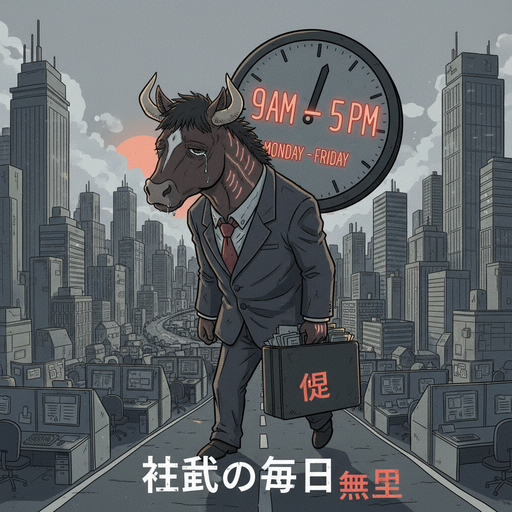

The wealthy executives of the big companies are around you.
On New Year’s Eve watching the Spring Festival Gala, the two characters “Zhui Mi” in the lower left corner, combined with the recent trending comments, aim to create the first company in human history worth a hundred trillion dollars.
Dr. Ren has my full support. Most netizens seem to criticize Dr. Ren, possibly influenced by the recent Evergrande incident shaping their perception of him.
What I want to clarify is that marketing slogans are understandable; everyone has their own opinions, and opinions are easy—simply opposing or supporting. But do your opinions come from thorough thinking and analysis, or are they just emotional reactions? That’s what I want to express: there’s no right or wrong, only analysis.
Zhui Mi has performed very well over the past year.
From 2019 to 2023, Zhui Mi Technology’s five-year compound annual growth rate exceeded 100%. IDC data shows that by Q1 2025, Zhui Mi holds about 11.3% of the global robot vacuum market, ranking third, moving up two spots from last year. The top two are Roborock and Ecovacs.
How about Roborock? It has a gross profit margin of 43% and a market value of 38.4 billion yuan. Before Zhui Mi entered the scene, if it can reach Roborock and Ecovacs levels, its market cap could be around 40 to 50 billion yuan.
Their overseas revenue accounts for about 40% to 50%.
In the early days, Zhui Mi Technology only OEMed products for Xiaomi, mainly producing branded smart home cleaning devices like vacuum cleaners and dusters. Founder Yu Hao realized that OEM profits are slim and heavily dependent on the client. In 2017, Zhui Mi Technology was officially established to develop its own brand.
Secondly, what about this market? I won’t go into detailed data, but there are quite a few competitors—it’s a red ocean. Xiaomi, as a former client, was part of this scene. Xiaomi’s marketing and ecosystem are also influential.
In September 2025, Xiaomi launched small home appliances and kitchen appliances, releasing many products.
Recently, Zhui Mi Technology launched a dual-mechanical-arm floor cleaning robot, introducing the concept of “embodied intelligence” for the first time, enabling AI-powered dual-arm collaborative cleaning. Previously, at CES (Consumer Electronics Show) in the US and AWE (China Appliance & Electronics Expo), Zhui Mi showcased a robot vacuum with mechanical arms, expected to go on sale this year. The market views this as an evolution from single-function robots to multi-task, generalized household robots.
Wang Hongpin, head of R&D for Zhui Mi’s floor cleaning division in China, said: “Embodied intelligence and dual mechanical arms give the floor cleaner eyes, a brain, and hands. In the future, consumers might just push the robot around their home, and it will automatically adapt to different scenarios to complete cleaning tasks.”
Embodied intelligence is a trendy term now—basically, it’s about making cleaning robots more human-like and smarter.
Today, a news broke: mainstream large models collectively failed—meaning they gave wrong answers.
Even simple general knowledge questions online are still not perfect. And concepts like human-like cleaning are just for publicity.
Who is Elon Musk, and what’s his situation?
He manages a vast tech empire including Tesla, SpaceX, X (formerly Twitter), xAI (artificial intelligence), Neuralink (brain-machine interfaces), and more.
Most people know Tesla electric vehicles. SpaceX is known for using rocket recovery technology with rocket boosters—original innovation.
Neuralink is also original and has already entered clinical trials.
It means he’s still among the richest, even after reducing his wealth by half.
When it comes to technology, DeepSeek is now focused and calm. How would R1-style reasoning technology perform in any company? Would it open source? Currently, the entire internet is urging for V4, but DeepSeek remains unmoved.
Many billion-dollar assets-rich individuals or those with deep financial insight claim they’re not interested in money. Most netizens see this as humblebrag—like a hungry man not knowing hunger. But think about it: if you have dozens of billions, and you’re burning money daily at a rate that outpaces your ability to make it grow, you can imagine the situation.
There are probably many such people. The point is, many wealthy individuals have reached this level, but what do they do? Can they, like Musk, risk all their assets on rocket technology? What if Tesla becomes a robot? Maybe in a few years, Musk’s companies will be in space.
Furthermore, how many wealthy people are still working overtime to the point of collapse? Humanity is shouting loudly—are the programmers still risking their health just to survive?
Human productivity has increased a million times—what’s the point if it’s all about competition? Most ordinary people just want to live healthily.
Of course, more people in China aspire to be like Musk. Many big bosses are ambitious and proud. Many small companies aim to serve humanity. But can they truly lead people toward a lighter, healthier life?
Can they give 50% of their profits to employees? Can they leave work on time?
Can they stop slashing hundreds of billions in subsidies, ultimately just exploiting ordinary consumers?
Can they make life easier and happier for ordinary people?
Can they learn from the value orientation of Pang Donglai? Without high technology, just running a supermarket.