

Trade
Basic
Futures
Futures
Hundreds of contracts settled in USDT or BTC
TradFi
Gold
Trade global traditional assets with USDT in one place
Options
Hot
Trade European-style vanilla options
Unified Account
Maximize your capital efficiency
Demo Trading
Futures Kickoff
Get prepared for your futures trading
Futures Events
Participate in events to win generous rewards
Demo Trading
Use virtual funds to experience risk-free trading
Earn
Launch
CandyDrop
Collect candies to earn airdrops
Launchpool
Quick staking, earn potential new tokens
HODLer Airdrop
Hold GT and get massive airdrops for free
Launchpad
Be early to the next big token project
Alpha Points
Trade on-chain assets and enjoy airdrop rewards!
Futures Points
Earn futures points and claim airdrop rewards
Investment
Simple Earn
Earn interests with idle tokens
Auto-Invest
Auto-invest on a regular basis
Dual Investment
Buy low and sell high to take profits from price fluctuations
Soft Staking
Earn rewards with flexible staking
Crypto Loan
0 Fees
Pledge one crypto to borrow another
Lending Center
One-stop lending hub
VIP Wealth Hub
Customized wealth management empowers your assets growth
Private Wealth Management
Customized asset management to grow your digital assets
Quant Fund
Top asset management team helps you profit without hassle
Staking
Stake cryptos to earn in PoS products
Smart Leverage
New
No forced liquidation before maturity, worry-free leveraged gains
GUSD Minting
Use USDT/USDC to mint GUSD for treasury-level yields

More






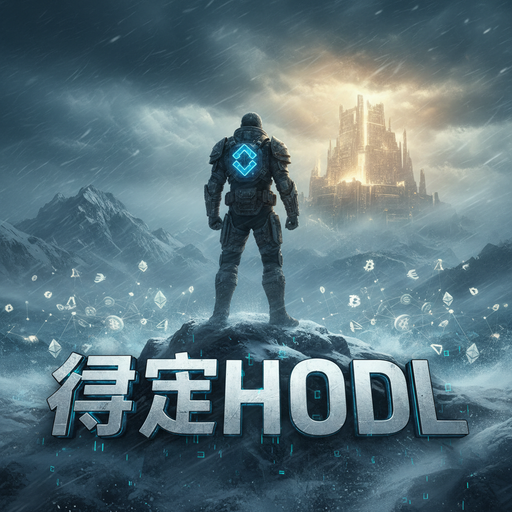
HODL Meaning Explained: How a Typo Became Crypto's Most Powerful Investment Philosophy
The cryptocurrency world thrives on creative terminology. From “FUD” to “to the moon,” the industry has developed its own linguistic ecosystem. Yet among all the crypto slang, few concepts have become as culturally significant—or as widely misunderstood—as “HODL.” This isn’t just internet humor; it represents a fundamental investment approach that has shaped how millions of people interact with digital assets. Understanding the HODL meaning is essential for anyone considering long-term participation in crypto markets.
The Origin Story: From Forum Typo to Movement
What started as a simple keystroke error has evolved into one of crypto’s defining philosophies. In late 2013, when Bitcoin’s price plummeted, a Bitcointalk forum user named GameKyuubi posted a message titled “I AM HODLING.” The post contained a deliberate misspelling of “hold,” but the passion behind it resonated far beyond the typo itself. GameKyuubi wasn’t describing a new concept—he was capturing a specific mindset during market turbulence.
The thread advocated for regular investors to resist panic selling as Bitcoin’s value dropped. Rather than attempting to time the market through constant trading, GameKyuubi encouraged people to maintain their positions and believe in the asset’s long-term potential. This simple but bold proposition struck a chord with the emerging Bitcoin community.
Within weeks, the forum post transformed into a cultural phenomenon. HODL memes flooded social media, and the acronym evolved to represent “Hold On for Dear Life”—a phrase that perfectly encapsulated the strategy’s emotional core. What made HODL different from typical investment advice was its community aspect. It became more than a tactic; it became an identity. Bitcoin holders started calling themselves “HODLers,” and the culture spread across the entire cryptocurrency ecosystem. Today, every major digital asset has its devoted HODL community, from Chainlink’s “marines” to Shiba Inu’s “SHIB Army.” Projects and platforms themselves have embraced HODL culture, recognizing its power to unite investors around shared values.
Core Strategy: What HODLing Really Means for Long-Term Investors
At its foundation, the HODL meaning centers on a straightforward practice: acquiring cryptocurrency and holding it for years without selling, regardless of short-term price movements. It’s rooted in a fundamental belief that a coin’s value will eventually increase over extended timeframes, even when markets experience significant volatility.
The evidence supporting this approach is compelling when viewed through a historical lens. Consider Bitcoin: On December 13, 2013—the very day GameKyuubi made his famous post—BTC closed at $522.70. Those who accumulated Bitcoin that year and maintained their positions through 2022 (when BTC traded above $20,000 for most of the year) experienced returns that would astound traditional investors. This isn’t merely retrospective success; it illustrates how patience can compound gains in volatile markets.
The appeal of HODLing stems from its simplicity. Professional traders spend years developing complex strategies to exploit micro-price movements and market volatility. For amateur investors lacking specialized knowledge and real-time execution capabilities, attempting to consistently time markets often results in losses or missed opportunities. HODLing removes that requirement entirely. The approach asks investors to conduct thorough research, select assets they genuinely believe in, and then execute a single decision: hold.
This passive strategy proves particularly valuable in highly speculative markets. Cryptocurrencies rank among the most unpredictable asset classes, making it nearly impossible for retail investors to predict directional movements with accuracy. By adopting a buy-and-hold framework, investors shift focus from short-term price fluctuations to long-term thesis development and conviction-building.
Building Your HODL Plan: From Asset Selection to Storage
Implementing a HODL strategy requires more than just buying and waiting. Successful long-term holders make deliberate choices about where and how to store their assets, and whether to pursue additional income opportunities.
Asset Selection and Research
The foundation of any HODL approach begins with rigorous research. Rather than chasing trending coins, HODLers identify projects with genuine utility, strong development teams, and realistic adoption prospects. This due diligence phase determines whether an investor can maintain conviction through market downturns—a critical factor given crypto’s price volatility.
Storage Considerations: Hot and Cold Wallets
Once acquired, where you store cryptocurrency significantly impacts security and accessibility. Many HODLers opt for self-custodial hardware wallets, which provide complete control over private keys without relying on centralized intermediaries. These “cold storage” solutions—often resembling USB drives—keep assets offline, making them virtually immune to hacking and theft. The tradeoff involves reduced convenience; accessing holdings requires physical device retrieval.
Alternatively, some HODLers maintain assets on centralized exchanges. This approach offers easier access and trading capability but introduces counterparty risk—the exchange itself becomes a point of failure. The choice between security-focused cold storage and convenience-focused exchange custody depends on each investor’s specific circumstances and risk tolerance.
Earning While You Hold: Staking and Passive Income
Modern blockchain networks using Proof-of-Stake consensus mechanisms enable HODLers to earn additional returns by staking their coins. Platforms like Ethereum, Solana, and Polygon reward validators and stakers with percentage-based annual yields for helping secure the network. This transforms HODLing from purely passive to productively passive—generating income while maintaining long-term positions.
However, staking introduces its own considerations. The reward rate only matters if your underlying asset appreciates or at least holds value; earning 10% annually means little if the coin’s price drops 25%. Additionally, staking carries specific risks including network glitches, validator pool defaults, and “slashing”—a mechanism where validators lose portions of their stake for protocol violations. Before staking holdings, investors should thoroughly understand their chosen network’s mechanics and validator reliability track record.
Weighing the Reality: Challenges and Opportunities in HODLing
Like any investment approach, HODLing presents distinct advantages and disadvantages that determine its suitability for different investors.
The Powerful Upside
HODLing’s primary strength lies in removing market-timing complexity. While HODLers may not purchase at absolute bottom prices, they benefit from multi-year time horizons where temporary downturns become irrelevant to final outcomes. If conviction in the underlying thesis proves justified, accumulated assets should appreciate substantially regardless of initial entry points.
Furthermore, HODLing enables what traditional investors might recognize as dollar-cost averaging. During bear markets when prices fall, committed HODLers can continue accumulating positions at depressed valuations. This systematic buying across different price levels naturally lowers average cost per unit while increasing long-term position size.
The psychological advantage deserves mention as well. Frequent trading triggers emotional responses to daily noise and creates decision fatigue. HODLing externally enforces discipline by reducing the number of active choices, allowing investors to maintain conviction despite inevitable volatility.
The Honest Challenges
Successfully HODLing demands substantial emotional resilience, patience, and genuine conviction in selected projects. For investors lacking genuine belief in cryptocurrency’s future or their specific holdings’ potential, maintaining positions through inevitable price crashes becomes psychologically torturous. Watching value decline 30%, 50%, or even 70% from peak prices tests everyone’s conviction.
Cryptocurrency’s speculative nature and rapid technological evolution mean projects that appear promising today might face obsolescence or competitive displacement tomorrow. Unlike blue-chip stocks with centuries of operating history, many digital assets lack extended track records. This makes conviction-building legitimately difficult, particularly for newer projects.
Additionally, HODLing offers no flexibility or responsiveness to major developments. If a network suffers serious security flaws, faces regulatory crackdowns, or loses development momentum, pure HODLers remain locked into positions rather than pivoting. This inflexibility can prove costly during genuine deterioration scenarios.
HODL in Practice: Common Questions and Real Scenarios
How Long Should You Actually Hold?
No mandatory timeframe defines being a HODLer. Most practitioners maintain positions for multiple years minimum before considering exits. However, some Bitcoin believers operate under the assumption they’ll never sell—instead eventually spending BTC directly as a mainstream currency. The timeframe ultimately reflects your conviction level and thesis development.
Should You Stack Additional Income Through Staking?
Combining staking with HODLing can amplify returns, but introduces complexity and risk. Staking makes sense only if you’re comfortable with your underlying asset maintaining minimum value plus potential additional upside offsetting the staking-specific risks. Conservative HODLers might prefer simple cold storage without staking complications.
How Does This Compare to Active Trading?
Dollar-cost averaging (DCA)—systematically purchasing fixed amounts at regular intervals—shares overlap with HODLing but represents a distinct strategy. DCA participants deliberately time purchases (weekly intervals, price drops, etc.) to optimize entry points, while pure HODLers simply accumulate and hold without timing. Many combine both approaches: maintaining core positions while systematically adding during downturns.
Active traders pursuing daily or weekly gains occupy the opposite spectrum from HODLers. While professionals possess tools to capitalize on short-term volatility, amateur traders typically underperform despite higher effort and stress. For most retail investors, HODLing aligns better with realistic skill levels and available resources.
The HODL Philosophy Moving Forward
Understanding HODL meaning extends beyond grasping a simple investment tactic. It represents a philosophical position about cryptocurrency’s role in your financial future and your personal capacity for conviction amid uncertainty. The strategy works exceptionally well for investors who genuinely believe in digital assets’ long-term value, possess the emotional discipline to maintain positions through volatility, and can afford to hold positions for years without accessing the capital.
For those aligned with these characteristics, HODLing has demonstrated its power across multiple market cycles. The community forged through shared challenges and triumphs creates genuine camaraderie that transcends typical investment relationships, making HODLing as much cultural movement as financial strategy.