

Trade
Basic
Futures
Futures
Hundreds of contracts settled in USDT or BTC
TradFi
Gold
Trade global traditional assets with USDT in one place
Options
Hot
Trade European-style vanilla options
Unified Account
Maximize your capital efficiency
Demo Trading
Futures Kickoff
Get prepared for your futures trading
Futures Events
Participate in events to win generous rewards
Demo Trading
Use virtual funds to experience risk-free trading
Earn
Launch
CandyDrop
Collect candies to earn airdrops
Launchpool
Quick staking, earn potential new tokens
HODLer Airdrop
Hold GT and get massive airdrops for free
Launchpad
Be early to the next big token project
Alpha Points
Trade on-chain assets and enjoy airdrop rewards!
Futures Points
Earn futures points and claim airdrop rewards
Investment
Simple Earn
Earn interests with idle tokens
Auto-Invest
Auto-invest on a regular basis
Dual Investment
Buy low and sell high to take profits from price fluctuations
Soft Staking
Earn rewards with flexible staking
Crypto Loan
0 Fees
Pledge one crypto to borrow another
Lending Center
One-stop lending hub
VIP Wealth Hub
Customized wealth management empowers your assets growth
Private Wealth Management
Customized asset management to grow your digital assets
Quant Fund
Top asset management team helps you profit without hassle
Staking
Stake cryptos to earn in PoS products
Smart Leverage
New
No forced liquidation before maturity, worry-free leveraged gains
GUSD Minting
Use USDT/USDC to mint GUSD for treasury-level yields

More


Trending Topics
View More286.17K Popularity
89.77K Popularity
411.89K Popularity
108.78K Popularity
15.87K Popularity



Pin
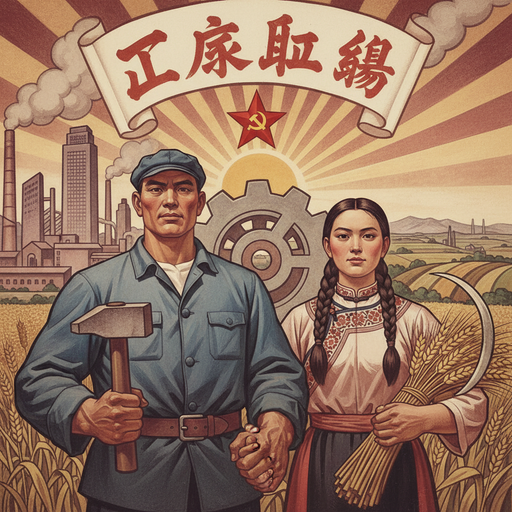
Web3 is not just the internet of the future — it's a revolution in data ownership
Web3 is a decentralized form of the internet built on blockchain technology, where users gain true control over their data instead of trusting it to large IT corporations. It is much more than just another technological innovation — it represents a fundamental shift in how we interact online, own digital assets, and manage our digital identities.
The design of Web3 is based on three pillars: decentralization (no central controlling authority), transparency (all transactions visible on the blockchain), and incentives through cryptocurrencies (users are rewarded for their activity). Unlike today’s Web 2.0, where Facebook, Instagram, and Google collect your data to sell to advertisers, Web3 gives you the right to decide how your information is used.
The term “Web3” was introduced in 2014 by Gavin Wood, co-founder of Ethereum and Polkadot, who envisioned a decentralized internet as a response to the growing monopolization of data by big tech companies.
The Three Stages of the Internet: How We Got to Web3
To understand why Web3 is a revolutionary change, it’s important to look back at the history of the internet.
Web 1.0: The “Read-Only” Era
When the internet launched in 1989–1990, it was a passive environment. Companies posted information on websites, and users just read. Click “back” — and that was it. No real interaction. This static phase lasted until around 2004, when the internet started to grow rapidly.
Web 2.0: The “Read-Write” Era (But Whose? Yours or Corporations?)
In 2004, social media changed everything. People started sharing photos, thoughts, videos. Facebook, Instagram, Twitter became platforms for billions. It seemed like a democratization of content.
The problem: all this data belongs to corporations. Every post, click, and like is data that is monetized through targeted advertising. You don’t own what you create. The platforms control you. This has gone on for two decades, and dissatisfaction is growing every day.
Web 3.0: The “Read-Write-Own” Era
Here’s where the magic happens. Web3 is not just a platform — it’s an ecosystem where you can confidently say: “This is mine. This is my data. This is my creation. This is my earning.”
Built on blockchain, smart contracts, and decentralized applications (dApps), Web3 returns control from tech giants back to users. For the first time in internet history, people can own their digital presence.
Why Web3 Is Fundamentally Different: Key Features
Decentralization: No Dictators, Just Rules
In Web2, one server, one company controls everything. Web3 distributes data across thousands of nodes (computers) worldwide. No one can simply shut down the network. No one can freeze your account without reason. It’s democracy in action.
Permissionless: Anyone Can Participate
On traditional platforms, you need their approval. They decide who can be here, who to ban, who to verify. In Web3, everyone is equal. If you have a wallet (like MetaMask), you can immediately start using any dApp. No documents, no verification, no gatekeepers. Just you, just code.
Trustless but with Guarantees
In Web2, you trust Facebook not to sell your data to third parties. In practice? It’s a strategic question. In Web3, you trust no one — you trust the code. Smart contracts execute automatically, as programmed. No room for corruption, no intermediaries who might “forget” your funds.
Cryptocurrency as the Economic Nervous System
Instead of sending money through a bank (and waiting 3–5 days), in Web3 you transfer directly. On the blockchain, in minutes. This makes Web3 truly accessible to 1.4 billion people worldwide who don’t have bank accounts.
Security Through Cryptography
Blockchain uses cryptography, making data virtually impossible to hack. Plus, since information is duplicated across the network, it can’t be deleted or forged. It’s the most secure way to store data that exists.
Scalability and Flexibility
Web3 is designed to operate seamlessly across multiple blockchains and platforms simultaneously. If one cloud service fails, it doesn’t affect you. It’s a system built for resilience.
How Web3 Is Already Changing Reality: Practical Applications
DeFi: Finance Without Intermediaries
Decentralized finance is the biggest current application of Web3. Protocols like Uniswap and Aave allow you to:
All peer-to-peer, 24/7, without human intermediaries. People without bank accounts now have access to financial services previously unavailable.
NFTs and Tokenization: Ownership of Digital Assets
In 2021, the NFT market exploded. People bought digital art for millions. But the real potential is much deeper. NFTs enable:
GameFi: Play-to-Earn
Play-to-Earn has transformed gaming. Projects like Axie Infinity and STEPN allow players to earn real money by playing. In some countries, people live off GameFi income. It’s not a joke. For game publishers, it also means fairer revenue sharing.
Metaverse: A Virtual World You Own
The Sandbox and Decentraland are building virtual worlds on the blockchain. Unlike Facebook’s Metaverse, here you truly own land, buildings, items. You can buy, sell, rent. It’s not just a game — it’s an economy.
Decentralized Social Networks
Decentraland, Audius, and Steem are alternatives to Facebook and Twitter, where you are not tracked, profiled, or manipulated for ads. Your data remains yours.
Decentralized Storage: Cloud Without Censorship
AWS and other cloud services control millions of websites. If they decide to block you, you’re gone. IPFS, Filecoin, and Storj offer distributed storage where no one can just turn you off.
Decentralized Identity: One Wallet, All Services
Instead of remembering dozens of passwords, one Web3 wallet (MetaMask, Halo Wallet) gives you access to hundreds of dApps. It’s not just convenient — it’s secure. Your identity isn’t in the hands of a single company.
Why Web3 Is a Game-Changer for Crypto Investors
For crypto investors, Web3 is more than just a trend. It’s the infrastructure on which the next era of the internet will be built.
Cryptocurrencies and tokens serve as:
This means that unlike Web2, where platform owners are billionaires, in Web3 you can be an owner.
Conclusion: Web3 Is the Future, But Not Tomorrow
Web3 is not hype. It’s not just a passing trend. It’s a fundamental reorientation of how power is distributed on the internet.
Of course, the technology is still young. Scalability is a challenge. UX can be complex. But the trend is irreversible. Every day, more people distrust centralized platforms. They want ownership. They want control. They want fairness.
Web3 is the answer. Are you ready to join?
Key Takeaways