

Trade
Basic
Futures
Futures
Hundreds of contracts settled in USDT or BTC
TradFi
Gold
Trade global traditional assets with USDT in one place
Options
Hot
Trade European-style vanilla options
Unified Account
Maximize your capital efficiency
Demo Trading
Futures Kickoff
Get prepared for your futures trading
Futures Events
Participate in events to win generous rewards
Demo Trading
Use virtual funds to experience risk-free trading
Earn
Launch
CandyDrop
Collect candies to earn airdrops
Launchpool
Quick staking, earn potential new tokens
HODLer Airdrop
Hold GT and get massive airdrops for free
Launchpad
Be early to the next big token project
Alpha Points
Trade on-chain assets and enjoy airdrop rewards!
Futures Points
Earn futures points and claim airdrop rewards
Investment
Simple Earn
Earn interests with idle tokens
Auto-Invest
Auto-invest on a regular basis
Dual Investment
Buy low and sell high to take profits from price fluctuations
Soft Staking
Earn rewards with flexible staking
Crypto Loan
0 Fees
Pledge one crypto to borrow another
Lending Center
One-stop lending hub
VIP Wealth Hub
Customized wealth management empowers your assets growth
Private Wealth Management
Customized asset management to grow your digital assets
Quant Fund
Top asset management team helps you profit without hassle
Staking
Stake cryptos to earn in PoS products
Smart Leverage
New
No forced liquidation before maturity, worry-free leveraged gains
GUSD Minting
Use USDT/USDC to mint GUSD for treasury-level yields

More






How Much Money Does Elon Musk Have Now? Understanding His $487.7 Billion Fortune
The question of how much money Elon Musk has accumulated has become one of the most fascinating financial discussions of our time. According to Forbes’ Real-Time Billionaires List, the Tesla CEO currently stands at the pinnacle of global wealth with a staggering net worth of $487.7 billion. Yet this fortune didn’t materialize overnight—the past five years have witnessed an extraordinary transformation that reshaped the world’s wealth landscape.
What makes Musk’s wealth trajectory particularly noteworthy is how dramatically his financial position has shifted. At the beginning of 2020, as the pandemic was just beginning, Musk’s net worth hovered around $30 billion. Fast forward just one year, and that figure had catapulted to $167 billion, making him the world’s second-richest person. Over the subsequent four years, he would accumulate an additional $300 billion, cementing his status as not just wealthy, but in a category of his own.
The Five-Year Wealth Explosion: From $30B to Nearly Half a Trillion
Understanding how much money Elon Musk possesses requires examining the multiple engines driving his fortune. The growth didn’t happen uniformly—it accelerated through several converging factors. Tesla’s extraordinary stock performance in the early 2020s was the initial spark, but that was only the beginning. By 2025 and into 2026, new revenue streams and strategic positioning had multiplied his wealth exponentially.
Tesla’s Stock Surge: The Foundation of Fortune
Tesla’s remarkable market performance formed the bedrock of Musk’s wealth accumulation. The company’s valuation surged dramatically during the pandemic recovery and beyond, pushing Musk’s Tesla holdings into the hundreds of billions. While the exact composition of his current wealth requires accounting for multiple holdings, Tesla remains the most visible driver of his net worth transformation over the five-year period.
The Historic $878 Billion Compensation Deal
In November 2025, Tesla shareholders approved an unprecedented compensation package for Musk worth approximately $878 billion—essentially a $1 trillion package in terms of headline-grabbing numbers. This pay structure comes with ambitious conditions: Musk must elevate Tesla’s market capitalization to $8.5 trillion, up from its current $1 trillion valuation, while also overseeing the production and delivery of specified quantities of robo-taxis and humanoid robots.
The compensation is distributed over the next decade, transforming it into the highest executive compensation package in history. If achieved, combined with his existing wealth, this deal would position Musk as the world’s first trillionaire—a milestone that would fundamentally redefine wealth records.
Government Contracts and Political Alignment
The political landscape shift in 2025 created new wealth-building opportunities. Musk’s involvement with the Department of Government Efficiency (DOGE) initiative at the start of 2025, though the program was officially disbanded within a year, opened doors to government contracts. The alignment with the Trump administration provided regulatory advantages for his companies, particularly SpaceX and Tesla.
During this period, Musk’s wealth increased by approximately $170 billion following his public endorsement of President Trump. Government contracts and reduced regulatory oversight for his businesses contributed significantly to this wealth expansion, demonstrating how political positioning translates into measurable financial gains.
SpaceX: The $449 Billion Space Empire
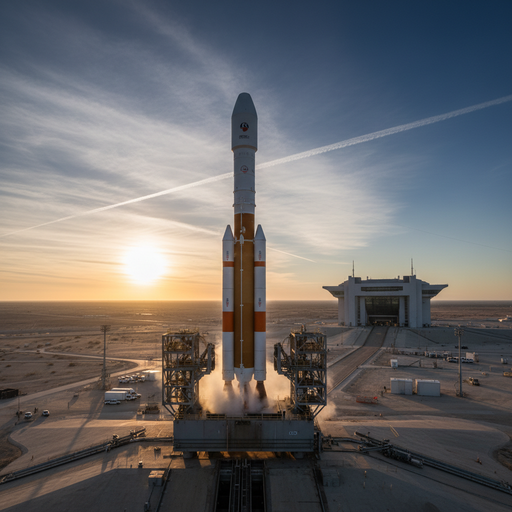
Beyond Tesla, SpaceX represents a critical component of Musk’s financial portfolio. With an estimated valuation of $449 billion, SpaceX remains the most valuable privately-held aerospace company. Musk’s approximately 42% ownership stake in the company directly adds around $188 billion to his personal net worth.
SpaceX’s dominance in commercial space launches, satellite internet development through Starlink, and emerging space tourism initiatives continues to enhance its valuation. This dimension of his wealth often receives less public attention than Tesla, yet it constitutes a massive financial asset that has grown substantially over the five-year period.
X and xAI: The Digital Assets Multiplier
Musk’s ownership of X (formerly known as Twitter) and his AI company xAI collectively contribute approximately $66 billion to his net worth. While these holdings represent a smaller percentage of his total wealth compared to Tesla and SpaceX, they position him at the forefront of emerging technologies in artificial intelligence and social media influence.
His strategic positioning in AI and crypto-related innovation, combined with the massive user base of X (formerly Twitter), creates ongoing wealth-building potential. These digital assets serve as both current value generators and future growth platforms as AI technology continues to advance.
The Path Forward: How Much Money Could Musk Eventually Have?
Understanding how much money Elon Musk has today requires recognizing it as merely a snapshot in an ongoing wealth accumulation story. If he successfully executes the Tesla compensation package conditions and continues expanding SpaceX’s commercial contracts, the trillion-dollar milestone is not merely theoretical—it’s potentially achievable within the current decade.
The diversification of his wealth across multiple industries—automotive, aerospace, AI, and digital media—creates multiple pathways for continued growth. Each sector carries significant upside potential, particularly as technological advancement accelerates. Whether Musk reaches the trillionaire status depends largely on execution across these platforms and continued favorable market conditions for his various enterprises.
What remains clear is that the question of how much money Elon Musk possesses will continue to evolve, potentially setting new records in personal wealth accumulation that few could have predicted five years ago.