

Trade
Basic
Futures
Futures
Hundreds of contracts settled in USDT or BTC
Options
HOT
Trade European-style vanilla options
Unified Account
Maximize your capital efficiency
Demo Trading
Futures Kickoff
Get prepared for your futures trading
Futures Events
Participate in events to win generous rewards
Demo Trading
Use virtual funds to experience risk-free trading
Earn
Launch
CandyDrop
Collect candies to earn airdrops
Launchpool
Quick staking, earn potential new tokens
HODLer Airdrop
Hold GT and get massive airdrops for free
Launchpad
Be early to the next big token project
Alpha Points
NEW
Trade on-chain assets and enjoy airdrop rewards!
Futures Points
NEW
Earn futures points and claim airdrop rewards
Investment
Simple Earn
Earn interests with idle tokens
Auto-Invest
Auto-invest on a regular basis
Dual Investment
Buy low and sell high to take profits from price fluctuations
Soft Staking
Earn rewards with flexible staking
Crypto Loan
0 Fees
Pledge one crypto to borrow another
Lending Center
One-stop lending hub
VIP Wealth Hub
Customized wealth management empowers your assets growth
Private Wealth Management
Customized asset management to grow your digital assets
Quant Fund
Top asset management team helps you profit without hassle
Staking
Stake cryptos to earn in PoS products
Smart Leverage
NEW
No forced liquidation before maturity, worry-free leveraged gains
GUSD Minting
Use USDT/USDC to mint GUSD for treasury-level yields

More





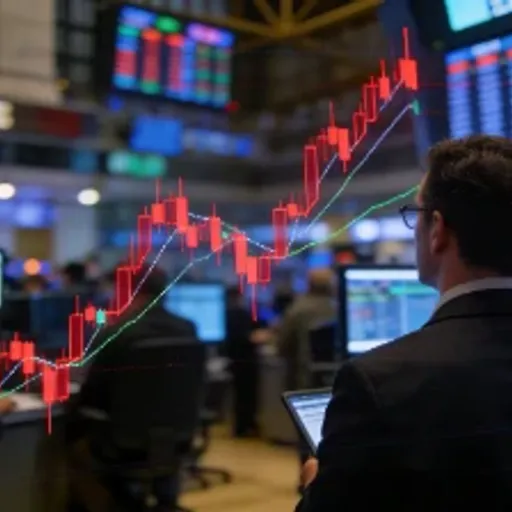
US Stock Market Could See Major Crash, Says Veteran Trader
Source: Coindoo Original Title: US Stock Market Could See Major Crash, Says Veteran Trader Original Link: A sharp reset in U.S. equities may be closer than most investors expect, according to veteran trader and strategist Todd Horwitz.
In recent comments, Horwitz painted a picture of markets supported by fragile assumptions, arguing that the risks building across policy, labor, and corporate balance sheets are being widely underestimated.
Key Takeaways
Instead of focusing on one trigger, Horwitz described a system under strain from multiple directions at once. He pointed to abandoned merger activity, stress signals inside the banking sector, and an economic environment that resembles stagflation rather than recovery. In his view, these developments suggest the market is late-cycle, even if headline indices continue to hover near highs.
Why easier money could backfire
Contrary to the belief that rate cuts would cushion the economy, Horwitz said looser monetary policy may worsen the imbalance. Despite having supported Donald Trump in past elections, he argued that additional rate cuts would largely benefit banks and government debt financing, not households.
According to Horwitz, lower borrowing costs do little to offset rising living expenses or weak wage growth. Instead, they encourage more federal borrowing while keeping inflationary pressures alive. Without serious restraint on spending, he warned, monetary easing risks prolonging the problem rather than solving it.
A valuation reset still ahead
Horwitz believes equity markets have not yet priced in the full economic slowdown. Rather than predicting a sudden crash, he expects a prolonged revaluation phase that could ultimately cut stock prices nearly in half.
He estimates that a decline of 40% to 60% across equities is plausible over the next market cycle, driven by weaker earnings power and declining consumer strength. From his perspective, current valuations rely on optimism that the economy can absorb rising debt, technological disruption, and policy missteps all at once.
Labor markets face structural disruption
Beyond markets and policy, Horwitz flagged employment trends as a critical vulnerability. He said job losses are likely to accelerate as artificial intelligence replaces roles faster than new ones can be created.
Unlike past economic downturns, he warned that displaced workers may struggle to re-enter the workforce due to the scale and speed of automation. That erosion of earning power, he said, could reduce consumption and deepen economic stress.
Skepticism toward the AI boom
Horwitz also questioned the sustainability of today’s AI-driven market leaders. Echoing concerns raised by investors such as Michael Burry, he suggested that some companies central to the AI narrative, including Nvidia, may be overstating growth through aggressive internal spending.
He described this dynamic as masking true profitability, creating valuation risks if capital becomes tighter or demand growth slows. In his view, these pressures could unwind quickly if investor sentiment shifts.
Staying invested, but not unprotected
Despite his bearish outlook, Horwitz said he remains active in the stock market. Rather than exiting entirely, he favors hedging strategies using derivatives and exposure to precious metals to manage downside risk.
Looking further ahead, he warned that falling incomes and rising automation could push governments toward heavier intervention, including discussions around universal basic income. Whether that outcome materializes or not, Horwitz believes the current market environment leaves little margin for error.
His message to investors is not one of panic, but of preparation: markets can remain elevated longer than expected, but when structural cracks widen, declines tend to be deeper than most anticipate.