

Trade
Trading Type
Spot
Trade crypto freely
Pre-Market
Trade new tokens before they are officially listed
Margin
Magnify your profit with leverage
Convert & Block Trading
0 Fees
Trade any size with no fees and no slippage
Alpha
Points
Get promising tokens in streamlined on-chain trading
Leveraged Tokens
Get exposure to leveraged positions simply
Futures
Futures
Hundreds of contracts settled in USDT or BTC
Options
HOT
Trade European-style vanilla options
Unified Account
Maximize your capital efficiency
Demo Trading
Futures Kickoff
Get prepared for your futures trading
Futures Events
Participate in events to win generous rewards
Demo Trading
Use virtual funds to experience risk-free trading
Earn
Launch
CandyDrop
Collect candies to earn airdrops
Launchpool
Quick staking, earn potential new tokens
HODLer Airdrop
Hold GT and get massive airdrops for free
Launchpad
Be early to the next big token project
Alpha Points
NEW
Trade on-chain assets and enjoy airdrop rewards!
Futures Points
NEW
Earn futures points and claim airdrop rewards
Investment
Simple Earn
Earn interests with idle tokens
Auto-Invest
Auto-invest on a regular basis
Dual Investment
Buy low and sell high to take profits from price fluctuations
Soft Staking
Earn rewards with flexible staking
Crypto Loan
0 Fees
Pledge one crypto to borrow another
Lending Center
One-stop lending hub
VIP Wealth Hub
Customized wealth management empowers your assets growth
Private Wealth Management
Customized asset management to grow your digital assets
Quant Fund
Top asset management team helps you profit without hassle
Staking
Stake cryptos to earn in PoS products
Smart Leverage
NEW
No forced liquidation before maturity, worry-free leveraged gains
GUSD Minting
Use USDT/USDC to mint GUSD for treasury-level yields


More
Promotions
Activity Center
Join activities and win big cash prizes and exclusive merch
Referral
20 USDT
Earn 40% commission or up to 500 USDT rewards
Announcements
Announcements of new listings, activities, upgrades, etc
Gate Blog
Crypto industry articles
VIP Services
Huge fee discounts
Proof of Reserves
Gate promises 100% proof of reserves

Trending Topics
View More19.49K Popularity
48.3K Popularity
56.79K Popularity
98.68K Popularity
3.84K Popularity





Pin
AI Growth Triggers Political Pushback Over Water and Power Limits
Source: Coindoo Original Title: AI Growth Triggers Political Pushback Over Water and Power Limits Original Link: https://coindoo.com/ai-growth-triggers-political-pushback-over-water-and-power-limits/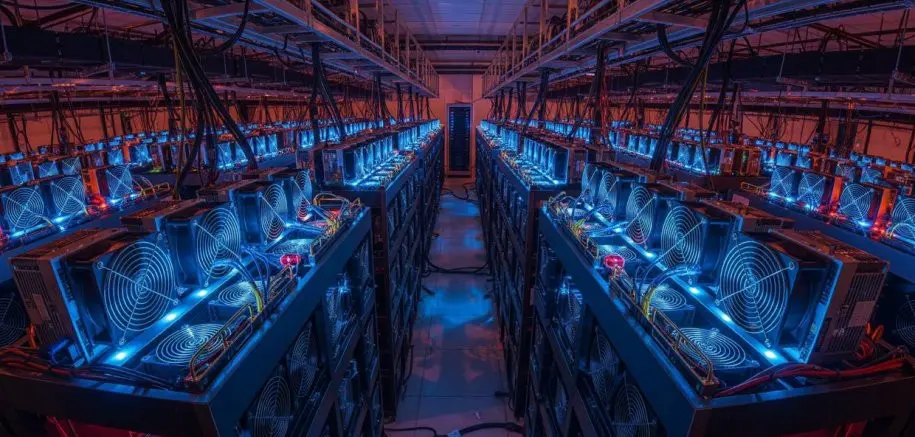
The explosive rise of artificial intelligence is creating an unexpected resource battle across the United States — one centered on water rather than computing power.
As companies race to scale AI infrastructure, large data centers are increasingly being built in regions where water supplies are already under strain, putting local communities in direct competition with corporate operators.
Key takeaways
The Geography of the AI Buildout
Recent data highlighted by Bloomberg shows that a majority of new data centers constructed since 2022 are located in areas already facing high water stress. Rather than being evenly spread, the buildout is clustered in a small number of states, intensifying pressure on regional water systems. In just three years, more than 160 AI-focused facilities have been added, representing a sharp acceleration compared with earlier periods.
This concentration has amplified local impacts. Municipalities that once planned for gradual population growth are now being asked to support industrial-scale water demand, often without clear assurances about long-term sustainability or public benefit.
Why AI Infrastructure Drains Water Supplies
The primary driver of water consumption is not electricity generation, but heat management. Advanced AI chips generate extreme temperatures, forcing operators to rely on water-intensive cooling methods. According to estimates from the International Energy Agency, a single large data center can use enough water each day to match the needs of several thousand households.
Most facilities depend on evaporative cooling, which permanently removes the majority of water drawn from local systems by releasing it into the atmosphere. Unlike residential or commercial use, where water typically returns to treatment plants, data center cooling creates a one-way draw that compounds stress on already limited supplies.
Political Pushback and Community Limits
As awareness grows, resistance is emerging from both policymakers and residents. Political figures have argued for slowing the pace of construction, warning that communities are being pushed to absorb environmental costs without sufficient oversight.
At the state level, measures are being backed that would allow local governments to block new data center projects, citing constraints on water systems and the power grid.
Public sentiment is also shifting. Once seen as abstract digital infrastructure, hyperscale data centers are increasingly viewed as resource-intensive industrial sites. As AI adoption accelerates into the next decade, the debate is moving beyond technology and into a broader question: how much environmental cost society is willing to accept in exchange for computational progress.