

Trade
Trading Type
Spot
Trade crypto freely
Pre-Market
Trade new tokens before they are officially listed
Margin
Magnify your profit with leverage
Convert & Block Trading
0 Fees
Trade any size with no fees and no slippage
Alpha
Points
Get promising tokens in streamlined on-chain trading
Leveraged Tokens
Get exposure to leveraged positions simply
Futures
Futures
Hundreds of contracts settled in USDT or BTC
Options
HOT
Trade European-style vanilla options
Unified Account
Maximize your capital efficiency
Demo Trading
Futures Kickoff
Get prepared for your futures trading
Futures Events
Participate in events to win generous rewards
Demo Trading
Use virtual funds to experience risk-free trading
Earn
Launch
CandyDrop
Collect candies to earn airdrops
Launchpool
Quick staking, earn potential new tokens
HODLer Airdrop
Hold GT and get massive airdrops for free
Launchpad
Be early to the next big token project
Alpha Points
NEW
Trade on-chain assets and enjoy airdrop rewards!
Futures Points
NEW
Earn futures points and claim airdrop rewards
Investment
Simple Earn
Earn interests with idle tokens
Auto-Invest
Auto-invest on a regular basis
Dual Investment
Buy low and sell high to take profits from price fluctuations
Soft Staking
Earn rewards with flexible staking
Crypto Loan
0 Fees
Pledge one crypto to borrow another
Lending Center
One-stop lending hub
VIP Wealth Hub
Customized wealth management empowers your assets growth
Private Wealth Management
Customized asset management to grow your digital assets
Quant Fund
Top asset management team helps you profit without hassle
Staking
Stake cryptos to earn in PoS products
BTC Staking
HOT
Stake BTC and earn 10% APR
GUSD Minting
Use USDT/USDC to mint GUSD for treasury-level yields


More
Promotions
Activity Center
Join activities and win big cash prizes and exclusive merch
Referral
20 USDT
Earn 40% commission or up to 500 USDT rewards
Announcements
Announcements of new listings, activities, upgrades, etc
Gate Blog
Crypto industry articles
VIP Services
Huge fee discounts
Proof of Reserves
Gate promises 100% proof of reserves






Japan Commits to Major AI and Semiconductor Investment in 2026 Budget
Source: Coindoo Original Title: Japan Prepares Major AI and Chip Spending Boost for 2026 Original Link: https://coindoo.com/japan-prepares-major-ai-and-chip-spending-boost-for-2026/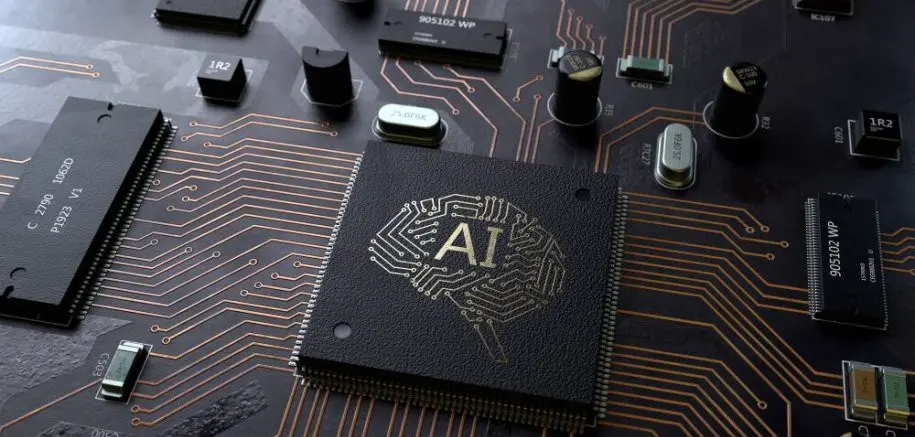
Japan is signaling that the next phase of its economic strategy will be built around chips and artificial intelligence, not traditional stimulus or short-term fixes.
As the government prepares its fiscal year 2026 budget, advanced semiconductors and AI have emerged as the clear winners, absorbing an unprecedented share of state resources. The shift reflects a growing sense in Tokyo that competitiveness in frontier technologies will determine economic leverage over the next decade.
Key Takeaways
Technology Moves to the Core of Japan’s Growth Plan
Rather than treating AI and semiconductors as supporting industries, policymakers are now positioning them as foundational. Funding dedicated to these areas is set to jump sharply, pushing the Ministry of Economy, Trade and Industry’s budget to its highest level in years.
The scale of the increase marks a break from previous years, when support for chips and AI was often fragmented or added later through supplementary spending. This time, the government intends to lock in funding from the start, giving companies long-term visibility and reducing uncertainty for capital-intensive projects.
Catching Up in a Fractured Global Tech Landscape
Japan’s pivot comes as competition between the US and China continues to reshape global supply chains. While tensions between the two superpowers have eased compared to earlier trade wars, technology access remains tightly controlled.
Japanese officials see domestic chip production and AI capability as strategic insurance. By expanding funding now, Tokyo hopes to secure supply chains, reduce dependence on external players, and reassert influence in sectors where it once dominated.
Chips First, Then AI at Scale
A significant portion of the expanded budget will go toward rebuilding Japan’s advanced semiconductor capacity. State-backed initiatives, including support for domestic manufacturing ventures, are designed to bring cutting-edge chip production back onshore.
Artificial intelligence, however, represents the longer-term bet. Funding will focus on developing large domestic AI models, upgrading data infrastructure, and integrating AI into physical systems such as robotics and industrial machinery. This approach reflects Japan’s strength in hardware and manufacturing, where AI is increasingly viewed as a productivity multiplier rather than a standalone software product.
Beyond Tech: Energy, Materials, and Exports
The broader budget also aligns with Japan’s strategic priorities outside pure technology. Additional allocations target access to critical minerals, decarbonization initiatives, and next-generation energy systems.
At the same time, the government plans to expand financial backing for Japanese companies investing abroad, particularly in the United States. Export insurance and bond-backed guarantees are intended to reduce risk as firms deepen overseas production and partnerships under existing trade agreements.
Stimulus Effects Already Shaping Expectations
The technology-heavy budget follows a massive stimulus program introduced late last year, which focused on offsetting rising living costs while encouraging private investment. That package included household support, energy subsidies, and funding for infrastructure and high-tech sectors.
Officials now expect those measures to feed into stronger economic performance. Growth forecasts for the coming fiscal years have been revised higher, with consumer spending and capital investment projected to accelerate as public support crowds in private activity.
A Long-Term Repositioning, Not a One-Off Boost
What stands out is not just the size of the spending, but its intent. Japan is moving away from reactive fiscal policy toward a model that uses the state to shape industrial direction.
If parliament approves the budget, fiscal 2026 could mark a turning point — one where Japan formally commits to competing at the highest level in AI and semiconductor development, even if that means running larger budgets and taking on more risk in the short term.