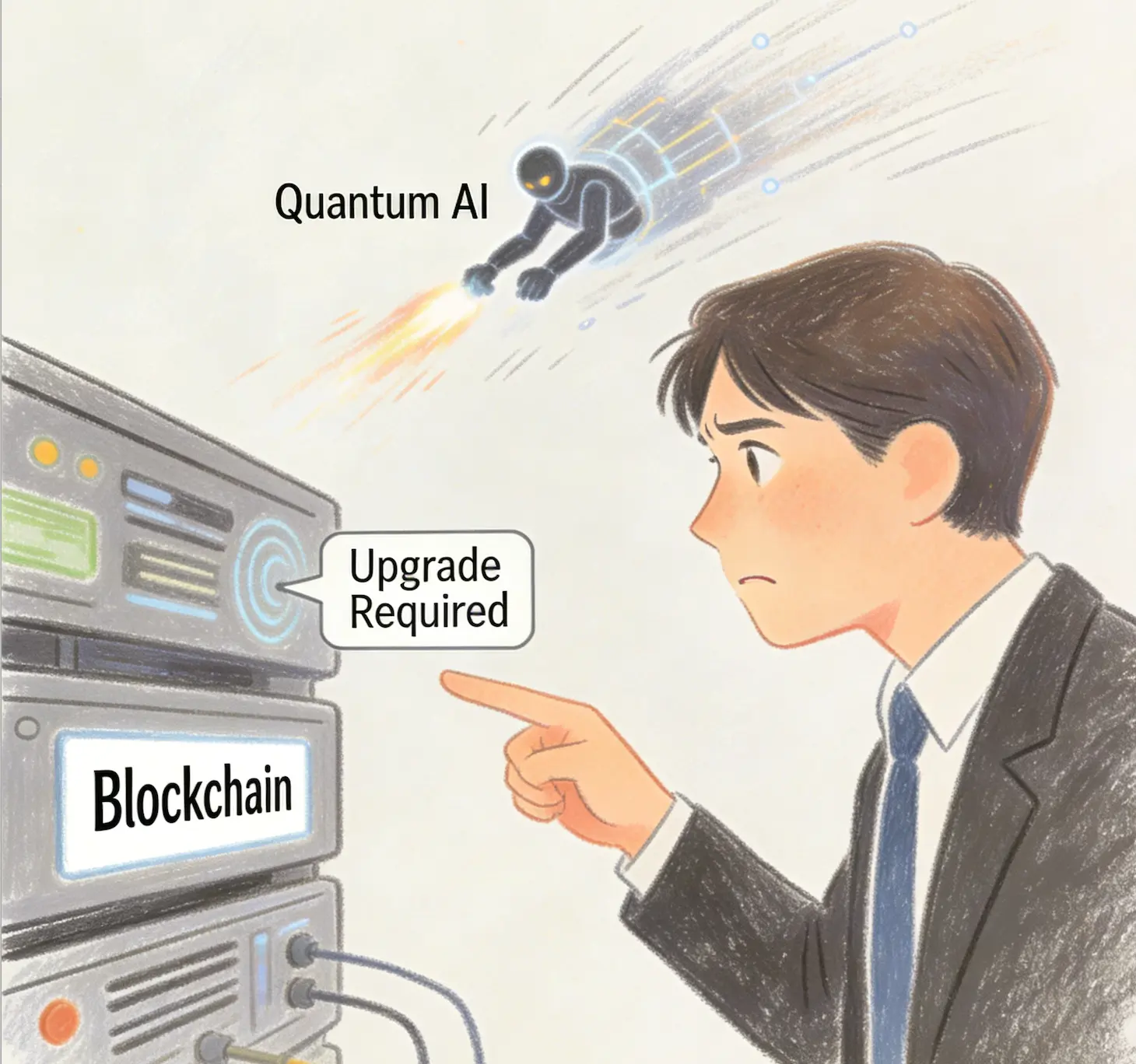
 Grayscale, a digital asset manager, argued on April 6, 2026 that a new research paper from Google Quantum AI makes post-quantum cryptography an urgent priority for public blockchains, as quantum progress may arrive in “discrete jumps” rather than linear steps, requiring as few as 1,200 to 1,450 logical qubits to break classical cryptography.
Grayscale emphasized that post-quantum cryptography tools already exist and are in use for internet security, with Solana and the XRP Ledger already experimenting with such systems, while Bitcoin faces a social governance challenge over how to handle coins with lost or inaccessible private keys.
Google Quantum AI Paper Estimates Quantum Threshold May Be Closer Than Thought
The Google Quantum AI whitepaper, which Grayscale described as a detailed technical summary, estimates that a quantum computer capable of running Shor’s algorithm at scale may require just 1,200 to 1,450 logical qubits—a measure of computational capacity. Grayscale noted that this places the “finish line” closer than many assume, and because progress may come in sudden jumps rather than gradual improvements, waiting for further innovation could be risky.
Grayscale found the argument persuasive and supports accelerated efforts toward quantum readiness. The firm noted that while no quantum computer capable of running Shor’s algorithm at scale exists today, blockchain communities have significant work ahead in engineering, consensus building, and addressing second-order effects such as potentially lower transaction throughput.
The Google paper balanced urgency with optimism, describing the path forward as “technically clear.” Blockchains need to adopt post-quantum cryptography, which Grayscale described as a “mature cryptographic discipline” with tools that have been proposed, scrutinized, implemented, and deployed. These systems are already securing internet traffic and certain blockchain transactions.
Quantum Risk Varies Across Blockchains, Grayscale Says
Grayscale noted that potential security vulnerabilities from advanced quantum computers depend on multiple factors: whether the blockchain uses a UTXO model (like Bitcoin) or an account model (like Ethereum), whether consensus derives from proof-of-work or proof-of-stake, whether there are smart contracts, whether there was a setup process, and the block time.
From a strict engineering standpoint, Grayscale said Bitcoin has lower risk than other cryptocurrencies because it uses a UTXO model and proof-of-work consensus, does not have native smart contracts, and certain address types are not quantum vulnerable if not reused after spending. Solana and the XRP Ledger are already experimenting with post-quantum cryptography, demonstrating that testing has moved beyond theory.
Bitcoin Faces Social Governance Challenge Over Lost Coins
Grayscale emphasized that Bitcoin’s challenges are more social than technical. The Bitcoin community must decide what to do about coins where the private key has been lost or is otherwise inaccessible. Options include burning the coins, doing nothing, or deliberately slowing their release by limiting the rate of spending from vulnerable addresses. All options are conceptually doable, but the challenge is reaching a decision.
Grayscale noted that the Bitcoin community has a history of contentious debates over protocol changes, including disputes around image data stored in blocks. Unlike centralized organizations that have chief technology officers who can order changes, public blockchains are global communities governed by consensus, making the decision-making process more complex.
Post-Quantum Migration as an Opportunity for Decentralized Resilience
Every organization that uses classical cryptography—including banks, tech companies, and governments—needs to prepare for a post-quantum future. However, Grayscale noted that centralized entities have the luxury of top-down governance, where a CTO can simply order the work done. Public blockchains do not have CTOs; they are global communities governed by consensus.
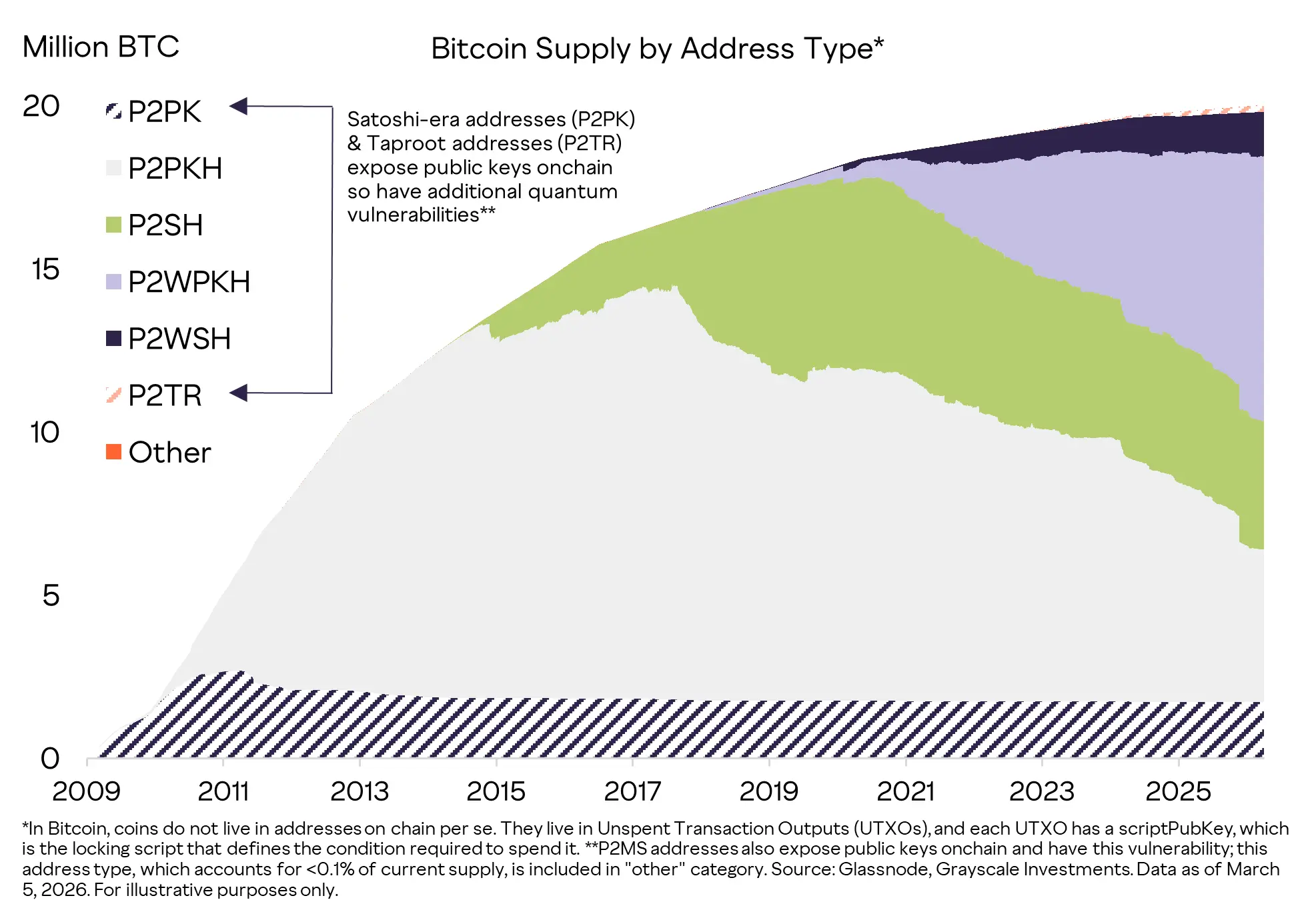 (Source: GrayScale)
The potential threat from quantum computing therefore presents both a challenge and an opportunity. Blockchain communities will need to organize around solutions and implement them in code. Grayscale believes that when this is done, it will become even harder to deny the adaptive resilience of decentralized financial technology.
(Source: GrayScale)
The potential threat from quantum computing therefore presents both a challenge and an opportunity. Blockchain communities will need to organize around solutions and implement them in code. Grayscale believes that when this is done, it will become even harder to deny the adaptive resilience of decentralized financial technology.
Grayscale concluded that investors should not fret: there is no security threat to public blockchains from quantum computers today. However, it is time to accelerate efforts to prepare for the post-quantum future, and in doing so, demonstrate the resilience of decentralized technology.
FAQ
What quantum computing threshold did Google Quantum AI estimate?
Google Quantum AI estimates that a quantum computer capable of running Shor’s algorithm at scale may require as few as 1,200 to 1,450 logical qubits, which is lower than many previous estimates. Grayscale noted that this places the potential threat closer than many assume.
Which blockchains are already experimenting with post-quantum cryptography?
According to Grayscale, both Solana and the XRP Ledger are already experimenting with post-quantum cryptography tools. These efforts show that testing has moved beyond theory and into practical implementation.
What is Bitcoin’s main challenge regarding quantum readiness?
Grayscale stated that Bitcoin’s challenges are more social than technical. The community must decide how to handle coins with lost or inaccessible private keys—whether to burn them, leave them untouched, or slow their release. Reaching consensus on this issue is the primary hurdle, given Bitcoin’s history of contentious protocol debates.
Disclaimer: The information on this page may come from third parties and does not represent the views or opinions of Gate. The content displayed on this page is for reference only and does not constitute any financial, investment, or legal advice. Gate does not guarantee the accuracy or completeness of the information and shall not be liable for any losses arising from the use of this information. Virtual asset investments carry high risks and are subject to significant price volatility. You may lose all of your invested principal. Please fully understand the relevant risks and make prudent decisions based on your own financial situation and risk tolerance. For details, please refer to
Disclaimer.


