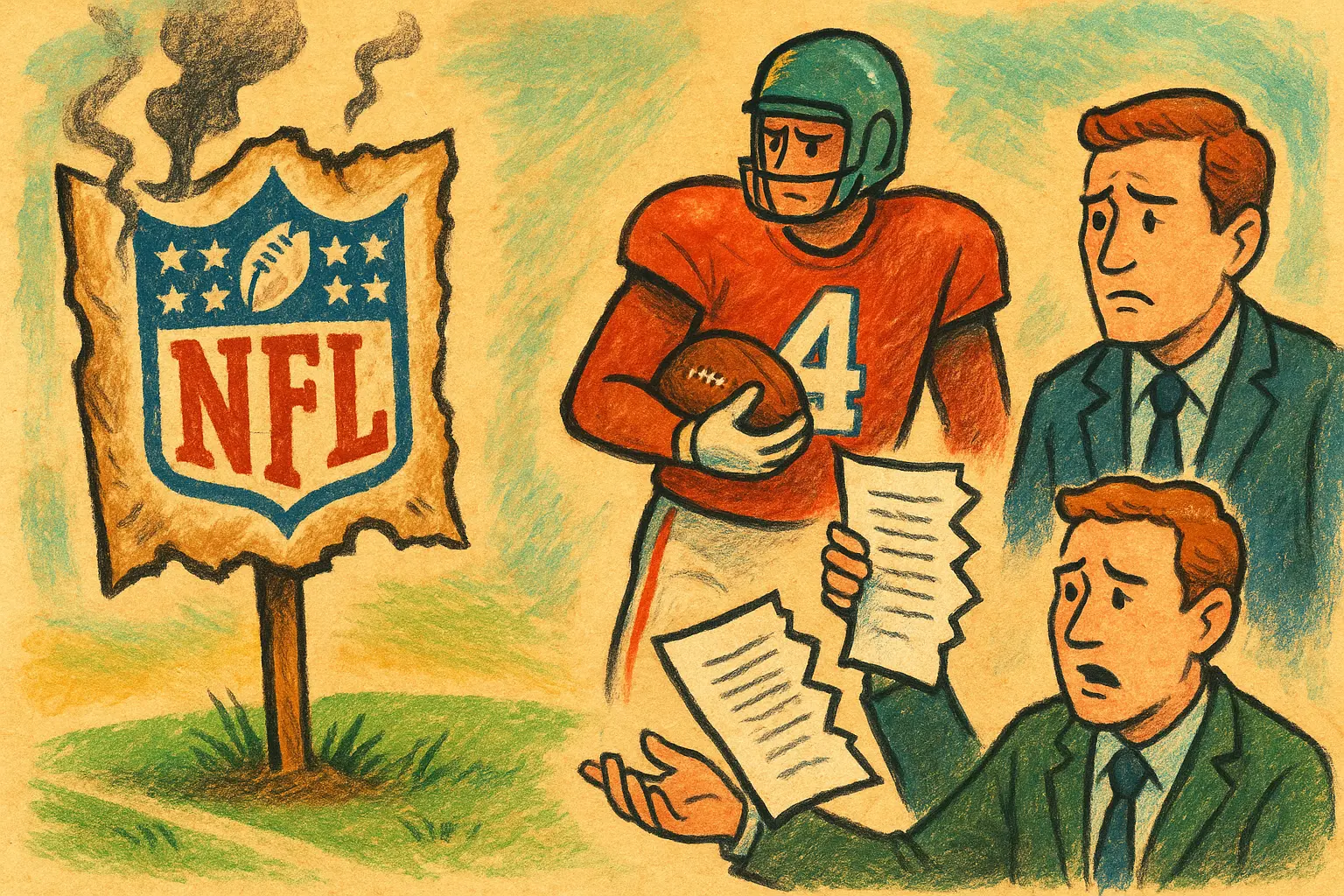
The National Football League (NFL) in early April found itself in its first situation since 2021 of having no official sports betting partner. FanDuel, DraftKings, and Caesars Entertainment’s current agreements all expired on March 31 and were not renewed. The three contracts were signed in April 2021, with a five-year term and a total value of nearly $1 billion.
Behind the contract expiration: Genius Sports data fees are at the core of the negotiation obstacle
The fundamental reason negotiations between FanDuel and DraftKings and the NFL fell apart was that the NFL’s exclusive real-time data provider, Genius Sports, significantly raised the official streaming data pricing. Genius Sports provides technology support for more than 98% of legal NFL sports betting across the United States, and it has already extended its exclusive data agreement with the NFL to the 2030 season in June 2025. Any company hoping to retain its status as an official NFL betting partner must accept the data-fee structure set by Genius Sports.
Caesars Entertainment’s situation, however, was different—insiders said it had no intention of renewing in the first place, and the pricing dispute had nothing to do with it. The NFL told The Sports Business Journal (SBJ) that it remains open to “various league partnership models,” which was interpreted as a possible shift toward an exclusive agreement model with a single operator. However, with FanDuel and DraftKings together holding about two-thirds of the U.S. sports betting market share, there were extremely limited financial alternatives to replace the two companies.
Lawsuit over micro-betting addiction: A legal challenge analogous to the tobacco industry
At the same time as the contracts expired, the PHAI lawsuit added another layer of unprecedented legal pressure on the NFL:
Addictive design of micro-betting: The lawsuit specifically targets “micro-betting” — rapid wagers on a single play during a game, such as “Will the next play be a pass or a run?” and “Can the third-down offense succeed?” These are typically settled within seconds, supported by Genius Sports’ data pipeline.
AI-driven reinforcement of addiction: The defendants are accused of using AI-driven push notifications and VIP customer service mechanisms to intensify users’ betting behavior, and even continuing despite the plaintiffs clearly stating they wanted to stop.
Tobacco-industry analogy: PHAI lawsuit director Andrew Rainer said, “By emulating the tobacco industry’s approach, the online sports betting industry has developed a product that is extremely easy to get addicted to—bombarding consumers with dozens of betting opportunities every day, every minute.”
The lawsuit was filed by two Pennsylvania gambling-addicted patients. DraftKings, FanDuel, the NFL, and Genius Sports did not comment on the matter.
Key background on the NFL betting landscape: The highest-bet-volume sport in the U.S.
According to data from the American Gambling Association, total sports betting handle in the United States in 2025 reached $166.94 billion, setting an annual revenue record with $16.96 billion. The NFL is the single sport with the highest wagered amount. This context means the impact of a gap in official partners far exceeds that of any other league.
Frequently asked questions
Why did negotiations between the NFL and FanDuel and DraftKings fail to reach an agreement at the last minute?
The core obstacle was that the NFL’s exclusive data provider, Genius Sports, sharply increased its data pricing. FanDuel and DraftKings had to operate NFL-related betting by purchasing real-time data from Genius Sports, but the two sides couldn’t reach a consensus on the reasonableness of the data fees, ultimately preventing the contract from being completed before the deadline.
What special significance does it have to list the NFL itself as a defendant in the lawsuit?
PHAI lists the NFL league itself (not just the betting operators) as a defendant, meaning the plaintiffs believe the NFL played an active role in promoting micro-betting products and bears joint responsibility for the addiction harms caused to users. If the lawsuit is successful, it could set an important precedent for the legal responsibility professional sports leagues may face regarding betting partnerships.
If FanDuel and DraftKings ultimately can’t reach a new agreement, what options does the NFL have?
The NFL said it is open to “various league partnership models.” Possible paths include: signing an exclusive partnership with one operator (abandoning the three-party model); bringing in other operators such as BetMGM; or maintaining the state of having no official betting partner until the data pricing dispute is resolved. However, since FanDuel and DraftKings together hold two-thirds of the market share, any plan that bypasses these two companies would face a significant loss in market coverage.
Disclaimer: The information on this page may come from third parties and does not represent the views or opinions of Gate. The content displayed on this page is for reference only and does not constitute any financial, investment, or legal advice. Gate does not guarantee the accuracy or completeness of the information and shall not be liable for any losses arising from the use of this information. Virtual asset investments carry high risks and are subject to significant price volatility. You may lose all of your invested principal. Please fully understand the relevant risks and make prudent decisions based on your own financial situation and risk tolerance. For details, please refer to
Disclaimer.


