Jan3 CEO Samson Mow was invited by Legislative Yuan member (KMT) Ko Ju-chun, marking his first time entering Taiwan’s Legislative Yuan to give a briefing on “How Taiwan Can Build a Bitcoin Reserve.” He suggested that Taiwan buy 83,000 bitcoins as a strategic reserve asset, with the cost being only about 1% of GDP. Ko Ju-chun said that the Taiwan government has already inventoried the 210 bitcoins it currently holds (from seizures), and that the central bank’s stance has shifted from “Bitcoin is a scam” to “possibly,” meaning reserves have turned into a possible option.
(Background: Ko Ju-chun urged the central bank to develop a “stablecoin strategic reserve,” and Yang Chin-Lung gave a hint: as time and space change, adjustments will be made.)
(Additional background: Dr. Bo (Ko Ju-chun): Bitcoin is a hot weapon of the digital age! Taiwan should include BTC in reserves.)
Table of Contents
Toggle
- Samson Mow: Bitcoin is “new money” of energy + information
- If Taiwan is going to set up a bitcoin reserve, 83,000 bitcoins is recommended
- The first move for crypto reserves might be a bitcoin ETF
The issue of bitcoin reserves continues to heat up, and Taiwan lawmakers are also following suit and studying it. On March 31, Legislative Yuan member Ko Ju-chun hosted a bitcoin reserve seminar at the Legislative Yuan Research Building, specially inviting Samson Mow, CEO of the bitcoin technology company Jan3, along with Henry Lin (林紘宇), Honorary Director of the Taiwan Bitcoin and Virtual Asset Development Association; Jeff Wen (温宏駿), co-founder of Haeyek Technology; Mike Lin (林宇定), a director of the Blockchain Enthusiasts Association; and other industry representatives such as Dongqu (動區) for an in-person discussion of a financial debate that has been gaining traction in Taiwan over the past few years: should the government buy bitcoin as a reserve?
Ko Ju-chun opened by throwing out two background points. First, the Taiwan government has finally completed its first bitcoin inventory, confirming that it holds 210 bitcoins (from judicial seizures), and the report also mentions that “there are more that haven’t been counted,” because some institutions’ holdings have not yet been consolidated.
Second, the central bank governor’s stance has shown a subtle change. In the past one or two years, Taiwan’s central bank had publicly called, on social media, that “Bitcoin has no value” and “Bitcoin is dangerous.” But from late 2024 to early 2025, the central bank began including positive case examples—such as the Czech Republic—within its reports.
Ko Ju-chun also said that, in a question-and-answer session in the Legislative Yuan on the 30th, when the central bank governor was asked about incorporating U.S. dollar stablecoins into reserves, the answer was: “We probably won’t consider it for now, but as time goes on, perhaps it could be possible.”
“This is not a very strong signal, but (toward bitcoin) the attitude has become more open,” Ko Ju-chun said at the outset, setting the premise first.
Samson Mow: Bitcoin is “new money” of energy + information
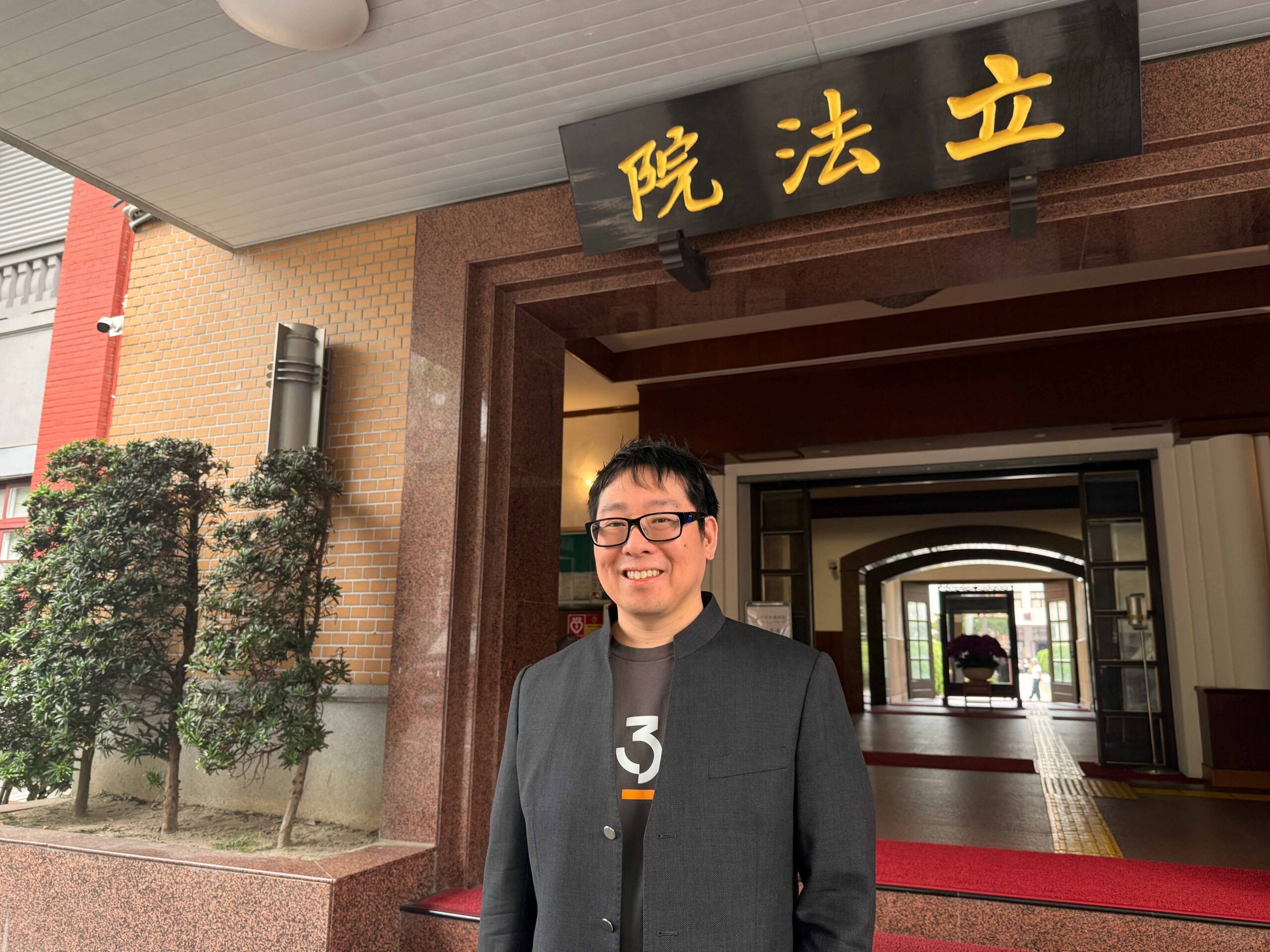
Samson Mow’s presentation is the core of the entire seminar. He first introduced Jan3’s background. He previously served as Chief Strategy Officer at Blockstream and Chief Operating Officer at BTCC. Later, together with bitcoin pioneer Adam Back, he helped develop second-layer network technology for Bitcoin, and ultimately decided to found Jan3. In recent years, he has focused specifically on pushing for “national adoption of bitcoin.”
Jan3 has helped El Salvador draft bitcoin legislation and digital asset laws. Currently, the team includes multiple members focused on national-level bitcoin initiatives, such as a Chief of Strategy, a Chief of Technology, and a Chief Scientist.
Samson Mow opened with a table that compares fiat currencies, gold, and bitcoin. He pointed out that sound money needs to have durability, divisibility, homogeneity, portability, verifiability, scarcity, and immutability. Fiat money can be divided, but if you take a $100 bill to buy coffee in a convenience store in the U.S., the cashier will directly refuse it.
Gold may be the underlying layer of fiat money, but it’s difficult to divide, hard to carry in large quantities, and verifying purity requires “melting it.”
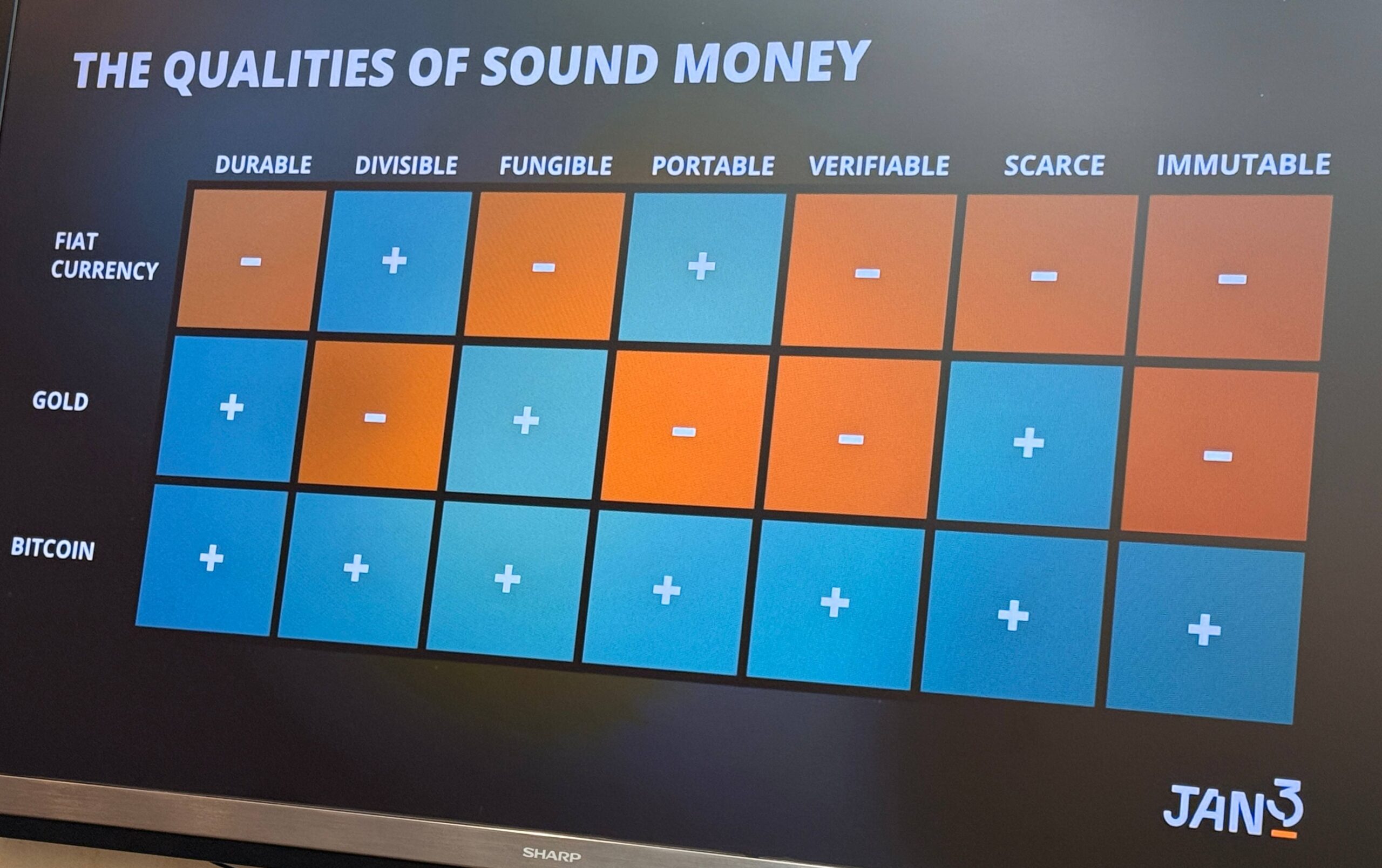
“Bitcoin meets all the standards,” Samson said. “And it’s something that can prove scarcity. Gold may be scarce, but there’s more gold in the solar system. Bitcoin is 21 million coins—your computer can verify that firsthand.”
He then offered an even deeper viewpoint: Bitcoin is a currency of energy and information (New Money). It converts any form of energy into electricity for mining. Users can transmit bitcoin transactions through the internet, wireless radio waves, and satellite broadcasts, or they can write it on a piece of paper to pass it along (private key conversion).
Samson Mow emphasized that this viewpoint is especially important to legislators, because when legislators draft laws, they will manage bitcoin as if it were a fiat currency, stock, or bond based on traditional understanding. But the essence of bitcoin is information—it’s a new form of money, and restricting the flow of information is a no-win war.
In the modern world, money is information, and everything needs to be reconsidered, because you can’t constrain information.
He also proposed a very special analogy: “Bitcoin is a ruler with 21 million notches.” 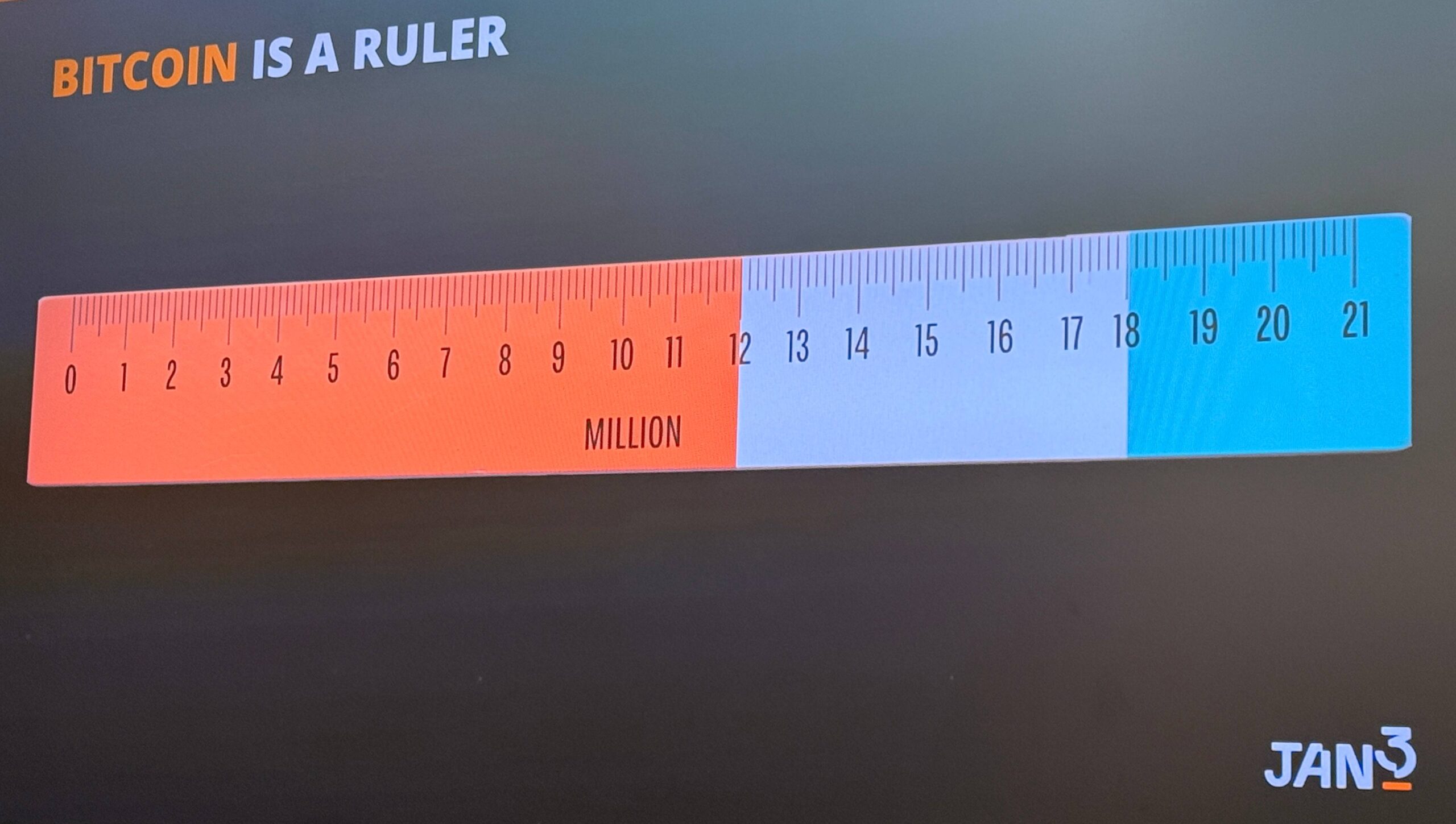
Taiwan’s dollar value is measured in U.S. dollars; the value of the U.S. dollar is measured by the S&P 500 or gold; and all assets fluctuate relative to other things. But Bitcoin creates an absolute standard of measurement. “In reality, Bitcoin itself doesn’t fluctuate—everything else fluctuates,” he said. “When you see Bitcoin going up or down, that reflects what’s happening elsewhere in the world.”
A part of this idea includes bitcoin standardism, as well as an onboarding mindset that treats BTC as a formal asset.
If Taiwan is going to set up a bitcoin reserve, 83,000 bitcoins is recommended
Returning to the core issue of entering strategic reserves, Samson Mow said directly that modern democratic countries no longer ask “whether they should hold bitcoin,” but instead ask “how much they should hold.”
He pointed out that the United States currently holds the world’s largest national bitcoin reserve—328,000 bitcoins in total—mainly coming from judicial seizures and proceeds from crimes, valued at about $22 billion. More importantly, the U.S. Senate already has a draft “Bitcoin Bill,” aiming to accumulate 1 million bitcoins, and each state is also actively pushing its own legislation.
At the same time, Wall Street is accumulating at an astonishing pace through ETFs. For example, BlackRock’s bitcoin ETF currently has a size of about $50 billion, holding around 750,000 bitcoins. MicroStrategy holds 252,000 bitcoins. Morgan Stanley is also grabbing a slice of the pie, announcing an ETF with the lowest fee rate in the market.
“The U.S. is already a superpower in bitcoin. Even if Trump says he wants this to happen, I think it has already happened,” Samson Mow said.
He also gave the example of Bhutan as the best demonstration of “energy money.” Bhutan used its hydropower resources to mine more than 9,000 bitcoins, once accounting for 10% of its GDP. It even “bitcoin-ized” its bitcoin reserve currency to pay for public services, boost wages, and build new airports. In mining, Bhutan has proven that if you have energy, you can have money.
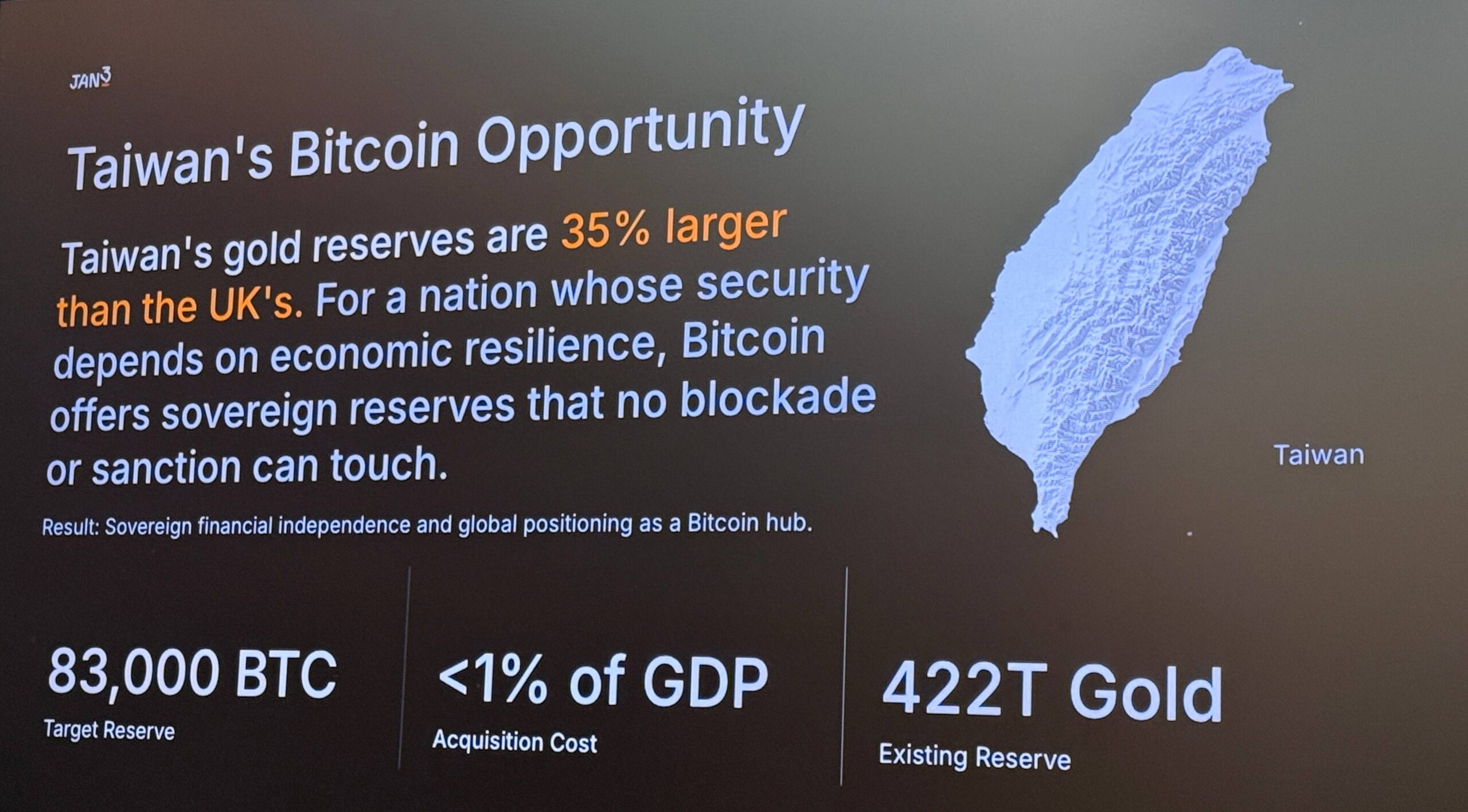
Coming back to the key point for Taiwan, Samson Mow used gold reserves to make the calculation: Taiwan has 422 metric tons of gold in its official gazette holdings. The UK has 310 metric tons of gold and over 60,000 bitcoins. Since Taiwan’s gold holdings are 30% higher than the UK’s, Taiwan’s bitcoin holdings should also be 30% higher. That translates to 83,000 bitcoins.
From a cost perspective, based on the current bitcoin price of about $67,000–$68,000 and Taiwan’s GDP of about $900 billion, purchasing 83,000 bitcoins would be about less than 1% of GDP.
“Considering that Taiwan spends 2% of GDP on the military, spending only 1% of funds in one year to buy bitcoin will bring huge returns over the next hundred years,” Samson Mow pointed out the returns hidden in bitcoin reserves.
As for exactly how to buy it, Samson Mow proposed the concept of a bitcoin bond. He said that direct purchase is not easy for a country, because it requires budget and legislative support, but the theme could be to issue bitcoin bonds. Interest could be paid through “investment in mining,” and on top of that, there’s the upside potential from bitcoin appreciation over the long term—so that the implied yield could rise from 6.5% in the fifth year to 90% in the tenth year.
He also revealed that Jan3 has submitted to the U.S. a proposal for “1 million bitcoin bonds” with a scale of $2 trillion, with interest at only 1% and a 10-year term. A similar framework has also been submitted to Argentina to help that country spread out its sovereign debt problem through bitcoin over 17 years.
The first move for crypto reserves might be a bitcoin ETF
Dongqu media (動區) asked Samson Mow and the experts attending the meeting: in terms of social support before a bitcoin reserve is proposed by a U.S. government agency, is there a direct relationship with compliant investment channels such as bitcoin ETFs issued by financial institutions? Especially in Taiwan, where the public is very enthusiastic about ETFs, is pushing bitcoin financial products first—so society becomes familiar with crypto—an important step that ultimately affects the central bank’s discretion?
Samson Mow responded that to push for national bitcoin reserves, three conditions are needed: “a friendly society, friendly legislation, and a friendly government.” All three are indispensable.
He believes that a bitcoin ETF is indeed the best way to give Taiwan’s 23 million people exposure to bitcoin, and it is also the biggest driving force for making society more friendly toward bitcoin. At the same time, he pointed out that a retirement fund is unlikely to buy spot bitcoin, but they can buy index funds—investing in bitcoin index funds—which can solve the problem that many countries’ retirement funds face: insufficient funds. If retirement funds (labor insurance funds) can invest in bitcoin through ETFs, it would help address this structural crisis.
Legislative Yuan member Ko Ju-chun responded that ETF products have been very successful in Taiwan. Over the past two years, the crypto industry has also helped the government open the gate, so that trading in bitcoin ETFs—previously completely prohibited, and even Sub-brokerage (cross-brokerage/overseas brokerage services)—was banned. Now, qualified domestic investors can buy foreign bitcoin ETFs through cross-brokerage arrangements.
He believes that as the government continues to assess whether Taiwan can issue its own bitcoin ETF, Taiwan’s top financial holding companies or banks do in fact have plans and are considering creating their own bitcoin ETF. Under Taiwan’s current regulations, there is no strict ban that says “it can be issued only if it is a security.” But bitcoin is not a security. After that, it still needs to be designed into what specific form—so that requires working with domestic industry players and referencing how other countries have categorized similar assets.
Crypto lawyer Guo Ke (林紘宇) responded that the Taiwan Bitcoin and Virtual Asset Development Association has completed a legal paper exploring how to transform the virtual assets seized by Taiwan into strategic reserve assets, which will be formally published soon. At the same time, the association is also actively pushing for locally issued large-cap index bitcoin ETFs in Taiwan. It has already met with key figures in the Securities Investment Trust and Consulting Association (投信投顧公會), and it has also reached out to all ETF-issuing trust companies that have interest. “We believe the timing is right,” he said.
Another guest attendee, “Finance-style Big Star” Wen Hongjun (温宏駿), also said that he and Lin Hongyu have indeed recently been actively engaging with ETF issuers. Currently, the trust companies do show interest in bitcoin financial products such as ETFs. The only issue is that for ETFs, under existing regulations, the underlying assets can only invest in securities. For including virtual currencies like bitcoin, the Financial Supervisory Commission would need to issue an administrative order.
In addition, Wen Hongjun approached it from a geopolitical angle. He said Taiwan should not only consider bitcoin, but also consider U.S. dollar stablecoins, because Taiwan’s life insurance industry has exposure to U.S. assets of more than $600 billion. Fluctuations in the exchange rate between the New Taiwan dollar and the U.S. dollar would expose insurance companies to massive valuation losses. He borrowed Samson Mow’s mention of El Salvador’s “volcano bonds” and proposed “silicon chip bonds,” because El Salvador has volcanic energy, while Taiwan has semiconductors and computing power—so Taiwan could issue bonds based on this to diversify treasury risk.
We have semiconductors here. We have chips and computing power here.
Director Lin Yudin (林宇定) of the Blockchain Enthusiasts Association then reviewed the association’s more than ten years of promotion efforts. Currently, Taiwan’s Bitcoin Hub has also signed cooperation memorandum agreements with cities such as Seoul, Chiang Mai, Tokyo, and Sydney. The goal is to build Taiwan into an Asian bitcoin hub.
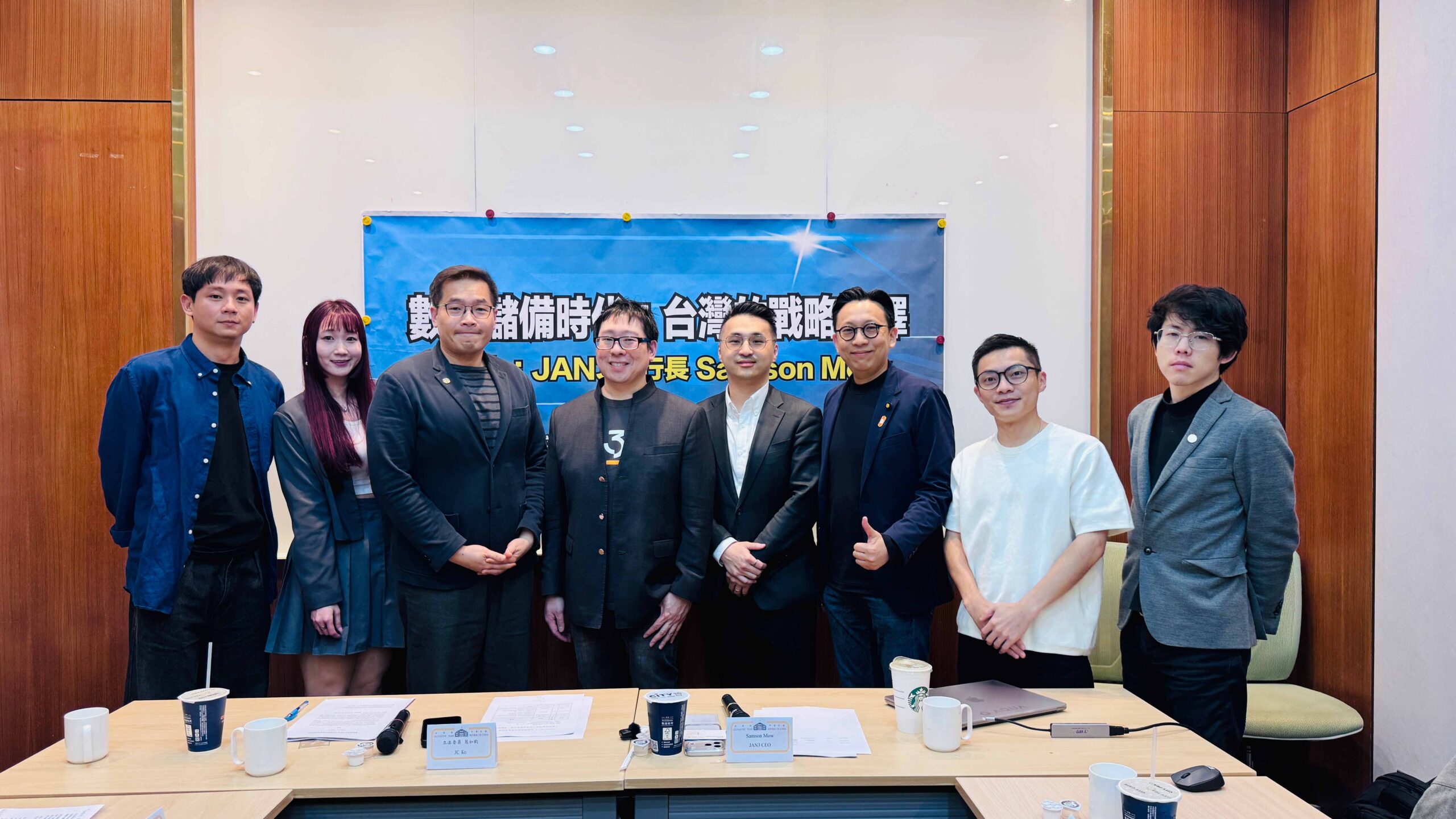
The final line that Samson Mow left Taiwan with at the end of the seminar was:
“Bitcoin is digital gold. If you think gold is important, then you should assign bitcoin the same value. Because bitcoin is better than gold—it is everything that gold wants to be. The sooner you act, the better, because other countries are paying attention, companies are buying, and ETFs are accumulating. Buy bitcoin as soon as possible.”