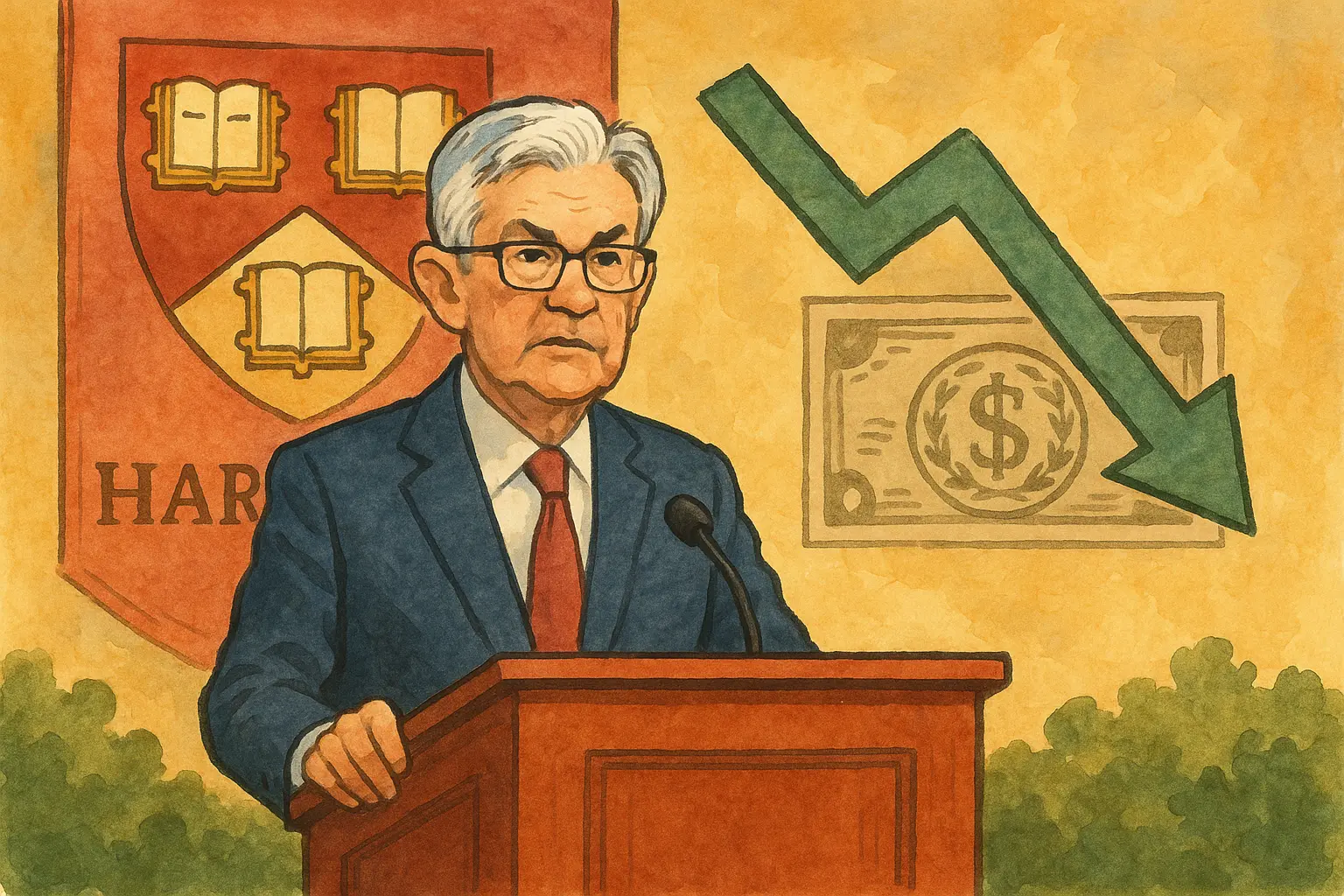
Federal Reserve Chair Jerome Powell (Jerome Powell) was invited to give a speech at Harvard University on March 30. With the Iran war entering its fifth week and the average U.S. gas price rising to $4 per gallon, Powell emphasized that the Fed will maintain a cautious wait-and-see stance; the impact of monetary policy on the supply-side shock is limited, and action should not be rushed at this stage. The market quickly repriced: the yield on U.S. 10-year Treasuries fell 10.2 basis points to 4.338%.
Key takeaway from the speech: Fit the policy to the moment; observe first
Powell said the current monetary policy stance is “in the right place.” With uncertainty currently extremely high, the most appropriate response is to observe how events unfold rather than take rushed action when information is insufficient. He emphasized that the effect of monetary policy on the supply-side shock is limited by nature, and that policy effects involve long and difficult-to-predict lags. Before oil prices and tariff pressures have been fully transmitted, the Fed needs more data to support a policy shift.
Immediate market reaction: Treasury yields fall, and tech and semiconductor stocks weigh on the U.S. equities market
After the speech, major U.S. market indexes showed a clear split:
Dow Jones Industrial Average: up 49.50 points (+0.11%), closing at 45,216.14
Nasdaq index: down 153.72 points (-0.73%), closing at 20,794.64
S&P 500 index: down 25.13 points (-0.38%), closing at 6,343.72
Philadelphia Semiconductor Index: down 315.33 points (-4.23%), closing at 7,142.33
NYSE FANG+ Index: down 196.85 points (-1.47%), closing at 13,235.31
The Dow edged into positive territory with defensive support from blue-chip stocks, but the sizable declines in the Nasdaq and the Philadelphia Semiconductor index reflect investors’ pessimistic interpretation of the policy tone of “cautious but not panicked.” Technology stocks are more sensitive to interest rates, so they faced more pronounced pressure when the rate path is unclear.
The inflation dilemma: a one-off tariff shock vs a long-term inflation anchor
On the inflation issue, Powell reiterated the Fed’s commitment to the 2% inflation target. He said current inflation pressure mainly comes from supply-side shocks, including post-pandemic supply-demand imbalances and the effects of recent tariff policies. Price increases attributable to tariffs are a one-off impact, and are expected to add roughly 0.5 to 1 percentage point to the annual inflation rate. Although consumers’ short-term inflation expectations have risen, the Fed places greater emphasis on long-term inflation expectations, which are still stable and anchored near the target.
The Fed’s policy dilemma is clear: downside pressure from slower labor market growth calls for maintaining low interest rates to support employment, while upside inflation risks limit room to cut rates—both sides constrain each other structurally at this stage. Powell refused to provide a timeline for any policy shift in any direction, and said the Fed will continue to monitor transmission effects through the “Beige Book” data from 12 regional reserve banks.
Compared with near-term pressures, Powell expressed a high degree of optimism about the U.S. medium- to long-term economic outlook, positioning artificial intelligence (AI) as a key driver for future productivity growth. He believes the U.S. still has a significant structural advantage in productivity growth relative to other mature economies.
The political implications of Powell’s farewell speech: defending independence and leadership uncertainty
In the speech, Powell strongly defended the Fed’s political neutrality. He stressed that the institution should maintain a “depoliticized” stance, focusing on its dual responsibilities of price stability and maximum employment, and that monetary tools should not be used to achieve political goals. The Senate confirmation process for Kevin Warsh, Powell’s successor, has been temporarily delayed due to investigations into the Fed headquarters renovation plan. If the nomination confirmation is not completed as scheduled, Powell may need to extend his term. When asked about Warsh’s stance on supporting rate cuts, Powell chose not to comment, once again clearly drawing the independent boundary of the Fed.
In addition, Powell expressed concern about the long-term path of U.S. federal debt. He noted that the federal debt growth rate has outpaced economic growth, emphasizing that the government needs to seek fiscal balance to ensure the long-term sound development of the economy.
Frequently asked questions
Why did U.S. Treasury yields fall after Powell’s speech?
Powell reiterated that the Fed will maintain a wait-and-see stance, easing market concerns about near-term rate hikes. At the same time, it reduced expectations of taking aggressive tightening action due to rising oil prices. The market interpreted this as the interest-rate environment staying stable for the foreseeable future, which helped drive capital flows into the bond market and pushed the 10-year Treasury yield down 10.2 basis points to 4.338%.
What exactly are the Fed’s current “dilemma dilemmas”?
The Fed faces two mutually contradictory pressures: a slowdown in the labor market requires maintaining low interest rates to support jobs; while inflation pressure stemming from higher oil prices and tariff policies caused by the Iran conflict limits the room to cut rates. Powell chose not to lean toward either side, emphasizing that decisions will be made again once more data supports them.
Why is the nomination case for Kevin Warsh attracting so much market attention?
Warsh is the nominated successor to Powell. His past remarks indicate a bias toward supporting rate cuts, which differs markedly from Powell’s relatively cautious policy style. If the nomination confirmation process is completed, the Fed’s policy direction could shift in the second half of 2026, which would have an important impact on global interest-rate expectations and asset pricing.
Disclaimer: The information on this page may come from third parties and does not represent the views or opinions of Gate. The content displayed on this page is for reference only and does not constitute any financial, investment, or legal advice. Gate does not guarantee the accuracy or completeness of the information and shall not be liable for any losses arising from the use of this information. Virtual asset investments carry high risks and are subject to significant price volatility. You may lose all of your invested principal. Please fully understand the relevant risks and make prudent decisions based on your own financial situation and risk tolerance. For details, please refer to
Disclaimer.


