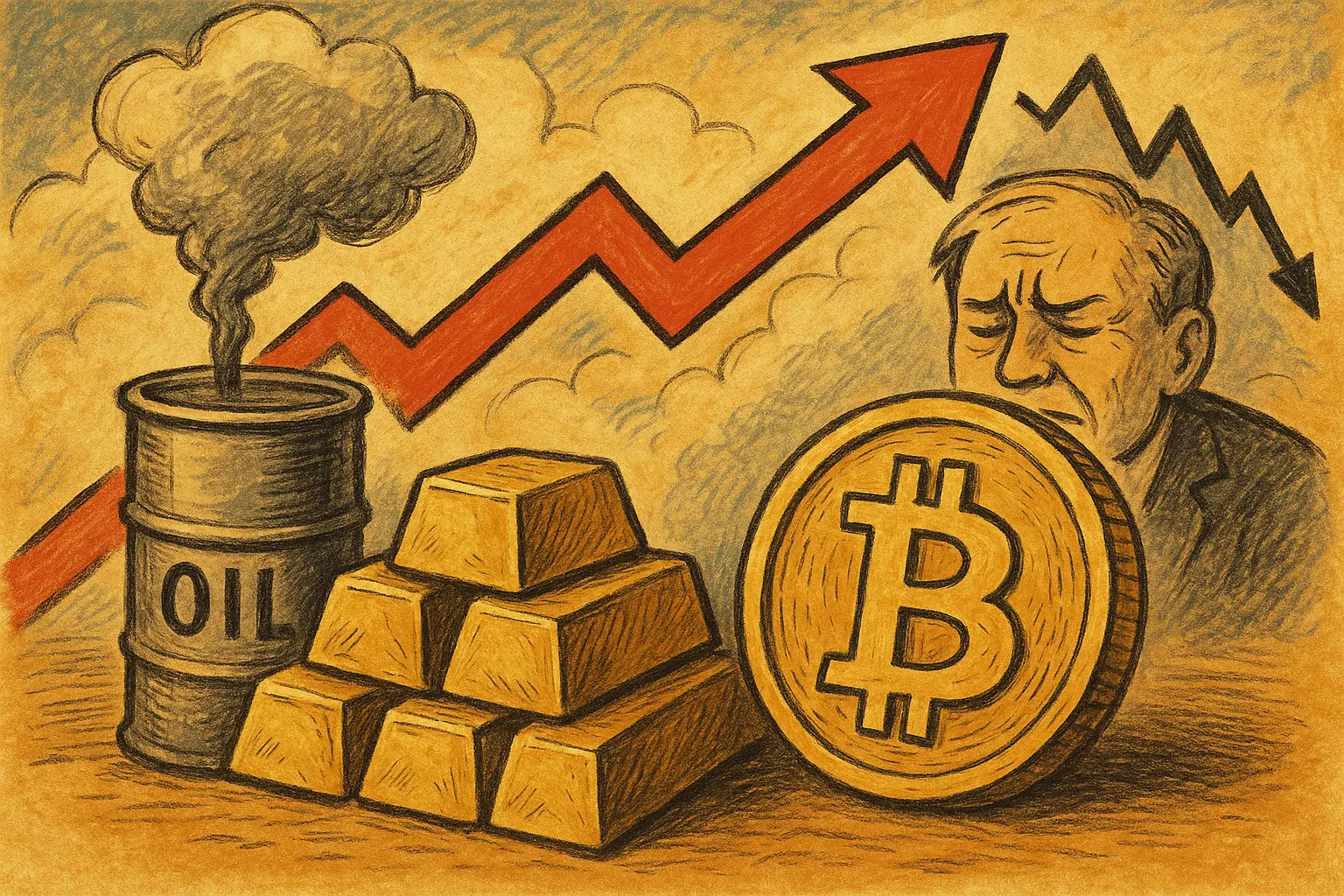
Brent crude oil has fallen about 8% over the past few weeks to around $116 per barrel, while gold has rebounded to near its all-time high of $4,550 per ounce. This rare divergence in commodity markets is regarded by top analysts as a classic market signal of stagflation. Bitcoin is currently trading at $71,043, with on-chain data indicating its trend is gradually diverging from oil-related assets and moving toward valuation logic similar to gold.
Gold-Oil Divergence: The Most Clear Historical Signal of Stagflation
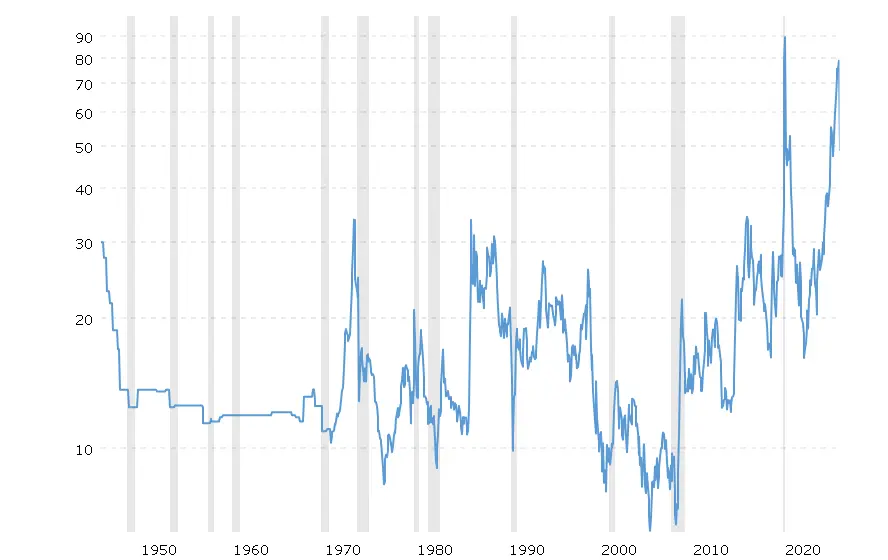
(Source: Macro Trends)
The ratio of gold to oil has surged sharply recently, a pattern often associated with major macro paradigm shifts rather than routine market adjustments. Bloomberg analysts interpret this as a “structural risk-off rotation” rather than tactical trading—when oil prices fall due to recession fears and gold rises amid currency devaluation concerns, the market is pricing the same macro reality: simultaneous inflation and recession pressures.
The stagflation cycle of the 1970s is the most significant historical reference: gold prices surged over 2,000%, while oil-related stocks eventually plummeted amid demand collapse. Brent crude has fallen about 8% from recent highs, while gold approaches its historical peak, and this divergence pattern is drawing high attention from analysts.
Federal Reserve Hawkish Stance and Three Core Indicators of the Stagflation Pattern
Key Market Signals of the Current Stagflation Environment
Federal Funds Rate 3.50%—3.75%: Indicates the Federal Reserve is unwilling to sacrifice inflation control to defend growth, providing a textbook macro stagflation backdrop.
Weekly Bitcoin ETF Outflows of $708 million: The Fed’s hawkish stance has led institutions to take profits at the ETF level, but on-chain spot accumulation data shows the opposite trend, indicating underlying structural buying continues.
Gold/Oil Ratio Soaring: Valuation divergence between supply-constrained assets (gold, Bitcoin) and demand-sensitive assets (oil), reflecting market concerns over the purchasing power of fiat currency-based assets.
In a stagflation environment, fiat currency-denominated assets can absorb dual pressures (inflation eroding purchasing power + slowing growth suppressing valuations), while assets with limited supply (like gold and Bitcoin) are less easily compressed—this is the fundamental logic behind their differential treatment in this market cycle.
Structural Shift: Bitcoin Decoupling from Oil and Tracking Gold
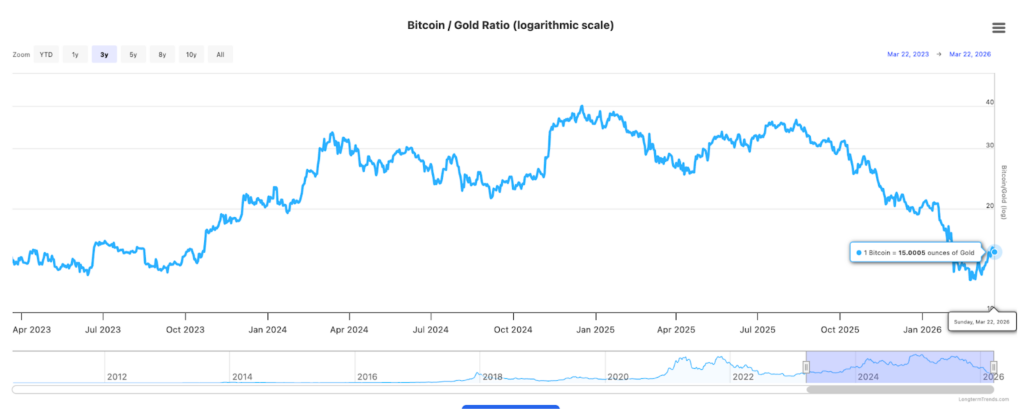
(Source: Zerocap)
Zerocap’s weekly on-chain data shows that despite ETF outflows indicating bearish sentiment on the surface, there is still significant spot buying of Bitcoin underlying assets. The divergence between institutional investors reducing paper holdings and continuous accumulation of on-chain spot holdings is a noteworthy structural signal.
The Bitcoin/Gold ratio remains unusually stable in this cycle, contrasting sharply with the correlation seen in 2022 when Bitcoin and risk assets like stocks declined together. Data from Fortune magazine supports this shift: while Bitcoin rebounded to $71,043, traditional risk assets still face pressure.
Institutions such as Strategy, Metaplanet, and American Bitcoin Corp have continued increasing their Bitcoin holdings during this cycle, indicating savvy capital is viewing Bitcoin as a macro hedge with a fixed supply, rather than a speculative risk asset.
Frequently Asked Questions
What is stagflation, and why are rising gold prices and falling oil prices classic signals?
Stagflation is a macroeconomic condition characterized by high inflation and stagnant economic growth occurring simultaneously. Rising gold indicates market concerns over inflation and declining currency purchasing power; falling oil reflects demand contraction and recession expectations. Their concurrent occurrence accurately describes a stagflation environment with slowing growth but persistent high prices.
Why is Bitcoin considered more like gold than oil in a stagflation environment?
Bitcoin and gold share a capped supply (21 million coins), giving them potential safe-haven properties when fiat currencies weaken. Oil, being demand-sensitive, tends to decline during recessions. This supply characteristic difference makes Bitcoin’s valuation logic more aligned with gold during stagflation.
How does the Fed maintaining high interest rates exacerbate current stagflation pressures?
The Fed’s hawkish stance with rates at 3.50%–3.75% prioritizes inflation control over growth. While this helps combat inflation, it also suppresses demand and investment, potentially deepening growth slowdown and intensifying the stagflation cycle—slowing growth while inflation remains high.
Disclaimer: The information on this page may come from third parties and does not represent the views or opinions of Gate. The content displayed on this page is for reference only and does not constitute any financial, investment, or legal advice. Gate does not guarantee the accuracy or completeness of the information and shall not be liable for any losses arising from the use of this information. Virtual asset investments carry high risks and are subject to significant price volatility. You may lose all of your invested principal. Please fully understand the relevant risks and make prudent decisions based on your own financial situation and risk tolerance. For details, please refer to
Disclaimer.


