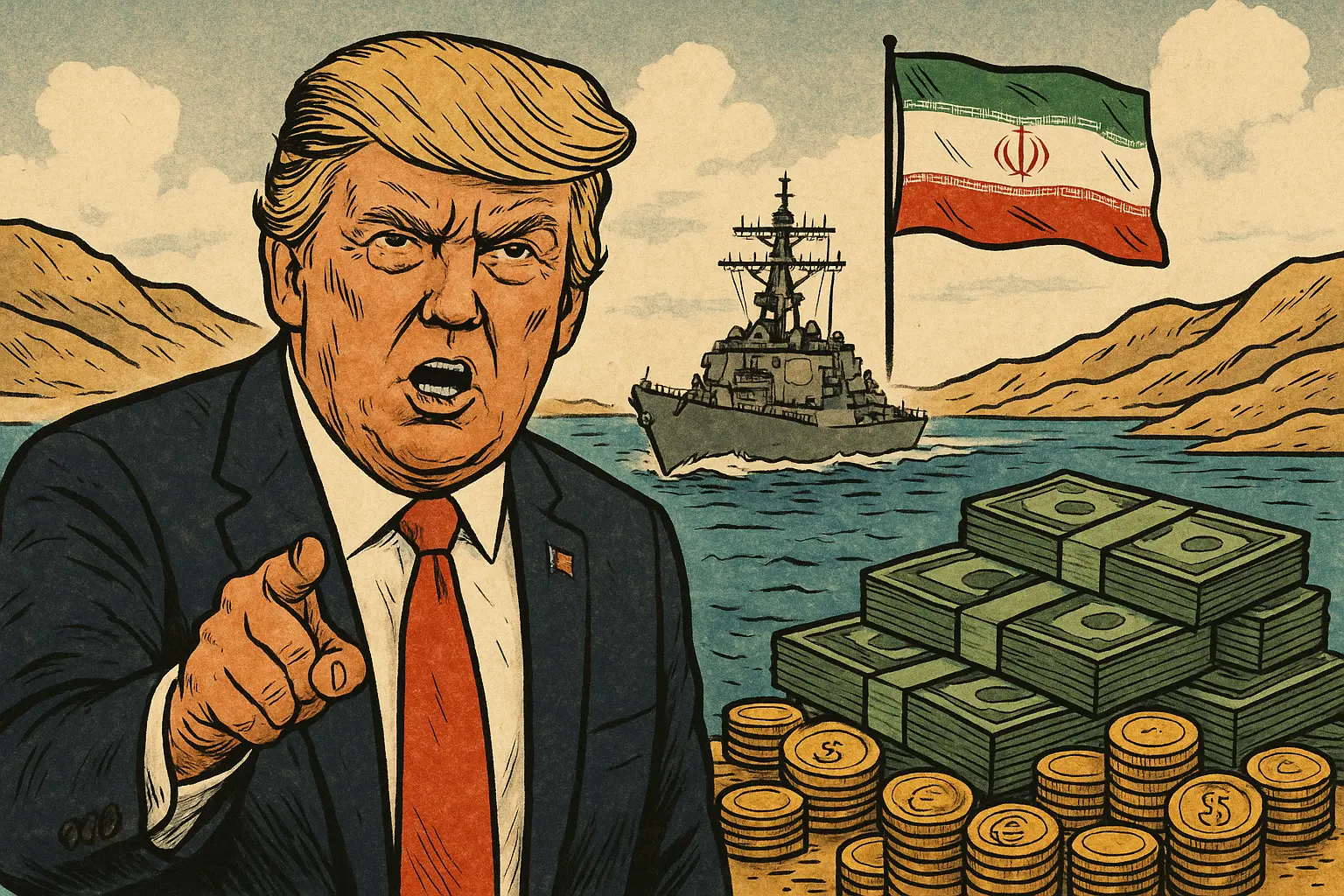
U.S. President Donald Trump issued a final ultimatum on Truth Social on Saturday, demanding that Iran fully reopen the Strait of Hormuz within 48 hours, and threatening to “strike and destroy” Iranian power plants, starting with the largest facilities. Iran promptly responded with a hardline warning, threatening to completely block the strait and attack energy and water infrastructure of Gulf allies. U.S. stock futures declined across the board Sunday evening, crude oil prices surged, and global assets entered a state of heightened alert.
Ultimatum Escalation: Diplomatic Channels Severed, Iran Warns of “Gulf Blackout”
There is no room for negotiation between Trump’s ultimatum and Iran’s response. Tehran warned that if its power infrastructure is attacked, it will retaliate against allied facilities such as desalination plants in Saudi Arabia and the UAE, explicitly mentioning the possibility of a “Gulf-wide blackout.” Reports indicate that currently, no diplomatic channels are active between Washington and Tehran, and market forecasts suggest a very low probability of a quick resolution in the short term.
Global Asset Volatility: Market Snapshot Sunday Night
Real-time Market Data Sunday Night
U.S. Stock Futures: S&P 500 down 0.7%, Nasdaq 100 down 0.7%, Dow Jones down 0.6%
Crude Oil: WTI up 2.0%, Brent crude up 1.5%, approaching $114 per barrel
Gold: down 2.5%, with a total decline of over 14% since the outbreak of war, the largest daily drop since 1983
Bitcoin (BTC): fell below $69,000, with the crypto market declining along with overall risk sentiment
BTC and S&P 500 Correlation: peaked at 89% during the conflict, indicating macro factors dominate crypto pricing
The decline in gold rather than an increase is noteworthy. Analysts point out that the current weakness in gold reflects a strengthening dollar and liquidity sell-off, rather than a lack of traditional safe-haven demand; disruptions in oil supply pushing inflation expectations higher are actually suppressing the logic that falling real interest rates would support gold.
Macro Vulnerability: Why Markets Have No Buffer Against This Crisis
The Strait of Hormuz crisis overlays a structurally fragile market environment. The Shiller CAPE ratio is at multi-decade highs, and the Buffett Indicator (market cap to GDP ratio) has reached about 220%, levels unseen since the dot-com bubble. Institutional leverage is at historic highs, while mutual fund cash reserves are at record lows, indicating limited buffer capacity if the crisis escalates.
The Federal Reserve maintained interest rates at 3.5% to 3.75% on March 18, with expectations of only one rate cut by 2026. Rising oil prices hinder rate cuts through inflation pressures, while weak employment data and rising consumer default rates signal stagflation, paralyzing monetary policy. Goldman Sachs and Citi analysts warn that if the conflict further escalates, Brent crude could break $150 per barrel.
Bitcoin ETF saw $90 million in outflows on March 19, ending seven consecutive days of net inflows, indicating institutional investors are beginning to reduce risk exposure across asset classes.
FAQs
How important is the Strait of Hormuz to global energy supply?
The Strait of Hormuz is one of the world’s most critical energy transit routes, handling about one-fifth of global oil and liquefied natural gas shipments under normal conditions. Since the conflict erupted in late February, passage through the strait has effectively stalled, with oil prices continuing to carry geopolitical premiums. Any further blockade would directly impact the global energy supply chain.
Why did gold fall instead of rise after Trump’s 48-hour ultimatum?
Gold’s decline reflects the market’s logic of a strengthening dollar and liquidity prioritization. Rising oil prices trigger inflation fears, leading markets to expect central banks to hold or raise interest rates, which increases real yields and suppresses gold’s appeal. Additionally, institutional investors tend to sell the most liquid assets first to meet margin calls during heightened risk, and gold was not spared.
What impact does this crisis have on Bitcoin and the crypto market?
During this conflict, Bitcoin’s correlation with the S&P 500 has reached 89%, moving almost in tandem with traditional risk assets. This indicates that Bitcoin is acting more like a risk asset rather than a safe haven in this crisis. Any escalation in geopolitical tensions that prompts institutional deleveraging could accelerate crypto sell-offs.
Disclaimer: The information on this page may come from third parties and does not represent the views or opinions of Gate. The content displayed on this page is for reference only and does not constitute any financial, investment, or legal advice. Gate does not guarantee the accuracy or completeness of the information and shall not be liable for any losses arising from the use of this information. Virtual asset investments carry high risks and are subject to significant price volatility. You may lose all of your invested principal. Please fully understand the relevant risks and make prudent decisions based on your own financial situation and risk tolerance. For details, please refer to
Disclaimer.


