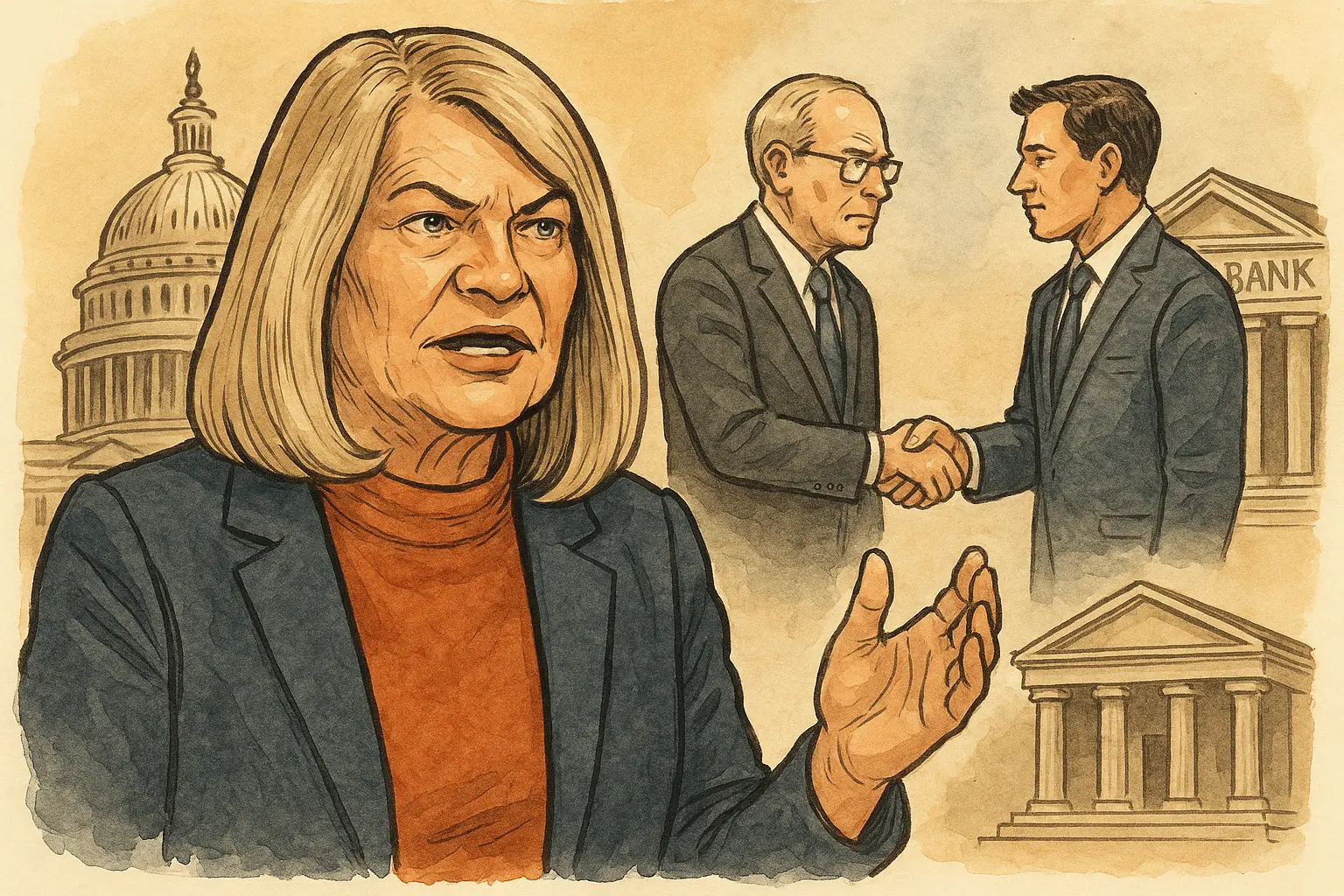
Wyoming Republican Senator Cynthia Lummis stated on March 18 at the Washington D.C. Blockchain Summit hosted by the Digital Chamber of Commerce that the U.S. Digital Asset Market Structure Bill (CLARITY Act) is “very close” to being officially passed. However, if the current legislative window is missed, “digital asset legislation will not be able to pass in the foreseeable future.” Lummis pointed out that disagreements within the banking industry are nearing resolution.
Final Hurdle: Stablecoin Yield Disputes Enter Last Negotiation Stage

(Source: Washington D.C. Blockchain Summit)
Lummis directly identified stablecoin yields as the “main reason” for the bill’s delay, noting that crypto industry players and banking representatives hold clearly opposing positions, each with their own lobbying channels at the White House. She revealed that both sides are actively seeking compromise under White House coordination.
“Some who are very firm on issues of yield and returns have been working closely with the White House and collaborating with our members to reach a compromise on this issue. We believe we have found a solution,” Lummis said.
Her spokesperson added that Lummis expects an agreement on stablecoin yields “within the next few days” and that negotiations on ethical provisions in the bill are also progressing simultaneously.
Lummis also stated that she believes the DeFi-related provisions are “settled,” but several details remain to be clarified regarding fund transfer rules and the classification of crypto assets as commodities or securities.
Key Legislative Milestones
The legislative path of the Market Structure Bill currently faces dual pressures: the need to merge two versions from Senate committees and the timing pressure of the midterm elections.
- July 2025: The bill passes the House of Representatives
- January 2026: Senate Banking Committee Chair Tim Scott indefinitely delays review; Agriculture Committee advances its version in the same month
- 2026 to present: The White House and representatives from the crypto and banking sectors have held three coordination meetings; the Banking Committee has yet to reschedule review sessions this week
- Expected April: Lummis and colleagues plan to push forward after the Easter recess; Senate Majority Leader John Thune also expects the Banking Committee to not pass the bill before April
The two versions still need to be merged to resolve jurisdiction disputes over commodities and securities before submitting to the full Senate for a vote.
Midterm Election Countdown: No Passage Before May, Dreams May Fade
Lummis warned that the 2026 midterm elections in November are the biggest external time pressure—electing all 435 House seats and 33 Senate seats. The Democratic Party could regain control of Congress, and if the Republicans lose their majority, the current legislative momentum will face a fundamental reversal.
Ohio Senator Bernie Moreno was more direct: “If we can’t pass the CLARITY Bill before May, then in the foreseeable future, digital asset legislation will not be able to pass.”
Notably, Lummis announced last December that she would not seek re-election, giving this legislative push a personal farewell significance. She wrote on X, “This may be our only chance to complete market structure reform.”
Frequently Asked Questions
Q: What is the core issue currently blocking the passage of the Market Structure Bill?
A: According to Lummis, the main obstacle is the disagreement between the banking industry and crypto firms over stablecoin yields. Additionally, issues such as tokenized stocks, ethical provisions for elected officials’ crypto assets, and the classification of crypto assets as commodities or securities remain unresolved.
Q: Why is May considered the legislative deadline for the Market Structure Bill?
A: The November midterm elections could change the control of Congress. If the Republicans lose their majority, the current political support for the bill will disappear. Moreno explicitly stated that if the bill is not passed before May, digital asset legislation will be difficult to advance in the foreseeable future.
Q: What is Lummis’s latest stance on DeFi provisions?
A: Lummis said that the DeFi provisions “are settled,” meaning the related disputes have reached a consensus. However, she pointed out that details regarding fund transfer rules and the classification of crypto assets as commodities or securities still need clarification.
Disclaimer: The information on this page may come from third parties and does not represent the views or opinions of Gate. The content displayed on this page is for reference only and does not constitute any financial, investment, or legal advice. Gate does not guarantee the accuracy or completeness of the information and shall not be liable for any losses arising from the use of this information. Virtual asset investments carry high risks and are subject to significant price volatility. You may lose all of your invested principal. Please fully understand the relevant risks and make prudent decisions based on your own financial situation and risk tolerance. For details, please refer to
Disclaimer.
Related Articles
CFTC Chairman Selig: Prediction-market fraudsters will face harsh legal penalties; will not pause rulemaking
In a House hearing, U.S. CFTC Chairman Selig emphasized a “zero-tolerance policy” toward market fraud and manipulation. He responded to questions regarding a $500 million oil futures transaction and said the CFTC is drafting rules to regulate prediction markets. Selig also mentioned a cooperation memorandum of understanding with the SEC to strengthen oversight of digital assets. Given that the CFTC currently has only one commissioner—himself—Selig emphasized operational efficiency and will hire new staff to enhance regulatory capacity.
MarketWhisper1h ago
MTN Nigeria Suspends Xtratime Airtime and Data Borrowing Service to Comply with Digital Lending Regulations
MTN Nigeria has suspended its Xtratime service due to new regulatory compliance from the FCCPC. While normal purchases continue, the suspension aims to align with upcoming digital lending rules. The company does not foresee significant financial impact and will monitor user response.
GateNews5h ago
Pakistan Opens Banking System to Licensed Crypto Firms, Reversing 2018 Ban
Pakistan's central bank has opened its banking system to licensed virtual asset service providers, reversing a previous ban. This change, following the Virtual Assets Act 2026, allows crypto businesses access to banking services under strict regulations.
GateNews9h ago
Musk’s X Money hasn’t launched yet—but it’s already making headlines! Mizuho says it will shake up the U.S. payments market and also downgrades PayPal’s rating
Elon Musk’s financial product X Money is expected to launch in April, potentially upending the U.S. payments market and putting pressure on PayPal, as Mizuho Securities has downgraded PayPal’s rating to “Neutral.” However, regulatory variables have become the main challenge, especially the legal uncertainty surrounding crypto-asset payments and yield-generating products. X has also rolled out a “Cashtags” feature that integrates real-time financial data.
ChainNewsAbmedia10h ago
Major South Korean CEX Places SPURS Token on Trading Alert List
A South Korean cryptocurrency exchange has added the SPURS token to its trading alert list due to poor market performance and investor risks. Deposits are temporarily suspended while the token is reviewed until July 16, 2026.
GateNews11h ago
Bitcoin Transactions Face 70-Page Tax Filing Burden Annually
According to Nicholas Anthony of the Cato Institute's Center for Monetary and Financial Alternatives, spending Bitcoin on everyday purchases creates an unexpected tax compliance nightmare. The IRS treats Bitcoin as property, not currency, meaning every transaction—even a $5 coffee
CryptoFrontier11h ago


