


blockchain layers
What Is Blockchain Layering?
Blockchain layering refers to the architectural approach of dividing a blockchain system into distinct layers according to function: the base layer ensures security and reliable data recording, while the upper layers focus on transaction execution and feature expansion. This modular design replaces a monolithic chain with a stack of specialized, interoperable layers.
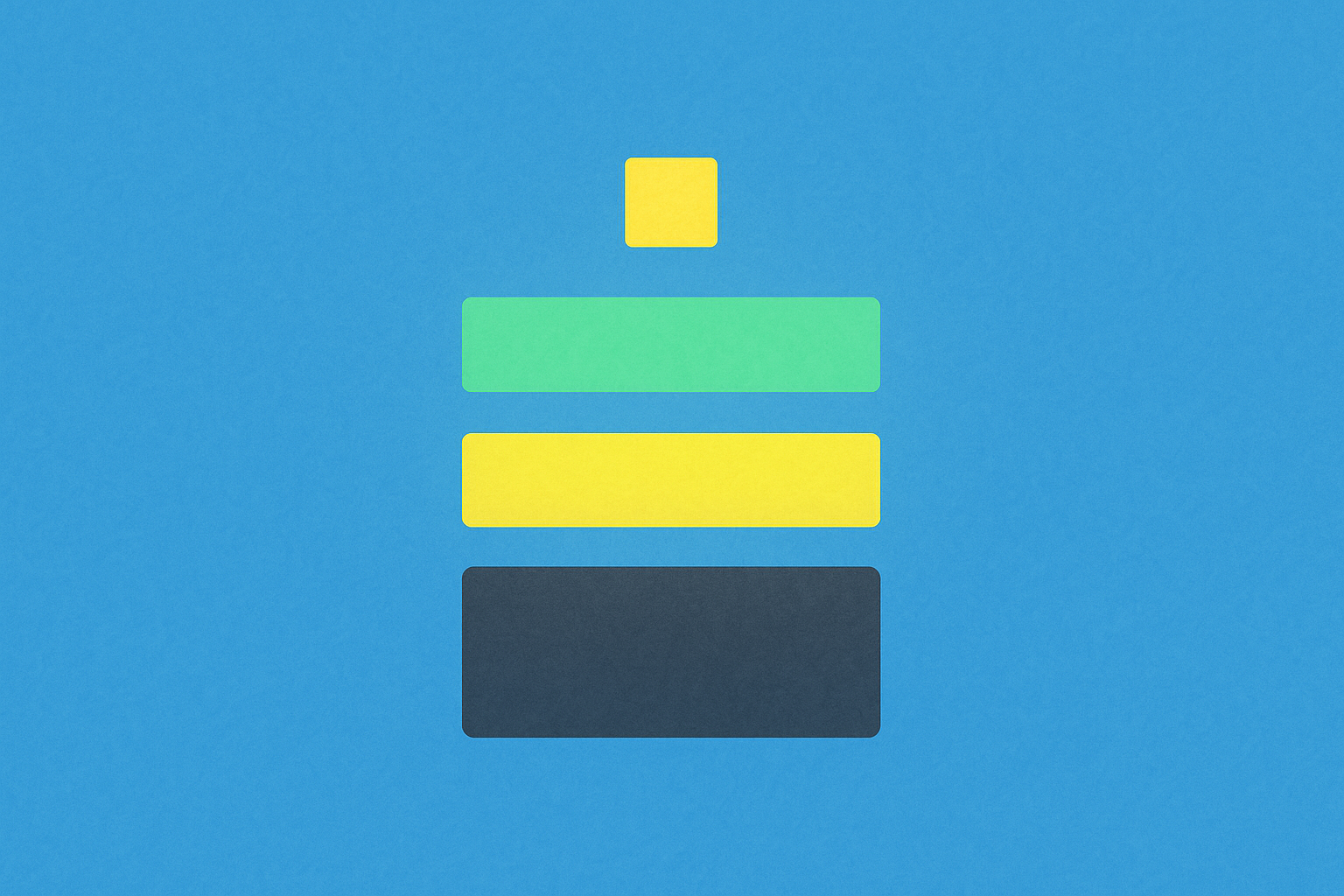
You can think of it like a building’s structure: the foundation provides stable support, while floors above can be added or renovated. The base layer acts as the foundation, handling consensus and data attestation; upper layers are like the floors, responsible for business logic and scaling performance. Working together, these layers make blockchain systems more scalable and easier to maintain.
Why Is Blockchain Layering Needed?
Blockchain layering addresses the trade-offs between performance, security, and decentralization. A monolithic chain that tries to optimize all three often faces limitations; splitting responsibilities across layers allows each part to focus on what it does best.
In a non-layered architecture, every node must process transactions, reach consensus, and store data simultaneously, leading to network congestion. With layered architecture, the base layer specializes in security and accounting, while upper layers use advanced technologies to improve throughput and reduce costs, resulting in better overall performance and more flexible upgrades.
What Is the Basic Architecture of Blockchain Layering?
The basic architecture of blockchain layering typically involves four roles: consensus & settlement, execution, data availability, and cross-layer communication. Different projects may merge or split these responsibilities as needed.
- The consensus & settlement layer is the “foundation,” responsible for ordering transactions and final confirmation.
- The execution layer is the “business floor,” where user transactions and smart contract logic are processed.
- The data availability layer ensures transaction-related data is published and can be accessed and verified by anyone.
- Cross-layer communication serves as “stairs and elevators,” relaying messages and value between different layers and networks.
What Is the Relationship Between Blockchain Layering and Layer1/Layer2?
Blockchain layering is closely linked to Layer1 and Layer2 concepts: Layer1 is the base chain (such as Ethereum or Bitcoin) responsible for security and finality; Layer2 refers to scaling solutions built atop Layer1 that enable faster and cheaper execution, then relay results back to Layer1.
To clarify:
- Layer1 is the “main foundational chain,” offering security and settlement.
- Layer2 provides “scaling solutions,” like Rollups, which batch transactions for off-chain or external execution, then publish proofs or data to Layer1—achieving high speed while inheriting Layer1 security.
- Sidechains are independent blockchains whose security is not directly inherited from Layer1.
What Is Data Availability in Blockchain Layering?
Data availability in blockchain layering refers to the ability to publish transaction-related data so it can be accessed and verified by anyone. Without strong data availability, external validators cannot replay or inspect transactions, compromising security.
Think of it as ensuring “copies of the public ledger are always accessible.” Ethereum provides data availability at its base layer, while specialized data availability networks like Celestia focus on reliably broadcasting and storing data so execution layers and Rollups can access it—reducing costs and increasing flexibility.
How Is Blockchain Layering Used in Practice?
In practical applications, blockchain layering works as follows: users rely on the base chain for security and asset settlement, while upper networks provide lower fees and faster confirmation. Developers can deploy complex logic on the execution layer and publish relevant data to the base or DA layer.
Step 1: Select your network in a wallet or exchange. For example, on Gate’s deposit/withdrawal page, “ETH-ERC20” refers to Ethereum Layer1 mainnet; “ETH-Arbitrum” or “ETH-Optimism” indicates Layer2 networks, each with different fees and speeds.
Step 2: Verify which networks are supported by your target application. When using a decentralized app, check which Layer2 or sidechains it supports to avoid sending assets to an incompatible network (which could render them unusable or require extra bridging).
Step 3: Execute operations while monitoring fees and confirmation times. Layer2 typically offers lower fees and faster confirmations but depends on Layer1 for final settlement. When transferring between layers, use official or trusted third-party bridges and note the estimated arrival time.
What Are Common Project Examples of Blockchain Layering?
Project examples of blockchain layering combine base chains, scaling layers, and data layers for specific functionality:
- Ethereum is a classic Layer1 providing security and settlement.
- Arbitrum and Optimism are popular Layer2 Rollup solutions offering cheaper, faster execution with results written back to Ethereum.
- zkSync utilizes zero-knowledge proof-based Layer2 technology for enhanced security and efficiency.
- Celestia is a dedicated data availability network focused on broadcasting and storing transaction data so multiple execution layers can reuse its DA capabilities.
For everyday use, Gate allows users to select deposit/withdrawal networks. For example, choosing “Arbitrum” for USDT transactions lowers fees for use within Arbitrum’s ecosystem; selecting “ERC20” keeps assets on Ethereum mainnet, ideal for maximum security and broad compatibility.
What Are the Security Risks Involved in Blockchain Layering?
Security risks in blockchain layering include cross-chain bridge vulnerabilities, reliability issues with Layer2 sequencers, data availability incidents, and settlement delays with the base chain. Understanding these risks can help you manage your assets more safely.
Cross-chain bridges transfer assets between layers; if their contracts or signing mechanisms are compromised, assets may be lost. Sequencers order transactions on Layer2; if they go offline or are maliciously controlled, transaction processing and fairness are impacted. Data unavailability or extended delays hinder users from verifying transactions or withdrawing funds. Risk mitigation strategies include using official/audited bridges, diversifying assets, monitoring network status updates, and planning withdrawal times carefully.
What Are Future Trends in Blockchain Layering?
Future trends for blockchain layering point toward deeper modularization, ongoing expansion of Layer2 ecosystems, and continued advances in data availability and cryptographic proofs. As of December 2025, public platforms like L2Beat show growing activity and TVL on Ethereum Layer2s—with daily transaction volumes sometimes surpassing Ethereum mainnet—highlighting real-world benefits of layered scaling.
With Ethereum upgrades introducing more efficient data publishing methods and standalone DA networks adopted by more Rollups, execution layers will gain flexibility and further reduce costs. Cross-layer communication will increasingly leverage cryptographic proofs to minimize trust assumptions. Developers will assemble components for security, data management, and execution like building blocks—enabling richer application types.
How Do Blockchain Layers Connect Key Concepts?
Blockchain layering places security and data recording in the base layer while delegating execution and scaling to upper layers. Layer1 guarantees finality; Layer2 improves performance; data availability ensures that anyone can verify transactions. For users, this means balancing fees, speed, and security when choosing networks and apps. For developers, it enables systems to be modularized for targeted optimization. Understanding how these layers interact helps you use blockchain more efficiently and securely in real-world scenarios.
FAQ
Are Funds Safe on Layer2? Is There a Risk of Losing Assets?
Layer2 safety depends on its technical framework. Optimistic Rollups use fraud proofs for security; ZK Rollups rely on zero-knowledge proofs for verification. Both have been audited and are running reliably. However, smart contract vulnerabilities remain possible; it is recommended to use reputable projects (such as Arbitrum or Optimism), avoid newly launched small projects, and regularly check official security advisories.
Why Do Some Say Layer2 Is Less Secure Than Mainnet?
Layer2 introduces additional technical complexity. Although cryptographic methods secure Layer2s, they still depend on Layer1 for final settlement. If a vulnerability emerges within Layer2 itself, upgrades may be required. However, leading Layer2 projects have accumulated billions in locked value—proving their practical reliability. New users should prioritize established solutions to minimize risk.
How Can I Transfer Assets Between Different Layer2s?
Currently there are no direct channels between different Layer2s; assets must first be bridged back to Layer1 before moving to another Layer2—incurring two gas fees (one for each transfer). To simplify this process, exchanges like Gate typically support cross-chain deposits/withdrawals so users can select their target chain directly without manual bridging steps.
Will Layer3 Become the Ultimate Form of Blockchain?
Layer3 can theoretically extend functionality but is not necessarily an “ultimate solution.” Its main purpose is to optimize specific application scenarios (such as gaming or social platforms) rather than general scaling. In the future we may see coexistence among multiple chains: Layer1 handling security, Layer2 providing general scaling, Layer3 serving customized applications—creating a division of labor rather than a simple hierarchical progression.
If Mainnet Is Congested, Does Using Layer2 Completely Avoid Issues?
Layer2 greatly reduces costs and latency but cannot fully bypass mainnet congestion. When Layer1 is heavily congested, withdrawals from Layer2 back to Layer1 also experience delays. Some cross-chain operations still rely on Layer1 with increased costs during congestion. Therefore, Layer2 is best suited for frequent trading or small transfers; large long-term holdings are better kept on mainnet or in exchanges.
Related Articles

The Future of Cross-Chain Bridges: Full-Chain Interoperability Becomes Inevitable, Liquidity Bridges Will Decline

Solana Need L2s And Appchains?
