In Decentralized Finance (DeFi) protocols, core tokens typically serve multiple roles, including value settlement, incentive distribution, and network security. For cross-chain protocols, which manage asset transfers and state verification across multiple blockchains, a unified value medium is essential to connect liquidity across chains and to provide economic incentives that maintain node network security.
Without a unified protocol token, cross-chain liquidity would face challenges such as complex trading paths, fragmented liquidity, and insufficient security incentives. As a result, most cross-chain protocols design native tokens to fulfill these critical functions. RUNE, for example, is the foundation for THORChain to achieve both cross-chain liquidity and robust security mechanisms.
RUNE Tokenomics: Total Supply, Distribution, and Utility
RUNE is the core asset of the THORChain protocol, with a total supply of approximately 425 million tokens. The protocol employs a burn mechanism to drive deflation. All RUNE tokens have been released, with no unallocated or locked portions remaining.
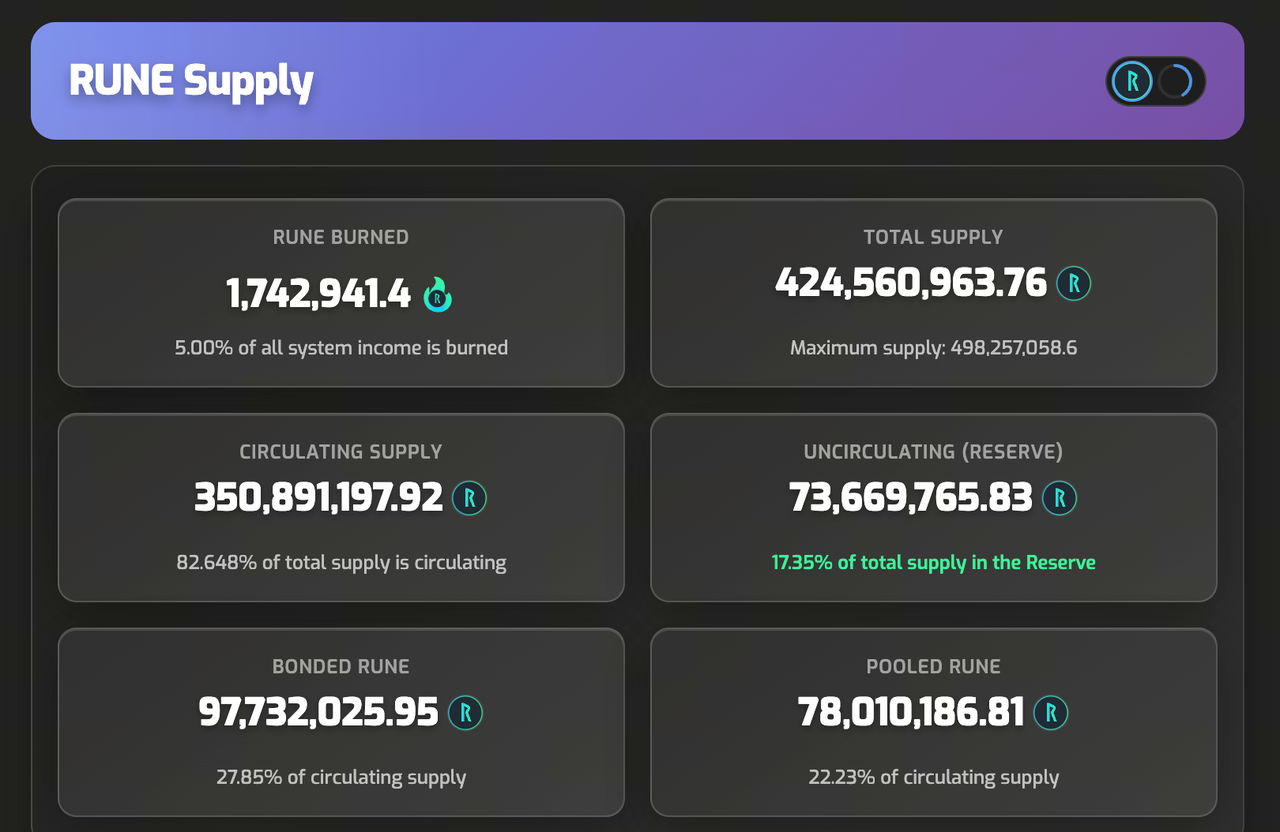
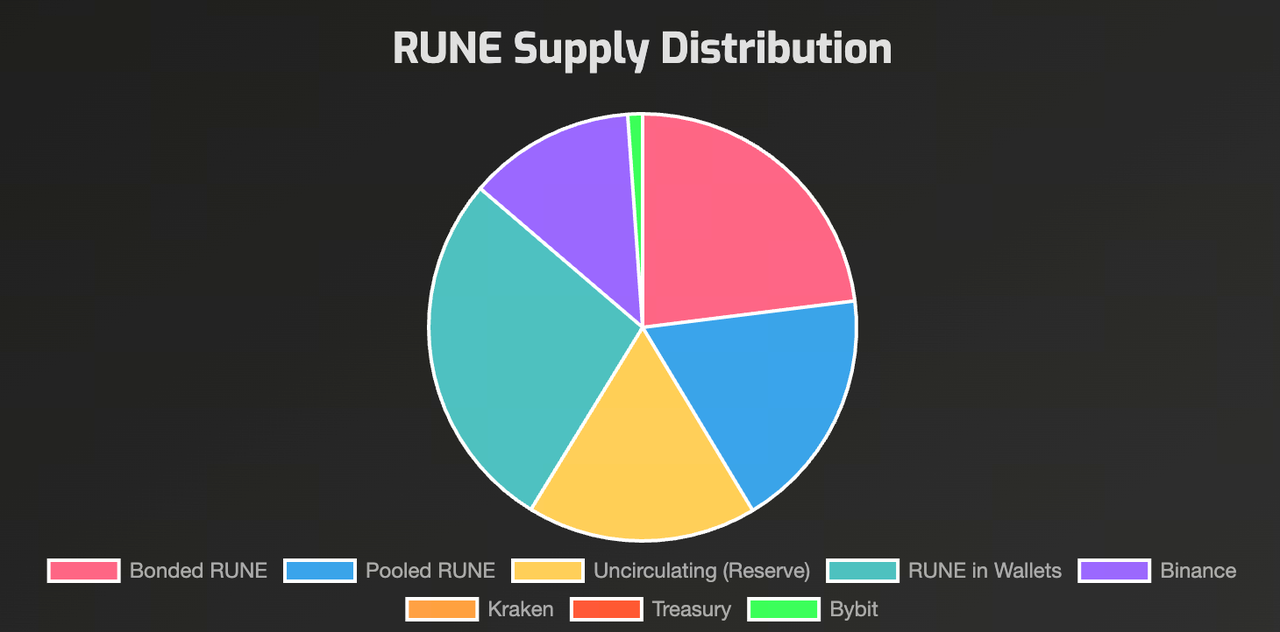
Within THORChain, RUNE fulfills three primary functions: cross-chain trade settlement, node staking, and liquidity incentives.
First, all asset pools on THORChain are paired with RUNE, meaning every asset swap is routed through RUNE as an intermediary. For instance, swapping BTC for ETH follows the path BTC → RUNE → ETH. This structure makes RUNE the core settlement asset for protocol liquidity.
Second, RUNE is used for node staking. Validator nodes are required to stake a significant amount of RUNE to participate in network operations. This mechanism increases the cost of malicious behavior and provides economic security for the protocol. Additionally, Liquidity Providers earn rewards for supplying assets to liquidity pools, with incentives typically paid in RUNE, making it a central component of the ecosystem’s incentive structure.
How Does THORChain’s Economic Model Work?
THORChain’s economic model centers around RUNE, aiming to connect liquidity, node security, and trading demand. Since every asset pool is paired with RUNE, protocol liquidity growth directly increases demand for RUNE.
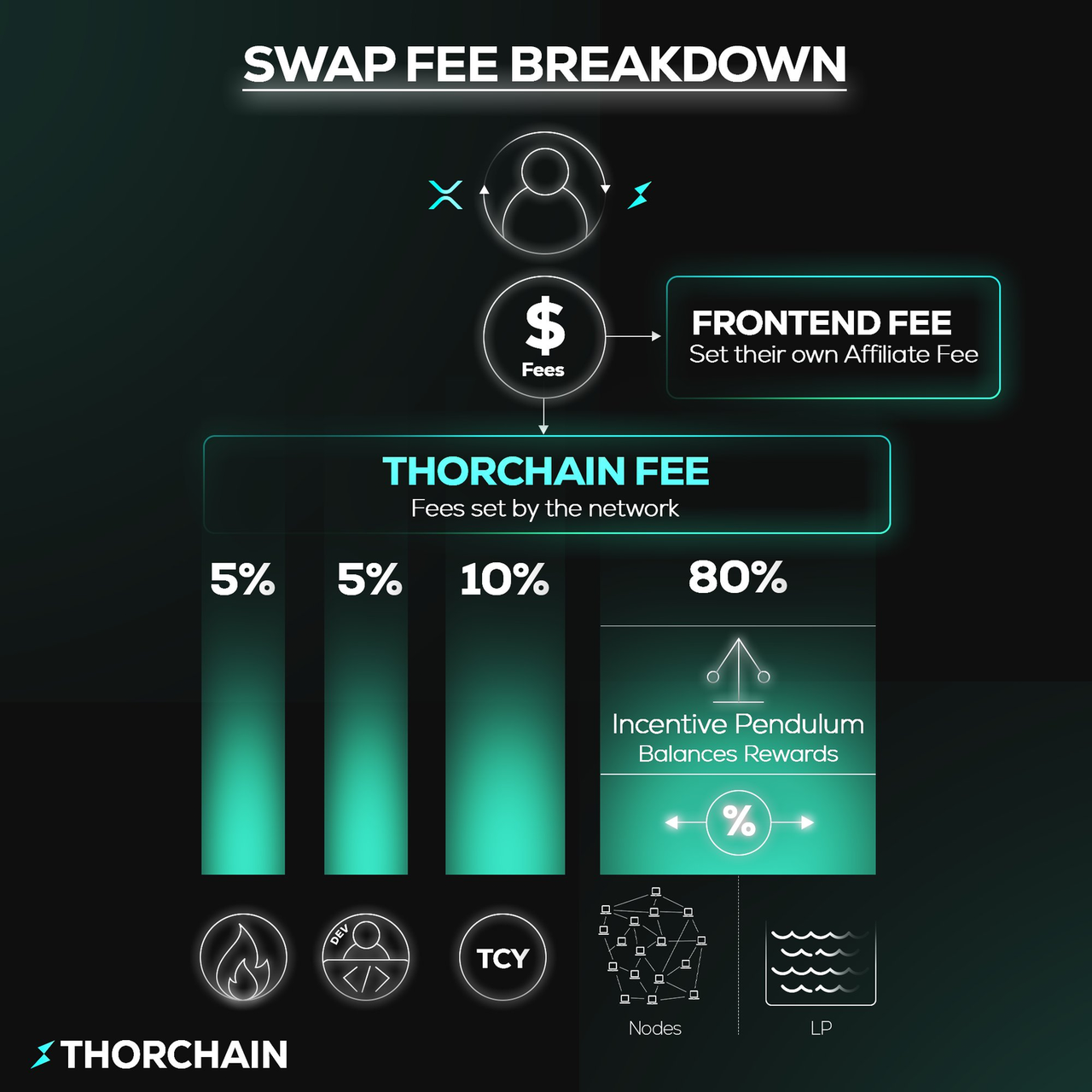 THORChain income distribution ratio, source: THORChain
At the same time, nodes must stake large amounts of RUNE to secure the protocol’s liquidity pools. THORChain enforces a mechanism where the value staked by nodes exceeds the total liquidity value, ensuring that the cost of malicious activity is higher than any potential reward, thereby strengthening network security. In this way, RUNE not only facilitates trade settlement but also serves as the economic backbone for protocol security via staking.
What Drives RUNE’s Value?
RUNE’s value is primarily driven by protocol usage and network demand. As users execute more cross-chain trades on THORChain and liquidity pools expand, the need for RUNE as a settlement asset rises. Higher trading volumes mean more frequent use of RUNE in liquidity pools, naturally increasing demand.
Node staking demand is also a key value driver. Since nodes must stake RUNE to operate, network expansion raises the need for RUNE as staking collateral. This dual engine of “trading demand + staking demand” tightly links RUNE’s value to the growth of the THORChain protocol.
Why Is RUNE THORChain’s Core Value Carrier?
RUNE is THORChain’s core value carrier because it connects the protocol’s three pillars: liquidity, trading, and security. Without RUNE, THORChain could not maintain a unified liquidity pool structure or secure cross-chain assets through node staking.
This architecture makes RUNE more than just a utility token—it is the essential medium for value transfer within the protocol. Increases in trading volume boost RUNE’s settlement demand, growing liquidity raises the amount of RUNE locked in pools, and network expansion drives up RUNE staking requirements. Together, these factors underpin RUNE’s long-term value proposition.
What Risks Could Impact RUNE’s Value Growth?
While RUNE has a clear value capture mechanism, its long-term value faces several risks. RUNE’s demand is closely tied to THORChain’s protocol usage; if cross-chain trading growth slows, demand for RUNE may also decelerate.
Competition in cross-chain DeFi is intensifying, with other protocols vying for liquidity and users. If THORChain fails to expand its ecosystem, RUNE’s growth potential could be limited. Additionally, liquidity and protocol security risks may affect market confidence in RUNE.
Summary
As the core value medium of the THORChain protocol, RUNE performs three essential functions across the cross-chain liquidity network: trade settlement, node security, and incentive distribution. Since all cross-chain trades are settled through RUNE, protocol volume growth directly drives demand for RUNE, while staking and liquidity incentives further reinforce its value within the ecosystem.
Over the long term, RUNE’s value is closely linked to the development of the THORChain protocol. Sustained growth in cross-chain trading and liquidity will continue to elevate demand for RUNE, solidifying its central role in the cross-chain DeFi landscape.
FAQs
What is RUNE’s role in THORChain?
RUNE is the core token of THORChain, used for cross-chain trade settlement, node staking, and liquidity incentives. It is the protocol’s foundational asset.
Why does RUNE have value?
RUNE’s value derives from increasing protocol trading activity and node staking demand. Greater THORChain usage translates directly to higher demand for RUNE.
Why must all assets be paired with RUNE?
Pairing all assets with RUNE reduces liquidity fragmentation and enhances the efficiency of cross-chain swaps on THORChain.
Is RUNE’s value dependent on THORChain’s development?
Yes. RUNE’s demand is directly linked to THORChain’s trading volume, liquidity, and node count, making its value highly dependent on the protocol’s growth.







