As stablecoins gradually become one of the most important on-chain use cases, demand for high-performance and low-cost payment networks continues to grow. From cross-border settlement to on-chain transfers, stablecoins are pushing blockchain closer to real-world financial applications, and the infrastructure supporting this shift has become a key competitive focus.
Plasma is built within this trend as a payment-focused public blockchain. Unlike traditional chains that emphasize general computation, Plasma focuses on stablecoin settlement and payment experience. Through zero-fee USDT transfers, a Paymaster-based gas sponsorship mechanism, and a native Bitcoin bridge, it aims to deliver a user experience closer to Web2. Within this system, XPL forms the economic foundation of network operations.
The Role of XPL in the Plasma Network
As the core asset of the Plasma network, XPL functions across fees, staking, governance, and incentives.
First, at the base level, XPL is used to pay gas fees, including complex contract interactions and on-chain operations. Although Plasma offers a zero-fee experience for certain stablecoin transfers, the underlying cost is still settled in XPL.
Second, at the security layer, Plasma uses a PoS-based PlasmaBFT consensus mechanism. Validators must stake XPL to participate in block production and validation, ensuring network security.
In addition, XPL also carries governance functions. Token holders may participate in parameter adjustments, inflation model changes, and ecosystem fund allocation, giving XPL both utility and governance roles.
XPL Supply Mechanism
The XPL supply model combines initial issuance, ongoing inflation, and fee burning.
According to official information, Plasma sets the initial total supply of XPL at 10 billion tokens at mainnet launch. At the same time, the protocol introduces inflation to continuously incentivize validators and stakers.
On this basis, Plasma adopts a fee model similar to Ethereum's EIP-1559: The base fee from transactions is burned, while the priority fee, or tip, is distributed to validators.
This mechanism leads to several key effects:
-
More network usage leads to more token burning
-
Inflation provides security and incentives
-
The interaction between the two determines the net inflation level
As transaction activity increases, XPL may move toward low inflation or even temporary deflation, strengthening its scarcity.
XPL Distribution Structure
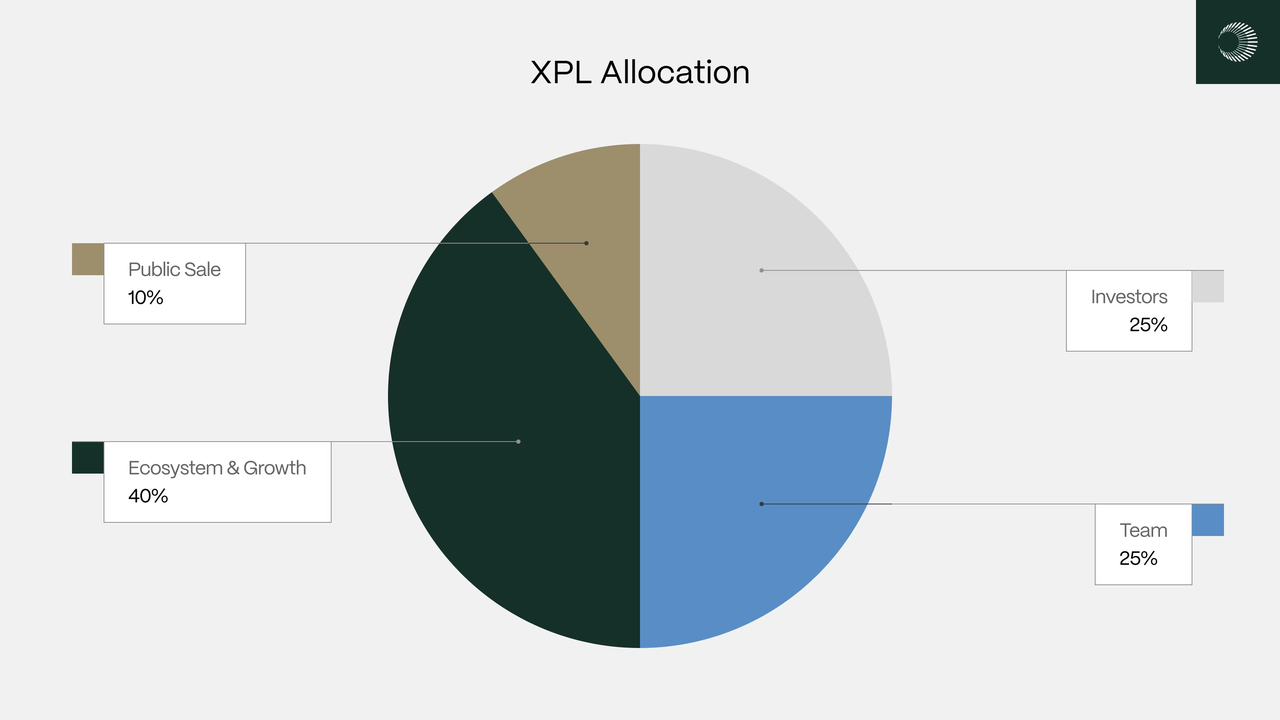
XPL distribution covers three main groups: team, investors, and ecosystem participants, with a structure oriented toward growth.
-
Public sale accounts for about 10 percent, with partial immediate unlock and the rest released linearly
-
Ecosystem and growth incentives account for about 40 percent, released in stages to support long-term expansion
-
The team accounts for about 25 percent, with a 1-year cliff and 2-year linear vesting
-
Investors account for 25 percent, following the same vesting schedule as the team
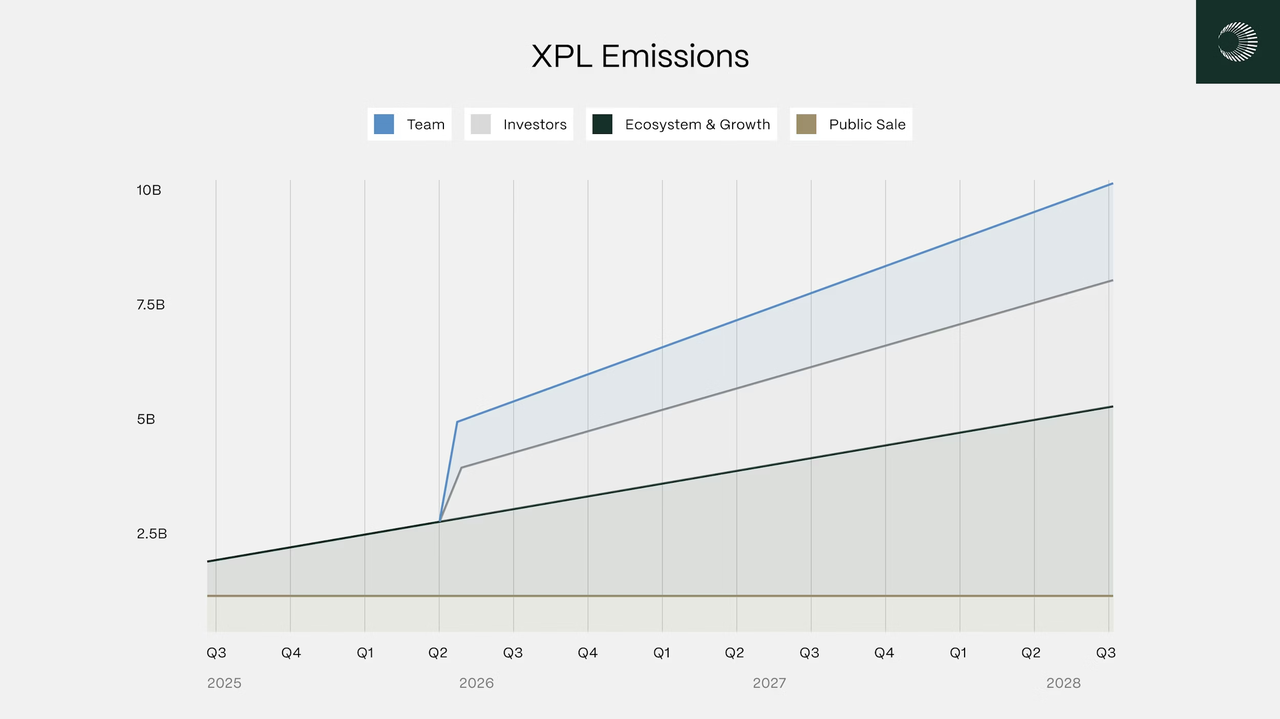
The key feature of this structure is the high share allocated to ecosystem incentives, which supports early network expansion. At the same time, the combined allocation to team and investors is relatively high and may create periodic selling pressure during unlock periods.
XPL Incentive Mechanism
Plasma's incentive system is structured around three areas: network security, user growth, and ecosystem expansion.
Validator and staking rewards
Validators stake XPL to participate in PlasmaBFT consensus and earn rewards from block issuance and transaction fees. Delegated stakers receive a proportional share of these rewards.
To reduce the risk of principal loss due to operational errors, Plasma primarily applies reward reduction rather than direct slashing of staked capital for malicious or unstable nodes. This lowers participation barriers while maintaining some level of deterrence.
Ecosystem and user incentives
The ecosystem and growth pool distributes XPL through hackathons, grants, liquidity mining, and partnerships to DApps, DeFi protocols, and real users on the network, helping attract developers and increase total value locked.
In stablecoin payment scenarios, platforms or partners can use XPL to subsidize gas fees so that end users experience near zero-cost transactions. This shifts complexity to the protocol layer and improves user retention.
Governance and long-term participation incentives
As governance develops, users who hold and stake XPL can participate in proposals and voting, influencing key variables such as inflation rates, fee parameters, and ecosystem fund allocation. This gives long-term participants exposure to governance-related value.
XPL Value Capture Mechanism
The value capture logic of XPL centers on converting on-chain payment activity into token demand.
On the one hand, complex transactions and DeFi operations require XPL as gas, creating direct demand. As payment activity grows, this demand is expected to increase.
On the other side, the fee-burning mechanism creates a link between network usage and token scarcity. Increased usage leads to higher burn rates, which can help limit supply growth over time.
In addition, staking provides yield for token holders, giving XPL characteristics similar to a yield-bearing asset rather than a simple medium of exchange.
Plasma also introduces pBTC, a mapped Bitcoin asset, into on-chain activity. These higher-value assets typically involve more complex interactions, which can further increase XPL demand and strengthen its role in network security.
Potential Risks and Limitations of the XPL Model
Although the XPL design is relatively comprehensive, several uncertainties remain.
First, the initial supply is large, with team and investor allocations together accounting for about 50 percent. While these tokens are subject to lock-up and linear vesting over one to three years, significant selling pressure may still occur at key unlock periods.
Second, competition in the stablecoin settlement sector is intense. Ethereum Layer 2 networks, other high-performance Layer 1 chains, and centralized payment systems are all targeting the same market. Plasma must continue to build advantages in cost, performance, and compliance. If major stablecoin issuers or institutions adopt alternative infrastructure, Plasma's growth in transactions and total value locked may slow, weakening XPL's value capture.
In addition, technical and security risks remain important. The use of reward reduction instead of principal slashing may reduce deterrence against malicious validators in extreme cases, requiring governance adjustments. Complex components such as the Bitcoin bridge, Paymaster system, and cross-chain integrations also introduce additional risk surfaces. Any vulnerabilities could affect network confidence and token value.
Conclusion: Does XPL Have Long-Term Value Support?
From a design perspective, XPL integrates network security, fee settlement, governance, and ecosystem incentives into a single asset. By combining inflationary issuance with EIP-1559-style burning, it attempts to balance incentive provision with long-term scarcity. If Plasma continues to scale in stablecoin payments and institutional use cases, growing on-chain activity may support both fee burning and staking rewards, providing a foundation for long-term value.
However, the relatively high allocation to team and investors, the unlock schedule, uncertainty around the balance between inflation and burning, and strong competition in the stablecoin infrastructure sector mean that XPL remains a high-volatility, high-risk asset. Its long-term value will depend on Plasma's adoption in real payment scenarios and its ability to build sustained network effects.
FAQs
What is the total supply of XPL?
According to official documentation, XPL has an initial supply of 10 billion tokens at mainnet launch, with additional issuance through inflation over time.
What is XPL mainly used for?
XPL is used to pay network gas fees, participate in PlasmaBFT consensus through staking, earn validator and staking rewards, and in the future support governance and ecosystem incentives.
If Plasma offers zero fees, why is XPL still needed?
Plasma provides a zero-fee experience for simple USDT transfers, often subsidized through Paymaster or ecosystem incentives. However, complex contract interactions and DeFi operations still require XPL as gas, and these transactions also contribute to the burn mechanism.
Is XPL distribution too concentrated in the team and investors?
Public information shows that team and investor allocations together account for about 50 percent, with lock-up and linear vesting mechanisms to reduce short-term pressure. However, selling risk may still emerge at key unlock periods.
Will inflation suppress XPL's price in the long term?
XPL inflation is used for staking rewards and ecosystem incentives, while fee burning offsets part of this issuance. The long-term effect depends on network usage and fee generation. If usage remains low, inflation pressure could become a limiting factor.







