As stablecoins increasingly serve as foundational infrastructure in Decentralized Finance (DeFi), Reserve Protocol introduces a highly flexible framework for stablecoin design. By integrating RTokens, diversified collateral asset baskets, and the RSR risk buffer layer, Reserve Protocol not only broadens stablecoin issuance methods but also elevates the composability and scalability of on-chain stable asset systems.
Unlike conventional stablecoins anchored to a single fiat reserve, Reserve Protocol enables stablecoins to be backed by multiple digital assets, with collateralization, liquidation, and risk mitigation managed entirely on-chain.
What is the core operating logic of Reserve Protocol?
Reserve Protocol is structured around three fundamental pillars: asset collateralization, stablecoin issuance, and risk buffering.
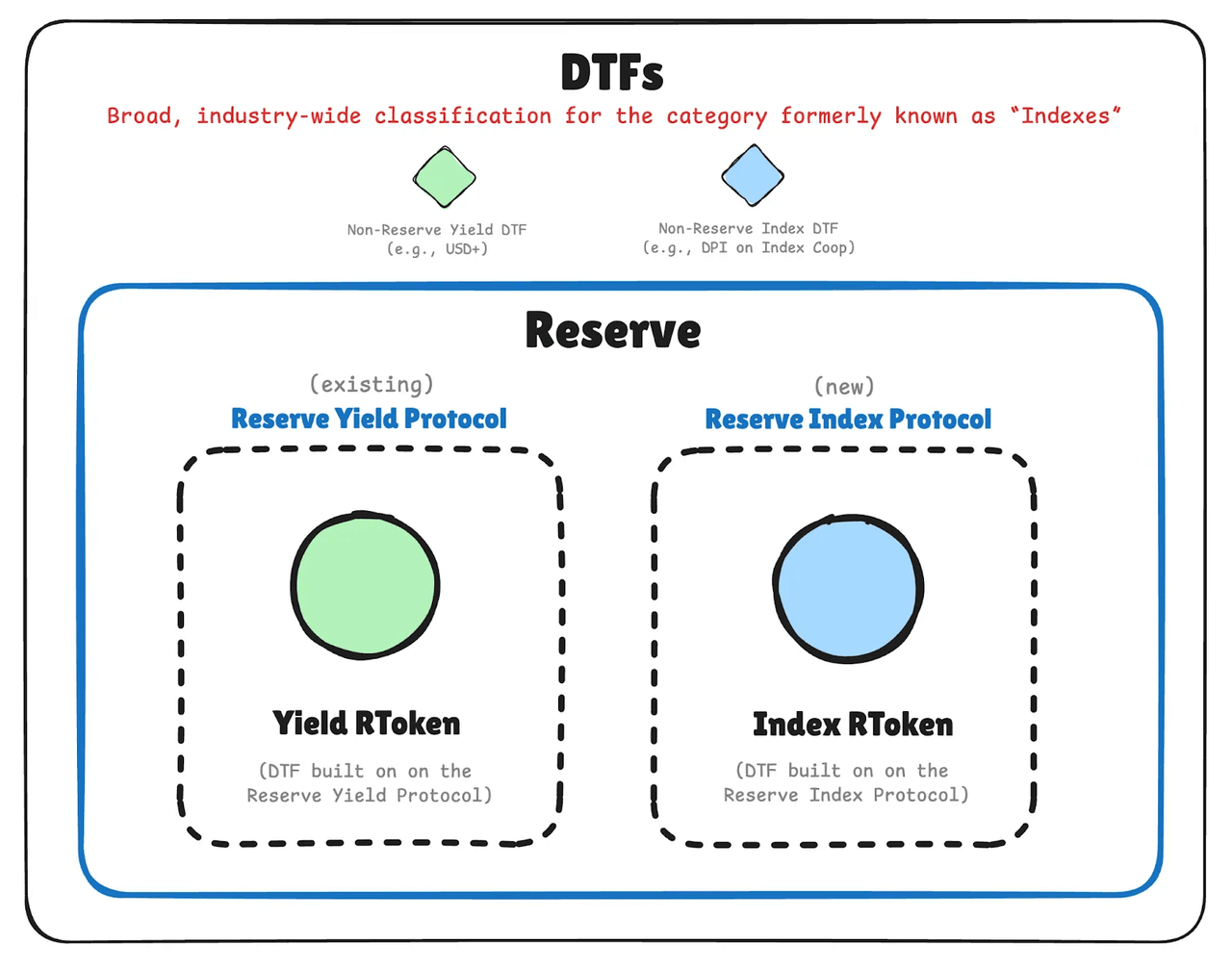 Source: Messari
The protocol first establishes a set of collateral assets as reserves, forming a collateral asset basket for stablecoins. When users deposit these assets, RTokens are issued in proportion to the deposited value. Each RToken’s value is directly supported by its underlying asset basket.
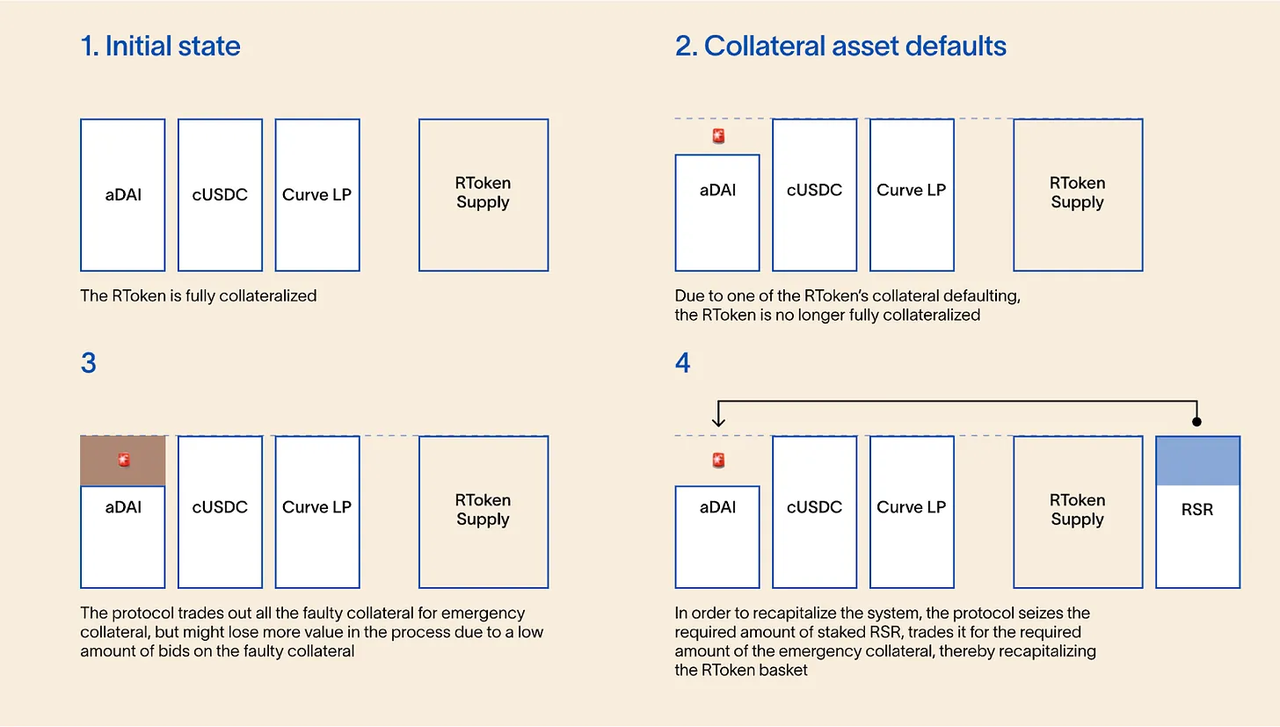
Additionally, Reserve Protocol implements an RSR staking mechanism. If collateral asset values decline or default risks arise, staked RSR is used to supplement reserves and maintain system solvency. This creates a dual-layer security structure: the collateral asset basket as the first layer, and the RSR risk buffer as the second.
What is RToken?
RTokens are asset-backed stablecoins issued by Reserve Protocol, each supported by a predefined basket of collateral assets—such as stablecoins, tokenized bonds, or other on-chain assets. The protocol mints RTokens based on the total value of these assets, ensuring that every stablecoin is fully backed.
Unlike traditional stablecoins, RTokens are not a single product but a customizable framework. Projects and communities can tailor their collateral asset baskets to meet specific needs, enabling creation of stablecoins with unique features, such as payment-focused or yield-generating stablecoins.
How are RTokens created?
RToken creation involves three steps: asset deposit, value calculation, and stablecoin minting.
Users deposit assets into the protocol that constitute the collateral basket. The protocol calculates the number of RTokens to be issued based on the current collateral ratio and asset prices.
The system then mints RTokens in proportion to the total value of the collateral assets and transfers them to the user. This process effectively packages a basket of assets into corresponding stablecoin shares.
This mechanism guarantees that every newly issued RToken is fully backed by reserves, establishing a solid value foundation for the stablecoin.
How does the collateral asset basket maintain stability?
The collateral asset basket is central to RToken stability.
Rather than relying on a single asset, the protocol diversifies reserves across multiple assets—for example, supporting an RToken with several stablecoins. This diversification reduces systemic risk from any single asset’s failure.
The protocol also dynamically monitors the status of collateral assets. If an asset no longer meets requirements, governance mechanisms allow adjustment of the collateral basket to preserve reserve quality.
Through multi-asset allocation, Reserve Protocol significantly enhances the risk resilience of its stablecoin system.
How does the over-collateralization mechanism work?
Reserve Protocol employs an over-collateralization mechanism to bolster stablecoin solvency.
Over-collateralization means the total value of collateral assets exceeds the value of issued RTokens. For instance, with a 105% collateralization ratio, the protocol requires at least 105 units of collateral assets for every 100 units of RTokens minted.
This approach provides a buffer against market volatility. If collateral asset prices fluctuate, the surplus reserve absorbs losses, minimizing insolvency risk.
Over-collateralization is a core security feature that underpins Reserve Protocol’s stability.
How does the protocol respond to collateral asset value fluctuations?
When collateral asset values decrease, Reserve Protocol activates its risk buffer mechanism.
The system checks if collateral reserves fall below required thresholds. If so, it sells staked RSR to replenish reserves and restore the stablecoin’s backing ratio.
RSR holders effectively provide insurance for the stablecoin system. During normal operations, they earn returns; in adverse conditions, their staked assets cover losses.
This mechanism ensures Reserve Protocol maintains stablecoin solvency amid market volatility.
Why is this mechanism crucial for decentralized stablecoins?
Decentralized stablecoin systems must guarantee that reserves always sufficiently back circulating stablecoins.
Reserve Protocol achieves this through a layered security model combining asset baskets, over-collateralization, and risk buffering. This reduces dependency on any single asset and allows flexible stablecoin configuration for diverse use cases.
Compared to single collateral models, Reserve Protocol’s structure is ideal for modular stablecoin systems, delivering versatile value stabilization tools for DeFi. As such, its design is foundational for stablecoin infrastructure.
Summary
Reserve Protocol’s core mechanism issues RTokens via collateral asset baskets, maintains stability through over-collateralization and the RSR risk buffer, and ensures system solvency. Users deposit collateral assets, the protocol mints stablecoins proportionally, and when collateral values drop, RSR staked funds supplement reserves.
This multi-layered approach not only enhances stablecoin security but also enables greater design flexibility, positioning Reserve Protocol as a critical infrastructure for decentralized, asset-backed stablecoins.
FAQs
Is RToken a stablecoin?
Yes. RToken is an asset-backed stablecoin issued by Reserve Protocol, supported by a predefined collateral asset basket.
How does Reserve Protocol maintain stablecoin stability?
Reserve Protocol maintains stablecoin solvency through collateral asset baskets, over-collateralization, and the RSR risk buffer mechanism.
Why is the RSR risk buffer mechanism necessary?
When collateral asset values are insufficient, staked RSR assets are sold to replenish reserves and restore stability.
What collateral assets can Reserve Protocol use?
Collateral assets may include stablecoins, tokenized bonds, or other on-chain assets that meet protocol requirements.
How does Reserve Protocol differ from single collateral stablecoins?
Reserve Protocol utilizes a diversified collateral asset basket and incorporates the RSR risk buffer mechanism, whereas single collateral stablecoins typically rely on only one collateral asset.







