QUAI vs OP: Comparing Two Innovative Layer-2 Scaling Solutions for Blockchain Ecosystems

2025-10-05 00:21:14
Blockchain
Crypto Ecosystem
Ethereum
Investing In Crypto
Layer 2
Article Rating : 4.9
half-star
0 ratings
The article "QUAI vs OP: Comparing Two Innovative Layer-2 Scaling Solutions for Blockchain Ecosystems" offers a thorough comparative analysis of Quai Network (QUAI) and Optimism (OP), focusing on investment value, price trends, tokenomics, and technical development. It addresses investor queries on which asset presents a better buy, examines historical performance, supply mechanisms, and market applications, and evaluates risks associated with these Layer 2 solutions. Targeted at both new and experienced investors, the article guides strategic allocation and risk management, leveraging information from Gate. Conclude with FAQs to clarify key points.
QUAI vs OP: Comparing Two Innovative Layer-2 Scaling Solutions for Blockchain Ecosystems

Introduction: QUAI vs OP Investment Comparison

In the cryptocurrency market, the comparison between Quai Network (QUAI) vs Optimism (OP) has been an unavoidable topic for investors. The two not only show significant differences in market cap ranking, application scenarios, and price performance, but also represent different positioning in crypto assets.

Quai Network (QUAI): Since its launch, it has gained market recognition for its next-generation proof-of-work Layer 1 blockchain aimed at creating a new decentralized global monetary system.

Optimism (OP): Introduced as a low-cost, lightning-fast Ethereum Layer 2 blockchain, it has been addressing the practical needs of developers and users since its inception.

This article will provide a comprehensive analysis of the investment value comparison between QUAI and OP, focusing on historical price trends, supply mechanisms, institutional adoption, technological ecosystems, and future predictions, attempting to answer the question most crucial to investors:

"Which is the better buy right now?"

I. Price History Comparison and Current Market Status

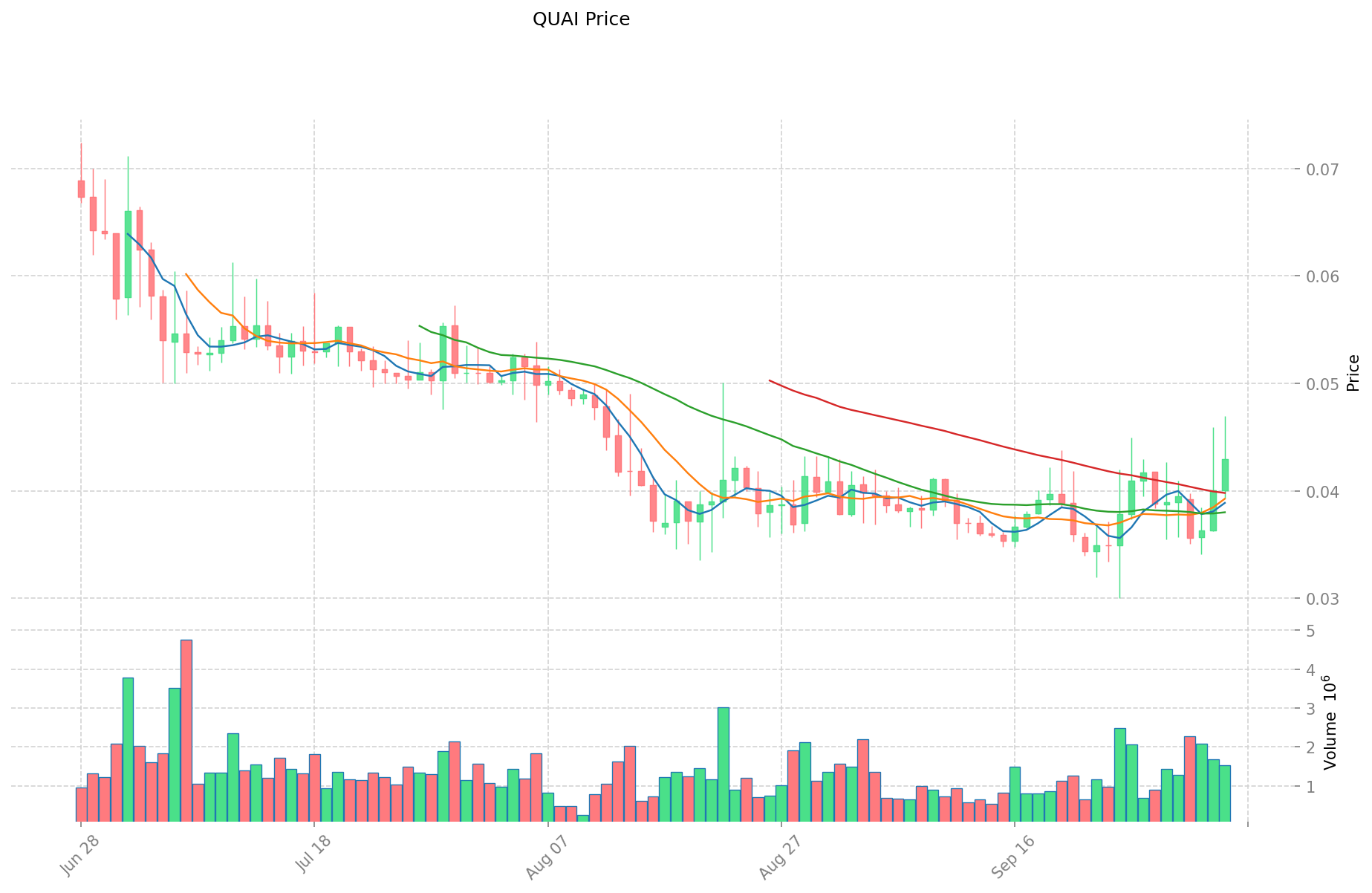
  • 2025: QUAI reached its all-time high of $0.37141 on February 24, 2025.
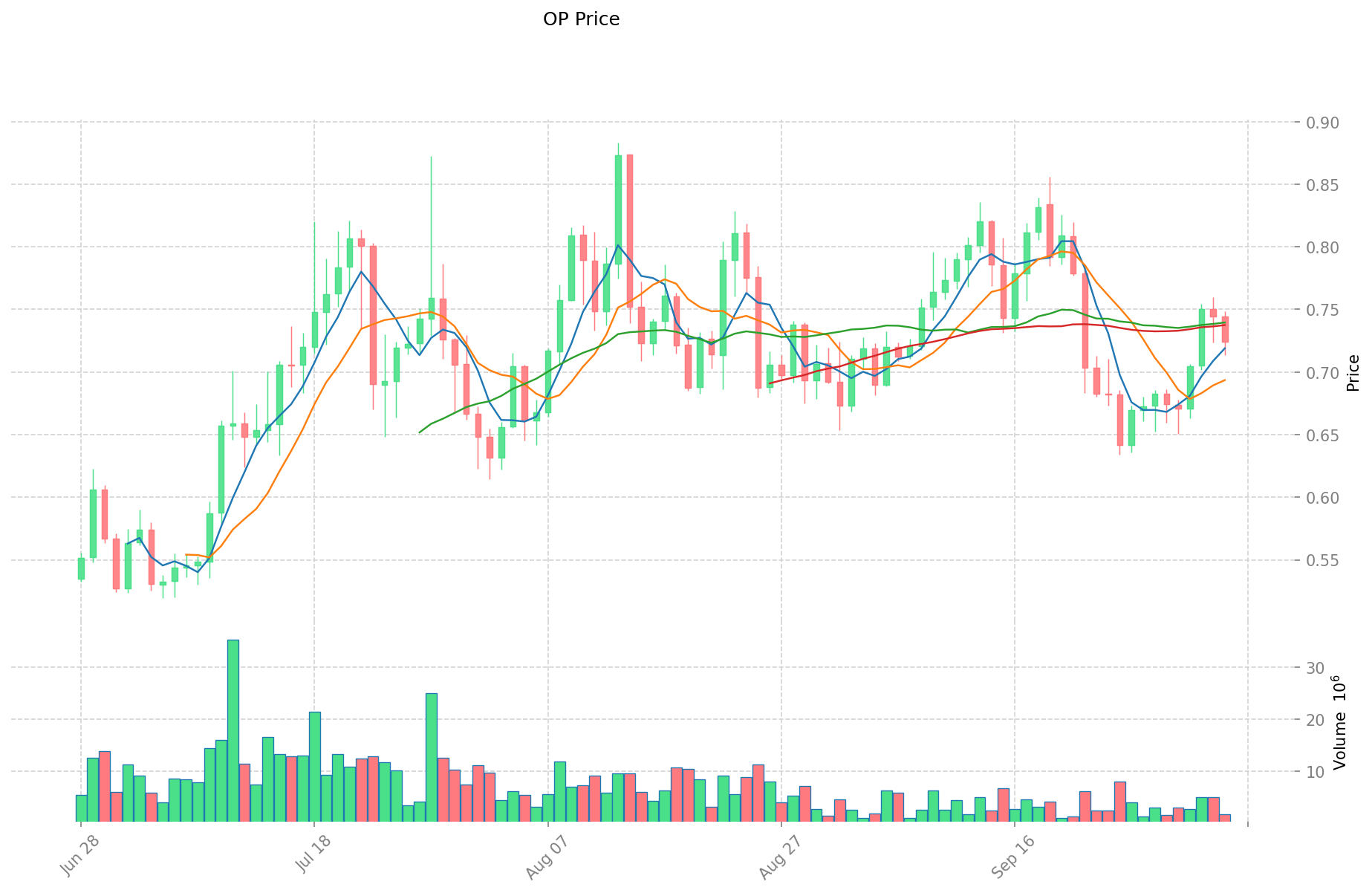
  • 2025: OP hit its all-time high of $4.84 on March 6, 2025.
  • Comparative analysis: In the recent market cycle, QUAI dropped from its high of $0.37141 to a low of $0.03, while OP fell from $4.84 to its current price of $0.7252.

Current Market Situation (2025-10-05)

  • QUAI current price: $0.0429
  • OP current price: $0.7252
  • 24-hour trading volume: QUAI $63,944.15 vs OP $1,291,988.78
  • Market Sentiment Index (Fear & Greed Index): 71 (Greed)

Click to view real-time prices:

price_image1 price_image2

II. Core Factors Affecting QUAI vs OP Investment Value

Supply Mechanism Comparison (Tokenomics)

  • Quai Network: Features the Qi token as an energy-backed "flatcoin" where value is directly linked to the energy costs of mining, allowing supply to flexibly respond to market demand and mining costs
  • OP: Not mentioned in the provided references

Institutional Adoption and Market Applications

  • Quai Network appears to be positioning itself in the PayFi ecosystem, though specific institutional holdings are not detailed in the references
  • Both tokens received new funding in recent months, with Quai Network being mentioned specifically as one of three Layer 1 blockchains that secured financing in August 2024

Technical Development and Ecosystem Building

  • Quai Network: Positioned as a crypto infrastructure project driving both technology and applications, particularly in the PayFi space
  • Quai's dual-token system includes Qi, which functions as an energy-backed "flatcoin"

Macroeconomic Factors and Market Cycles

  • Quai Network's "flatcoin" model may provide a different value proposition compared to traditional cryptocurrencies, as its value is tied to energy costs rather than purely market speculation
  • The recent funding secured by Quai Network suggests investor confidence in its growth potential during the current market cycle

III. 2025-2030 Price Prediction: QUAI vs OP

Short-term Prediction (2025)

  • QUAI: Conservative $0.0360 - $0.0429 | Optimistic $0.0429 - $0.0510
  • OP: Conservative $0.6384 - $0.7254 | Optimistic $0.7254 - $0.8342

Mid-term Prediction (2027)

  • QUAI may enter a growth phase, with estimated prices $0.0373 - $0.0578
  • OP may enter a bullish market, with estimated prices $0.7074 - $1.0612
  • Key drivers: Institutional capital inflow, ETF, ecosystem development

Long-term Prediction (2030)

  • QUAI: Base scenario $0.0681 - $0.0852 | Optimistic scenario $0.0852 - $0.1000
  • OP: Base scenario $0.8538 - $1.3340 | Optimistic scenario $1.3340 - $1.8542

View detailed price predictions for QUAI and OP

Disclaimer: The above predictions are based on historical data and market analysis. Cryptocurrency markets are highly volatile and subject to change. This information should not be considered as financial advice. Always conduct your own research before making investment decisions.

QUAI:

年份 预测最高价 预测平均价格 预测最低价 涨跌幅
2025 0.0510272 0.04288 0.0360192 0
2026 0.06103968 0.0469536 0.036623808 9
2027 0.0577764048 0.05399664 0.0372576816 25
2028 0.077682266136 0.0558865224 0.032414182992 30
2029 0.06945577003872 0.066784394268 0.06478086243996 55
2030 0.0851501026917 0.06812008215336 0.05313366407962 58

OP:

年份 预测最高价 预测平均价格 预测最低价 涨跌幅
2025 0.83421 0.7254 0.638352 0
2026 0.9045738 0.779805 0.7330167 7
2027 1.061158644 0.8421894 0.707439096 16
2028 1.39896081234 0.951674022 0.6185881143 31
2029 1.4926531198059 1.17531741717 1.1047983721398 62
2030 1.85423952319825 1.33398526848795 0.853750571832288 83

IV. Investment Strategy Comparison: QUAI vs OP

Long-term vs Short-term Investment Strategies

  • QUAI: Suitable for investors focused on PayFi ecosystem and energy-backed value proposition
  • OP: Suitable for investors seeking Ethereum Layer 2 scalability solutions

Risk Management and Asset Allocation

  • Conservative investors: QUAI: 30% vs OP: 70%
  • Aggressive investors: QUAI: 60% vs OP: 40%
  • Hedging tools: Stablecoin allocation, options, cross-currency portfolio

V. Potential Risk Comparison

Market Risk

  • QUAI: Volatility due to newer market entry and less established market presence
  • OP: Dependency on Ethereum ecosystem performance and Layer 2 adoption rates

Technical Risk

  • QUAI: Scalability, network stability
  • OP: Reliance on Ethereum's development, potential Layer 2 competition

Regulatory Risk

  • Global regulatory policies may have differing impacts on both tokens, particularly regarding energy consumption for QUAI and Layer 2 solutions for OP

VI. Conclusion: Which Is the Better Buy?

📌 Investment Value Summary:

  • QUAI advantages: Energy-backed "flatcoin" model, potential in PayFi ecosystem
  • OP advantages: Established Ethereum Layer 2 solution, larger market presence

✅ Investment Advice:

  • New investors: Consider a balanced approach, leaning towards OP for its more established market position
  • Experienced investors: Explore QUAI for its innovative model while maintaining OP exposure
  • Institutional investors: Diversify between both, with a focus on OP for current market applications and QUAI for potential future growth

⚠️ Risk Warning: The cryptocurrency market is highly volatile. This article does not constitute investment advice. None

VII. FAQ

Q1: What are the key differences between QUAI and OP? A: QUAI is positioned as a next-generation proof-of-work Layer 1 blockchain with a focus on creating a decentralized global monetary system, while OP is an Ethereum Layer 2 solution aimed at providing low-cost, fast transactions. QUAI features an energy-backed "flatcoin" model, while OP is more established in the Ethereum ecosystem.

Q2: Which token has shown better price performance recently? A: Based on the provided data, OP has shown better price performance. While QUAI's all-time high was $0.37141, it has dropped to $0.0429. OP reached an all-time high of $4.84 and is currently trading at $0.7252, representing a smaller percentage decline from its peak.

Q3: What are the main factors affecting the investment value of QUAI and OP? A: Key factors include supply mechanisms (tokenomics), institutional adoption, technical development, ecosystem building, and macroeconomic conditions. QUAI's energy-backed "flatcoin" model and focus on PayFi are unique factors, while OP benefits from its established position in the Ethereum Layer 2 ecosystem.

Q4: How do the long-term price predictions for QUAI and OP compare? A: For 2030, QUAI's base scenario predicts a range of $0.0681 - $0.0852, with an optimistic scenario of $0.0852 - $0.1000. OP's base scenario for 2030 is $0.8538 - $1.3340, with an optimistic scenario of $1.3340 - $1.8542. These predictions suggest potentially higher percentage gains for OP in the long term.

Q5: What are the main risks associated with investing in QUAI and OP? A: Both tokens face market risks due to cryptocurrency volatility. QUAI may face additional volatility due to its newer market entry and less established presence. Technical risks for QUAI include scalability and network stability, while OP's risks are tied to Ethereum's development and Layer 2 competition. Both face potential regulatory risks, with QUAI potentially more affected by energy consumption regulations.

Q6: How should different types of investors approach QUAI and OP? A: New investors might consider a balanced approach with a lean towards OP for its more established market position. Experienced investors could explore QUAI for its innovative model while maintaining OP exposure. Institutional investors might diversify between both, focusing on OP for current market applications and QUAI for potential future growth.

* The information is not intended to be and does not constitute financial advice or any other recommendation of any sort offered or endorsed by Gate.
Related Articles
XION vs OP: Comparing Layer 2 Solutions for Ethereum Scalability and Performance

XION vs OP: Comparing Layer 2 Solutions for Ethereum Scalability and Performance

Explore the investment landscape of XION vs OP, two prominent Layer 2 Ethereum solutions, by comparing their price trends, tokenomics, and market applications. Ideal for investors seeking to diversify their crypto portfolios, the article addresses key differences in technology, price predictions, and recommended strategies. It provides insights on institutional engagement, technological developments, and potential risk factors, enabling informed investment decisions. Structured to offer a comprehensive analysis, it appeals to both new and experienced investors looking to optimize their asset allocations tailored to real-time market conditions.
2025-10-03 12:29:15
2025 LINEA Price Prediction: Bullish Outlook as Layer 2 Adoption Accelerates

2025 LINEA Price Prediction: Bullish Outlook as Layer 2 Adoption Accelerates

The article provides a comprehensive analysis of Linea's price prediction from 2025 to 2030, emphasizing its potential as an Ethereum Layer 2 scaling solution. It addresses market volatility, historical price trends, and factors like ecosystem development influencing Linea's value. Key figures include technical development, ecosystem building, and risk management strategies for investors ranging from beginners to professionals. With sections on price history, professional investment strategies, risks, and conclusions, the piece targets investors looking to understand and potentially capitalize on Linea's growth in the rapidly evolving crypto market.
2025-10-18 02:08:28
Aptos vs Giants: Performance Analysis & Market Share of This Rising Layer 1 Blockchain

Aptos vs Giants: Performance Analysis & Market Share of This Rising Layer 1 Blockchain

Dive into the world of Aptos with our comprehensive competitor analysis. Discover how Aptos stacks up against Ethereum in performance, its market cap ranking, and user growth data. Uncover Aptos' unique advantages and explore its evolving market share trends in the dynamic blockchain landscape.
2025-06-24 03:28:13
Crypto Assets bankruptcy news

Crypto Assets bankruptcy news

Crypto Assets are no longer just a story about skyrocketing prices—they are also garnering attention in bankruptcy courts. Over the past five years, bankruptcy cases involving digital assets have grown by 420%, and regulators and practitioners are busy keeping up with this change. From the collapse of FTX to the rise of crypto intelligence experts, the wave of bankruptcies is becoming an important part of the digital finance narrative.
2025-07-18 08:17:02
2025 SUI价格预测:区块链新贵的未来发展与投资价值分析

2025 SUI价格预测:区块链新贵的未来发展与投资价值分析

本文从市场地位、历史价格走势、持仓分布及影响因素等方面全面分析SUI的投资价值。重点预测2025-2030年价格走势,并提供专业投资策略和风险管理框架以帮助投资者决策。适用于关注区块链技术发展和加密货币市场趋势的个人及机构投资者。文章逻辑清晰,结构包括引言、市场回顾、影响因素分析、价格预测、投资策略及风险评估,旨在支持加密投资和决策。
2025-09-09 10:38:03
2025 POL Price Prediction: Analyzing Potential Growth Factors and Market Trajectories for Polygon's Native Token

2025 POL Price Prediction: Analyzing Potential Growth Factors and Market Trajectories for Polygon's Native Token

This article explores the 2025 POL price prediction, analyzing key growth factors and market trajectories for Polygon's native token. It reviews POL's historical price trends, market status, and future price predictions up to 2030, while examining supply mechanisms, institutional dynamics, and macroeconomic influences. Investors will benefit from professional investment strategies, risk management frameworks, and potential risks assessments. Targeted readers include cryptocurrency investors, beginners, and institutions interested in Layer 2 scaling solutions. Structured logically, the article enhances SEO with relevant keywords and provides actionable insights and recommendations.
2025-09-10 10:03:32
Recommended for You
How Does BONK Compare to Pump.Fun and Believe in the Solana Meme Coin Market?

How Does BONK Compare to Pump.Fun and Believe in the Solana Meme Coin Market?

# How Does BONK Compare to Pump.Fun and Believe in the Solana Meme Coin Market? This comprehensive analysis examines three leading Solana meme coin platforms—BONK, Pump.Fun, and Believe—comparing their market positions, revenue models, and competitive strategies. BONK dominates with $190M daily revenue through robust ecosystem infrastructure and community-driven governance, while Pump.Fun maintains 91% market share in token listings via aggressive buyback mechanisms. The article explores differentiation strategies, market share dynamics shaped by first-mover advantage, and practical investment guidance for traders on Gate. Designed for both beginners and experienced investors, this guide clarifies liquidity metrics, volatility risks, and selection criteria for navigating Solana's meme coin landscape with confidence.
2026-01-06 10:30:35
What Is Token Economics Model: KAS Distribution, Inflation Mechanism & DAO Governance Explained
What Is Token Economics Model: KAS Distribution, Inflation Mechanism & DAO Governance Explained

# Article Introduction Kaspa's token economics model demonstrates a revolutionary approach to blockchain sustainability through three pillars: zero pre-allocation fair launch eliminating insider advantages, deflationary supply mechanics capping KAS at 28.7 billion tokens, and DAO governance empowering community-driven decisions. This guide addresses critical questions for Layer-1 investors and ecosystem participants—how equitable token distribution impacts project trustworthiness, why supply caps matter for long-term value preservation, and how decentralized governance balances community participation with operational efficiency. By exploring KAS distribution mechanisms, inflation control through scheduled halvings, and reputation-based voting systems, readers gain actionable insights into evaluating tokenomics sustainability and identifying advantages over traditional blockchain models like Bitcoin and Ethereum. Whether trading on Gate or participating as a network validator, understanding these economic fu
2026-01-06 10:25:08
How Do Kaspa (KAS) On-Chain Metrics Predict Price Movements in 2026?

How Do Kaspa (KAS) On-Chain Metrics Predict Price Movements in 2026?

# How Do Kaspa (KAS) On-Chain Metrics Predict Price Movements in 2026? This comprehensive guide analyzes Kaspa's critical on-chain metrics to forecast price dynamics through 2026, serving crypto investors, traders, and network analysts seeking data-driven insights. The article examines five core indicators: active address growth among 349,000+ holders, daily transaction volume patterns across 591+ million transactions, whale concentration dynamics with top 1,000 addresses controlling 59.98% supply, mining economics generating $80 daily rewards, and BlockDAG algorithm efficiency. By correlating unmoved supply records (61.65%), weekly whale accumulation (64.97M tokens), and transaction spikes with price movements, this guide equips readers to identify early signals of market direction before mainstream recognition. Whether monitoring liquidity depth on Gate, tracking holder distribution shifts, or evaluating mining incentive structures, these on-chain metrics provide actionable frameworks for predicting KAS va
2026-01-06 10:23:11
What does on-chain data analysis reveal about Render's whale movements and active addresses in 2026?

What does on-chain data analysis reveal about Render's whale movements and active addresses in 2026?

# Article Overview: Render Network On-Chain Analysis 2026 **On-chain data reveals Render Network's strengthening fundamentals through surging active addresses, strategic whale accumulation, and improved network efficiency in 2026.** This analysis examines three critical metrics: expanding active addresses and node operators demonstrating genuine ecosystem adoption; whale positioning patterns showing institutional conviction ahead of the $1.90 resistance level; and transaction volume growth paired with declining fees indicating protocol maturation. Designed for RNDR investors, traders, and cryptocurrency analysts, this article decodes behavioral signals that historically precede significant price expansion. The research clarifies how large holders accumulate during market corrections, reducing exchange supply while strengthening long-term positioning. By connecting on-chain metrics to market sentiment, readers gain actionable intelligence for evaluating Render's GPU computing potential and identifying optimal
2026-01-06 10:21:00
What is PEPE coin's fundamental analysis: white paper logic, use cases, and team background explained

What is PEPE coin's fundamental analysis: white paper logic, use cases, and team background explained

# PEPE Coin Fundamental Analysis: White Paper Logic, Use Cases, and Team Background This comprehensive guide examines PEPE coin's core fundamentals through three critical dimensions. First, the white paper analysis reveals a 420.69 trillion token supply creating mathematical impossibilities—requiring $420.69 trillion market cap for $1 valuation, exposing pure speculation without intrinsic value. Second, the use case overview demonstrates PEPE operates as a sentiment-driven meme coin, with viral social media marketing generating 30% price surges rather than utility-based adoption. Third, the team background assessment highlights anonymous developers, absent roadmaps, and historical insider token dumps, presenting 80% drawdown risks typical of speculative assets. This analysis serves investors and traders on Gate seeking transparent PEPE coin risk evaluation, providing essential due diligence before entering this volatile market segment. --- **Key Topics Covered:** Token supply economics | White paper archit
2026-01-06 10:17:43
What is tokenomics: token distribution, inflation mechanisms, and governance rights explained

What is tokenomics: token distribution, inflation mechanisms, and governance rights explained

# Article Introduction Tokenomics fundamentally shapes cryptocurrency project sustainability and value creation through three critical mechanisms: token distribution, inflation design, and governance frameworks. This comprehensive guide examines how successful projects like PEPE allocate tokens strategically—concentrating 93.1% in liquidity pools while constraining team holdings to 6.9%—and implement deflationary mechanisms including 1% transaction burns to enhance scarcity. Readers will discover how decentralized governance empowers token holders as active stakeholders, balanced vesting schedules prevent dilution risks, and transparent economic models distinguish healthy projects from those with concerning red flags. Whether you're an investor evaluating project fundamentals, a trader on Gate, or a developer designing sustainable tokenomics, this article provides actionable frameworks for assessing long-term viability and community alignment in crypto ecosystems.
2026-01-06 10:15:52