The most genuine market reaction in the past couple of days can actually be summed up in one sentence: first, cut off the worst-case expectations; then, reprice risk assets.
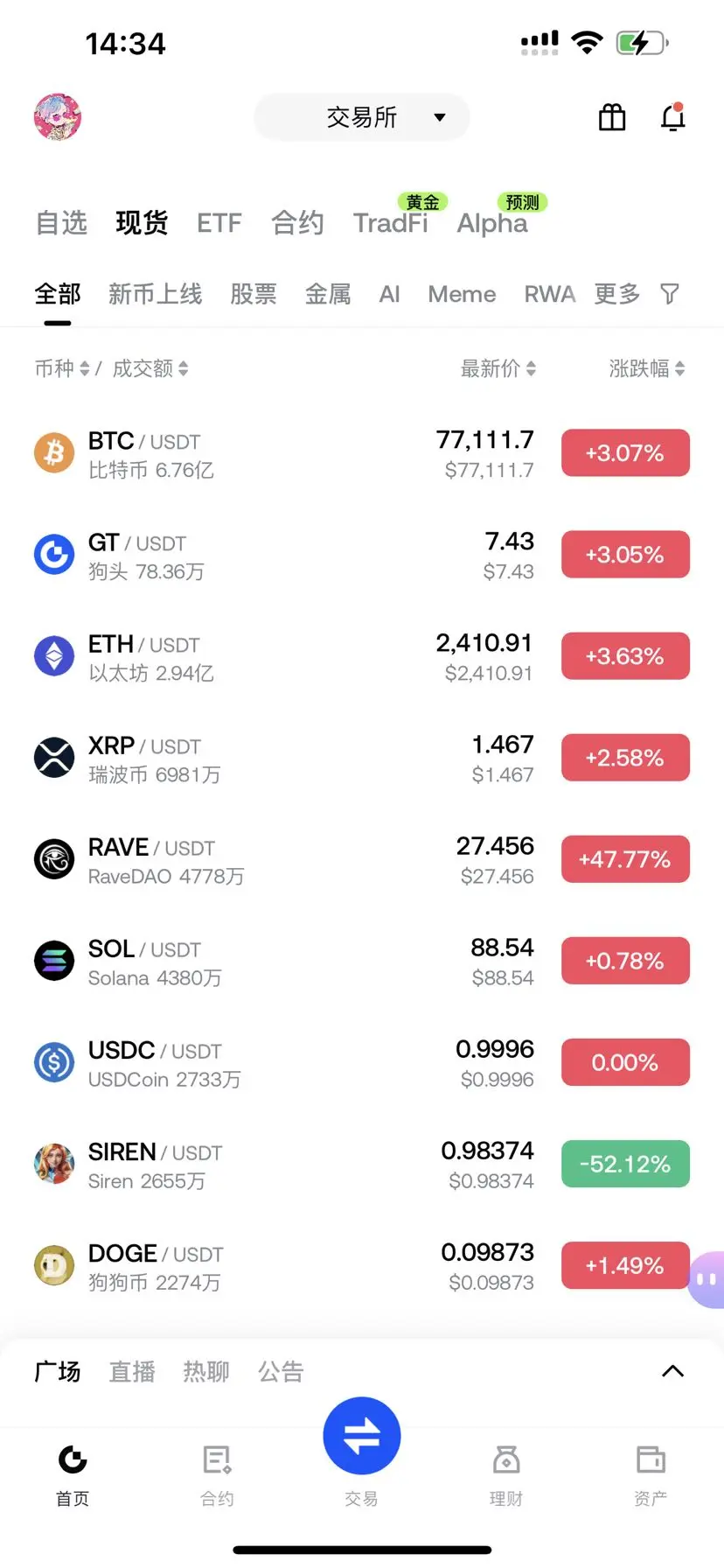
The Iranian Foreign Minister made a statement that the Strait of Hormuz is open to commercial ships, causing oil prices to fall in response. The market, which had been on edge for so long, finally relaxed. As crude oil prices dropped, inflation expectations also declined, and global stock markets and the crypto sector rebounded in sync, with BTC also surging toward around $77k. The chart looks like “bad news is exhausted,” but the issue is, this seems more like an emotional recovery rather than a complete resolution of risk.
Because the most critical contradiction still remains: on one side, Iran’s Foreign Minister signals easing, but on the other side, hardliners in Iran still haven’t truly loosened their stance. The Strait of Hormuz is said to be open, but control hasn’t been relinquished, and shipping isn’t back to pre-war free passage levels. The U.S. isn’t fully backing down either—Trump says the deal could be reached in a day or two, but also emphasizes that sanctions pressure will continue. In plain terms, it’s not that a ceasefire has been confirmed; rather, all parties are competing for narrative dominance and market expectations.
So, this BTC rally shouldn’t be simply understood as “geopolitical easing = direct surge.” More accurately, it’s trading three things: first, the macro pressure relief from falling oil prices; second, the market’s concentrated correction of risk aversion panic; third, funds flowing back into high-elasticity assets to switch risk preferences. But as long as the control dispute over Hormuz persists, as long as ceasefire agreements remain uncertain, and as long as U.S. and Iran keep throwing barbs at each other, the rise here still carries a heavy element of game theory.
My straightforward view: the current market isn’t a one-sided bullish outlook nor an immediate bearish turn, but a search for a new pricing equilibrium amid high volatility. BTC’s ability to retake $77k indicates that funds are willing to bet that “the situation won’t worsen further” for now. But if subsequent agreements face new uncertainties or the Hormuz issue escalates again, the tug-of-war between oil prices, the dollar, gold, and BTC will continue to swing violently.
This isn’t the end of risk; it’s just that risk has temporarily taken on a different form. The real determinant of the next phase of the market isn’t who’s louder today, but who can turn the verbal easing into actionable results. #美伊局势和谈与增兵博弈 @Gate广场_Official
The Iranian Foreign Minister made a statement that the Strait of Hormuz is open to commercial ships, causing oil prices to fall in response. The market, which had been on edge for so long, finally relaxed. As crude oil prices dropped, inflation expectations also declined, and global stock markets and the crypto sector rebounded in sync, with BTC also surging toward around $77k. The chart looks like “bad news is exhausted,” but the issue is, this seems more like an emotional recovery rather than a complete resolution of risk.
Because the most critical contradiction still remains: on one side, Iran’s Foreign Minister signals easing, but on the other side, hardliners in Iran still haven’t truly loosened their stance. The Strait of Hormuz is said to be open, but control hasn’t been relinquished, and shipping isn’t back to pre-war free passage levels. The U.S. isn’t fully backing down either—Trump says the deal could be reached in a day or two, but also emphasizes that sanctions pressure will continue. In plain terms, it’s not that a ceasefire has been confirmed; rather, all parties are competing for narrative dominance and market expectations.
So, this BTC rally shouldn’t be simply understood as “geopolitical easing = direct surge.” More accurately, it’s trading three things: first, the macro pressure relief from falling oil prices; second, the market’s concentrated correction of risk aversion panic; third, funds flowing back into high-elasticity assets to switch risk preferences. But as long as the control dispute over Hormuz persists, as long as ceasefire agreements remain uncertain, and as long as U.S. and Iran keep throwing barbs at each other, the rise here still carries a heavy element of game theory.
My straightforward view: the current market isn’t a one-sided bullish outlook nor an immediate bearish turn, but a search for a new pricing equilibrium amid high volatility. BTC’s ability to retake $77k indicates that funds are willing to bet that “the situation won’t worsen further” for now. But if subsequent agreements face new uncertainties or the Hormuz issue escalates again, the tug-of-war between oil prices, the dollar, gold, and BTC will continue to swing violently.
This isn’t the end of risk; it’s just that risk has temporarily taken on a different form. The real determinant of the next phase of the market isn’t who’s louder today, but who can turn the verbal easing into actionable results. #美伊局势和谈与增兵博弈 @Gate广场_Official