
Futures
Access hundreds of perpetual contracts
TradFi
Gold
One platform for global traditional assets
Options
Hot
Trade European-style vanilla options
Unified Account
Maximize your capital efficiency
Demo Trading
Introduction to Futures Trading
Learn the basics of futures trading
Futures Events
Join events to earn rewards
Demo Trading
Use virtual funds to practice risk-free trading
Launch
CandyDrop
Collect candies to earn airdrops
Launchpool
Quick staking, earn potential new tokens
HODLer Airdrop
Hold GT and get massive airdrops for free
Launchpad
Be early to the next big token project
Alpha Points
Trade on-chain assets and earn airdrops
Futures Points
Earn futures points and claim airdrop rewards


More





"Destroy everything," the market is out of control.
Source: Phoenix News
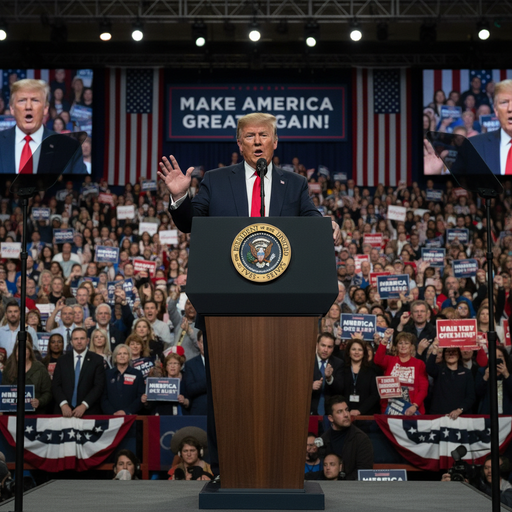
U.S. President Donald Trump has issued new ultimatums to Tehran, threatening that if the Strait of Hormuz is not reopened by 8:00 p.m. on Tuesday, he will strike Iran’s power plants and other civilian infrastructure. Tehran rejected the latest demand. This critical waterway is still closed to all vessels except a small number of ships.
Earlier, Trump said that if Iran does not quickly reach an agreement with the United States, he will order to “destroy everything” and “seize oil.”
Oil prices surge, U.S. stock index futures fall, and gold drops
Driven by this, oil prices rose. Brent crude climbed to above $110 per barrel. It rose 2% at the Monday open to above $111 per barrel, and its year-to-date gain has exceeded 80%. Last Thursday, WTI crude settled above $110 per barrel, up 11%, while Brent crude closed at around $109 per barrel.
U.S. stock index futures fell. S&P 500 index futures contracts fell 0.2%, as traders worried that higher energy prices would boost inflation, harm economic growth, and reduce stock positioning. The S&P 500 index had just posted its biggest weekly gain so far this year of 3.4%, and was only 5.7% below the record high set in January. But on Thursday of a shortened trading week due to the holiday, U.S. stocks initially opened lower because Trump’s late-evening televised address did not provide a clear timetable to end the war. Then, reports said Iran was discussing shipping arrangements for the strait with Oman, and the stock market recovered its losses.
Spot gold fell 1%, to about $4,630 per ounce. The U.S. dollar spot index rose 0.1%.
In addition, stronger-than-expected March employment data released on Friday showed 178k new jobs, prompting traders to reduce their bets on Federal Reserve rate cuts, and U.S. Treasury prices fell. The yield on the two-year Treasury note rose 4 basis points to 3.84%.
Escalating war intensifies the energy crisis—investors stay defensive
This war has thrown the crude oil market into chaos, triggering unprecedented supply shocks, and is evolving into a global energy crisis. Prices for oil and refined products have surged, intensifying inflation pressure, weakening economic growth, and putting a heavy burden on businesses and consumers.
After a weekend meeting, OPEC+ warned that even if hostilities end, the damage from the war to energy assets will still have long-term effects on oil supply. The oil-producing countries’ group approved an increase in production quota allocations, but given that crude exports from the Persian Gulf remain constrained, this is only a signal of intent. As the war entered its sixth week, the front-end spread for Brent crude widened to a spot premium of more than $10 per barrel—the widest level since the outbreak of the conflict, far above the peak during the Russia-Ukraine war in 2022.
Investors are uneasy about Trump’s frequently contradictory statements on the conflict. He has been wavering between claiming the war is about to end and threatening to increase the scope of strikes, and in the past he set deadlines for himself that he then did not follow.
Lee Houmin, a strategist at Longo Bank in Singapore, said: “For investors, the forecasting game is still quite tricky. Investors’ attention will be entirely focused on the military actions on both sides of the Persian Gulf, and on whether ship traffic through the Strait of Hormuz can further improve.”
Bloomberg strategist Mark Cranfield said that global investors will remain defensive. In traders’ view, the Iran war is in an escalation mode with no sign of an immediate end; therefore, the narrative of weaker stocks and bonds and a stronger dollar will continue to dominate.
The market is also focused on the impact of inflation. A survey showed that U.S. retail gasoline prices are up by about $1 per gallon, which could push the March consumer price index up by 1%, the largest increase since 2022. Investors will focus on U.S. monthly inflation data to be released on Friday.
On the other hand, strong employment data puts pressure on expectations for Fed rate cuts. Krishna Guha, head of central bank strategy at Evercore ISI, said: “To some extent, this reduces the likelihood that the Fed will be forced to cut rates due to ‘bad news’ (driven only by labor weakness). The decline in the pre-war unemployment rate does indeed slightly increase the risk of the Fed raising rates, but we still believe it is very unlikely to happen in 2026.”
A massive amount of information and precise interpretation—right on the Sina Finance app
责任编辑:Guo Yutong