Blockchain networks were originally used mainly for digital asset transfers and decentralized settlement. But as AI, on-chain finance, and automated applications continue to evolve, more use cases now depend on high-frequency computation and complex data verification. Traditional Layer 1 networks can provide decentralized security, but they are increasingly showing limits in execution efficiency, verification costs, and scalability. This is especially clear in scenarios that require large amounts of real-time computation, where on-chain systems struggle to balance throughput with trustless verification.
Against this backdrop, Nexus is not simply trying to raise TPS. Instead, through zkVM, a modular proving network, and a distributed verification architecture, it aims to provide a verifiable computing environment for AI inference, on-chain finance, and automated systems.

What Is Nexus (NEX)?
Nexus is a Layer 1 network built on zero-knowledge proof technology. It is designed to enable large-scale verifiable computation through a modular computation and verification architecture. The network’s core components include Nexus zkVM, a distributed proving network, and a high-performance execution layer, with a focus on solving the verification efficiency problems that traditional blockchains face in complex computing scenarios.
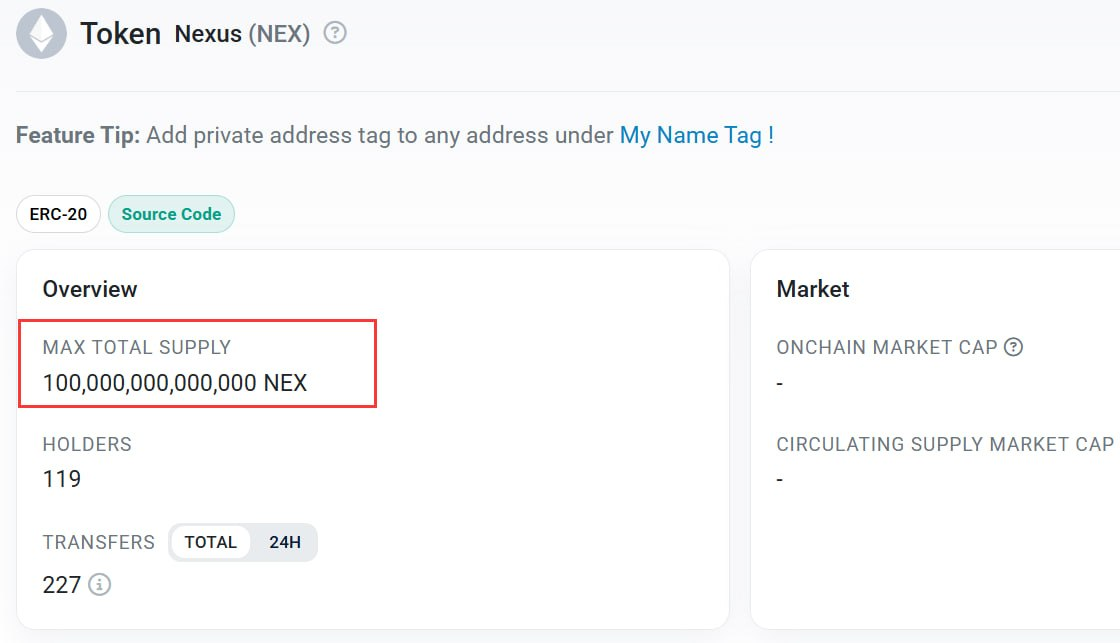
NEX is the native token of the Nexus network, with a total supply of 100 billion tokens. It is mainly used for network incentives, node participation, and future governance.
Nexus Background and Core Goals
Zero-knowledge proofs were first used primarily for privacy protection. As demand for blockchain scaling continued to grow, zk technology gradually expanded into transaction verification, Rollup scaling, cross-chain communication, and other areas. In recent years, the development of AI and automated systems has further pushed the idea of verifiable computation into the spotlight. The market has begun focusing on a new question: how can the results of complex computations be verified without requiring those computations to be executed again?
Nexus was built around this need. Compared with traditional Layer 1 networks, which tend to focus more on transaction throughput, Nexus places greater emphasis on building a verification network for future computing scenarios. Its key areas include Verifiable Finance, Verifiable AI, and distributed proving infrastructure. Through its modular architecture, Nexus aims to separate execution, proof generation, and verification, improving the scalability of the entire network.
This design means Nexus is closer to a combination of a “verification layer” and a “computation layer,” rather than simply a transaction-focused public blockchain in the traditional sense.
How Does Nexus Work?
Nexus uses a modular structure that divides the network into an execution layer, a proving layer, and a verification layer. The execution layer handles transactions and program execution. The proving layer generates zk proofs. The verification layer then quickly confirms whether those proofs are valid.
During execution, programs run inside the Nexus execution environment. After that, the zkVM converts the program’s execution process into a zero-knowledge proof. Unlike traditional blockchains, other nodes do not need to rerun the entire program. They only need to verify the proof to confirm whether the result can be trusted.
To improve proving efficiency, Nexus introduces a distributed proving network. Proving nodes in the network work together to generate proofs, reducing pressure on any single node and increasing the system’s ability to process complex computations in parallel.
What Are the Key Features of Nexus zkVM?
zkVM is a core part of the Nexus technical architecture. A traditional virtual machine mainly executes programs, while a zkVM executes programs and generates the corresponding zero-knowledge proofs at the same time, allowing execution results to be independently verified.
Compared with the traditional EVM, Nexus zkVM places more emphasis on verification efficiency and computational trustworthiness. Developers can build programs using general-purpose programming languages such as Rust, Go, or C++, and then use the zkVM to convert execution results into zk proofs. This lowers the development barrier and improves compatibility for complex applications.
The importance of zkVM is not just that it can improve blockchain performance. More importantly, it establishes a new way to achieve trusted computation. In the future, AI inference, on-chain order matching, and automated trading logic could all use zkVM to make results verifiable.
How Does the Nexus Proving Network Work?
The Nexus proving network is similar to a distributed computing marketplace. The network assigns proving tasks to different nodes, which work together to generate proofs and then submit them to the verification layer.
This design can significantly improve proving parallelism. Compared with generating proofs on a single node, a distributed network is better suited to high-frequency and complex computing tasks, while also reducing single-point performance bottlenecks.
During the testnet stage, users can participate in the network through browser nodes or CLI nodes and receive corresponding test rewards. As the proving network expands, Nexus may eventually develop into an open market centered on proving resources.
Over the long term, the proving network is not only part of Nexus’s core infrastructure, but also one of the main features that sets it apart from traditional public blockchains.
Nexus Applications in Verifiable Finance
Verifiable Finance is one of the main areas Nexus is currently developing. Traditional financial systems can support high-frequency trading and complex risk management, but their verification processes usually depend on centralized institutions. Even in on-chain finance, complex order logic and clearing processes are often difficult to verify at low cost.
Nexus aims to use zk proofs to turn financial logic itself into a verifiable process. For example, on-chain order books, perpetual contracts, risk controls, and automated trading strategies can all be verified through proving mechanisms, improving system transparency.
How Is Nexus Different from Other ZK Projects?
Today, projects in the zk sector mainly fall into several categories, including zkRollups, zkEVMs, and zk infrastructure networks. zkSync and Starknet focus more on Layer 2 scaling, while Nexus places greater emphasis on verifiable computation and proving infrastructure.
Compared with traditional Rollup projects, Nexus is not focused only on improving transaction processing efficiency. Instead, it aims to build an open network that supports large-scale proving. This means Nexus emphasizes computational verification, not just transaction scaling.
In terms of positioning, Ethereum is more of a general settlement layer, Solana focuses more on high-performance execution, and Nexus is trying to build a new infrastructure direction at the intersection of zk proving, AI verification, and financial computation.
| Project |
Core Direction |
Key Capability |
| Nexus |
Verifiable computation |
proving network + zkVM |
| zkSync |
Layer 2 scaling |
zkEVM |
| Starknet |
Cairo ecosystem |
ZK Rollup |
| Solana |
High-performance execution |
High TPS |
| Ethereum |
General settlement layer |
Decentralized security |
What Challenges Does Nexus Face?
Although verifiable computation is widely viewed as having long-term potential, Nexus still faces several practical challenges.
First, zk proving still requires significant computing resources. As applications scale, hardware costs and proving efficiency remain industry-wide issues that need to be solved. Second, the convergence of AI and blockchain is still in its early stages, and the real market demand for Verifiable AI has not yet been fully proven.
At the same time, competition in high-performance Layer 1 and modular infrastructure is intense. Projects including Solana, Celestia, zkSync, and Starknet are all advancing different forms of scaling solutions. Whether Nexus can build a sufficiently large proving network and developer ecosystem will be a key factor in its long-term development.
In addition, when digital assets and blockchain projects are involved, market price volatility, technological evolution, and regulatory changes may also affect ecosystem development.
Conclusion
Nexus (NEX) is a Layer 1 network built around verifiable computation. Its core goal is to provide high-performance verification infrastructure for AI and on-chain finance through zkVM, a modular proving network, and a distributed verification architecture.
Compared with traditional public blockchains that focus on transaction processing, Nexus places greater emphasis on “how to verify complex computation.” This differentiated positioning gives it a distinct direction within Verifiable Finance, Verifiable AI, and zk infrastructure.
As demand for trusted computation continues to grow across AI inference, automated agents, and on-chain finance, verifiable computation networks may become an important trend in the blockchain industry. Nexus is one of the representative projects moving in that direction.
FAQs
What Is the Role of Nexus zkVM?
zkVM can generate corresponding zero-knowledge proofs after a program is executed, allowing computation results to be verified quickly without rerunning the full program.
What Is a Proving Network?
A proving network is a distributed proof generation network made up of multiple proving nodes, used to collaboratively generate zk proofs.
How Is Nexus Different from zkSync?
zkSync mainly focuses on Layer 2 scaling, while Nexus places greater emphasis on a distributed proving network and verifiable computation infrastructure.
How Does Nexus Support AI Applications?
Nexus can verify AI inference results through zk proofs, helping improve the credibility and transparency of AI outputs.
What Is the NEX Token Used For?
NEX is used for network incentives, node participation, ecosystem coordination, future governance, and other scenarios.
How Can Users Participate in the Nexus Network?
Users can join the Nexus proving network by running browser nodes, CLI nodes, or participating in testnet tasks.







