Peacefulheart

vip
Age 0.8 Year
Peak Tier 5
No content yet
MrFlower_XingChen
#BTCPullback
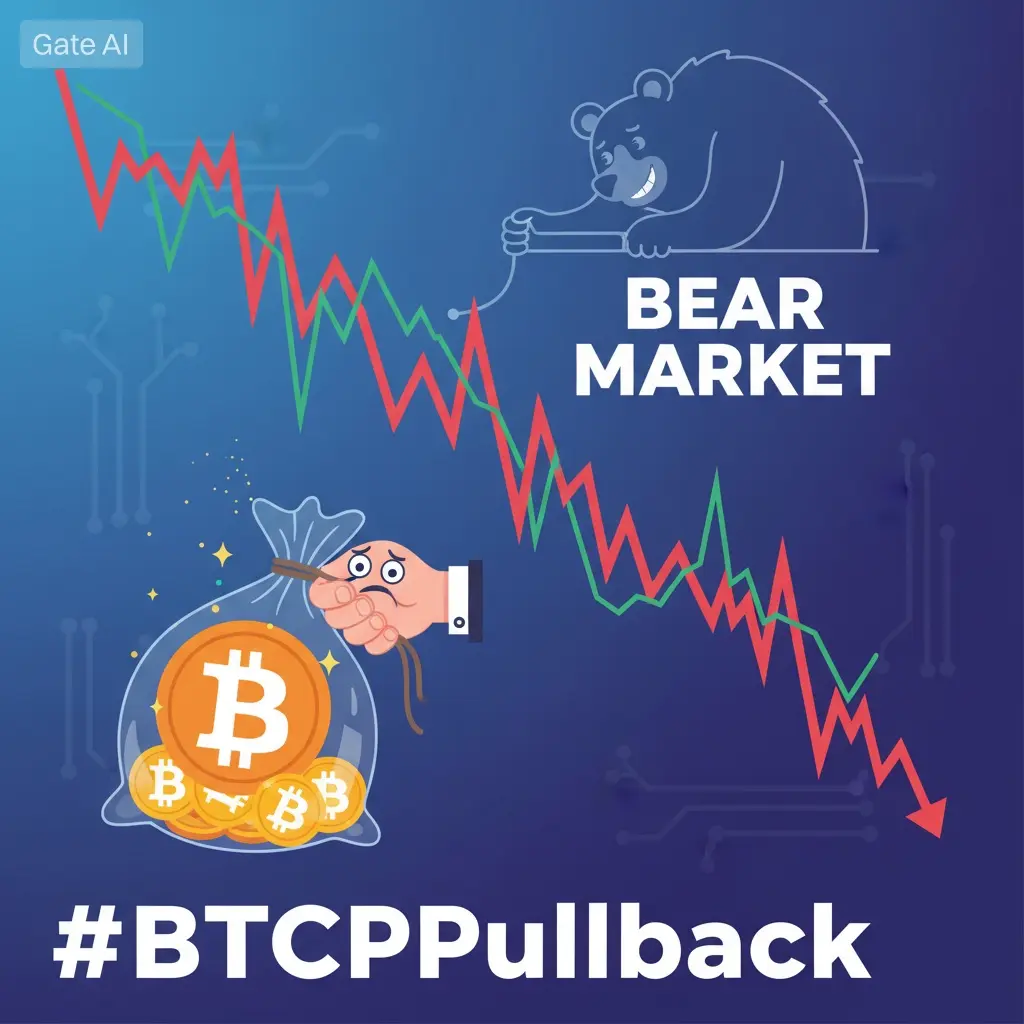
Bitcoin is showing a controlled pullback after holding above the $80K zone in recent sessions. This move looks more like a normal cooling phase rather than a trend reversal, following strong upside momentum. In healthy uptrends, pullbacks often act as a reset for liquidity and positioning before the next move.
Price structure still remains broadly bullish, but short-term momentum has slowed. Buyers and sellers are now interacting in a tighter range, which usually signals consolidation after expansion.
A key reason for this pullback is profit-taking near recent resistance zones. As BTC approached higher levels, some traders locked in gains, creating temporary selling pressure. At the same time, leveraged positions are being reduced, which helps stabilize market conditions over time.
Institutional demand continues to play a stabilizing role. Ongoing ETF-related inflows are still supporting the market during corrections, helping reduce the risk of deeper breakdowns.
The key level to watch is still $80K. Holding above this zone keeps the broader structure intact and supports the idea of consolidation within an uptrend. A break below it on strong volume could extend the correction toward lower liquidity areas.
Overall, current movement reflects consolidation and rotation rather than structural weakness.
#Gate13thAnniversaryLive
#GateSquareMayTradingShare
#TopCopyTradingScout

repost-content-media
  • Reward
  • Comment
  • Repost
  • Share
#GateSquareMayTradingShare
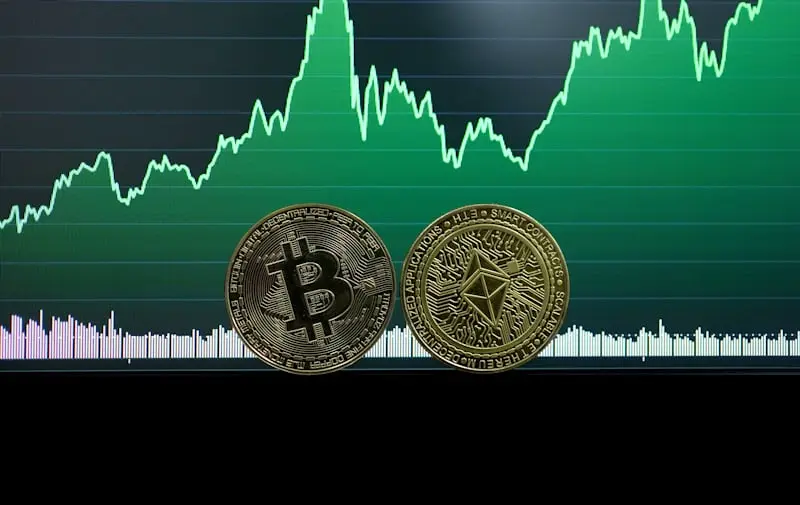
The market narrative around Bitcoin is increasingly shifting away from traditional cycle-based thinking toward liquidity-driven and institution-led price discovery. Recent market behavior shows that spot ETF flows, derivatives positioning, and macro liquidity conditions are now having a stronger influence on price direction than historical halving expectations.
One key structural change is the rise of persistent ETF demand, which has introduced a continuous bid into the market. Instead of sharp retail-driven expansion phases followed by deep drawdowns, Bitcoin is no
BTC-1.72%
MrFlower_XingChen
#GateSquareMayTradingShare
The market narrative around Bitcoin is increasingly shifting away from traditional cycle-based thinking toward liquidity-driven and institution-led price discovery. Recent market behavior shows that spot ETF flows, derivatives positioning, and macro liquidity conditions are now having a stronger influence on price direction than historical halving expectations.
One key structural change is the rise of persistent ETF demand, which has introduced a continuous bid into the market. Instead of sharp retail-driven expansion phases followed by deep drawdowns, Bitcoin is now experiencing more controlled expansion phases where institutional accumulation absorbs selling pressure during corrections. This has contributed to a noticeable reduction in downside volatility compared to earlier cycles.
On-chain data also reflects this transition. Exchange balances continue trending lower, suggesting reduced immediate selling supply, while long-term holder distribution remains relatively tight. At the same time, stablecoin liquidity has expanded, providing additional capital that can rotate into crypto assets during periods of improved risk appetite.
In derivatives markets, funding rates and open interest are showing more balanced behavior instead of extreme leverage buildup. This indicates that speculation is still present but increasingly managed through risk frameworks used by institutional participants rather than retail-driven overextension.
Macro conditions remain a dominant force. Expectations around interest rate policy and global liquidity cycles are now closely tied to crypto performance, aligning Bitcoin more closely with risk-on assets such as equities rather than purely supply-driven commodities.
Overall, Bitcoin is evolving into a hybrid macro asset where structural inflows, liquidity cycles, and institutional allocation strategies are becoming more important than fixed historical patterns.
#Gate13thAnniversaryLive
#GateSquareMayTradingShare
#TopCopyTradingScout
#WCTCTradingKingPK
repost-content-media
  • Reward
  • Comment
  • Repost
  • Share
MrFlower_XingChen
#GateSquareMayTradingShare
Global crypto markets are entering a high-volatility phase as geopolitical tension between the United States and Iran continues rising. Risk sentiment across financial markets weakened after renewed warnings surrounding energy routes and regional military positioning, pushing traders toward defensive positioning.
Bitcoin remains relatively stable near the $80K zone, but momentum has slowed after repeated failures to break higher resistance levels. Market structure suggests buyers are becoming cautious as macro uncertainty increases. Spot demand is still supporting price action, though derivatives data shows leverage building near local highs, increasing the probability of sharp liquidations if volatility expands suddenly.
Ethereum continues underperforming Bitcoin, reflecting weaker confidence in higher-risk assets during uncertain macro conditions. Capital rotation toward stronger large-cap assets is becoming more visible, while many altcoins remain split between isolated strength and broader weakness.
Energy markets are also becoming an important factor for crypto traders. Any disruption involving the Strait of Hormuz could rapidly increase oil prices, strengthen inflation concerns, and pressure global liquidity conditions. Historically, periods of geopolitical instability often trigger short-term volatility spikes across equities and digital assets.
For now, traders appear focused on risk management rather than aggressive expansion. Market direction may remain highly sensitive to macro headlines, ETF flows, and liquidity conditions over the coming sessions.
#Gate13thAnniversaryLive
#GateSquareMayTradingShare
#TopCopyTradingScout

$BTC $GT
  • Reward
  • Comment
  • Repost
  • Share
MrFlower_XingChen
#GateSquareMayTradingShare
Current precious metals prices continue showing strong volatility after the recent correction phase. Gold is trading near $4,735 per ounce, while Silver is fluctuating around $76–$77 per ounce across global markets. In Pakistan, local bullion markets are pricing gold close to Rs483,500 per tola, while silver remains near Rs7,700–8,000 per tola.
Despite the sharp decline from earlier highs, broader macro conditions still suggest that the long-term precious metals cycle remains structurally supported rather than fully broken. Recent weakness has been driven more by interest rate expectations, ETF outflows, and geopolitical inflation pressure than by a collapse in long-term demand fundamentals.
One of the strongest long-term drivers remains central bank accumulation. Several countries continue increasing gold reserves as part of broader reserve diversification strategies. Unlike speculative flows, sovereign buying is generally less sensitive to short-term price swings, creating a stronger structural support zone during corrections.
Another important factor is the relationship between metals prices and real interest rates. Higher real yields temporarily pressured gold after oil prices surged during Middle East tensions, increasing inflation concerns and reducing expectations for immediate Federal Reserve easing. However, easing energy prices and improving diplomatic signals have recently helped metals recover from local lows.
Silver continues showing stronger long-term industrial demand compared to previous cycles. Expansion in AI infrastructure, renewable energy systems, advanced semiconductors, and electric vehicles is increasing silver consumption globally. Supply growth remains limited because most silver production comes as a byproduct of other mining operations.
The gold-silver ratio also suggests that silver still maintains relative upside potential if industrial demand remains firm and macro liquidity conditions improve later in the cycle. Historically, declining ratios often signal stronger participation in broader metals markets.
ETF positioning remains another major variable. Institutional inflows have not yet fully recovered to earlier peak levels, suggesting that sidelined capital could still return if monetary policy expectations become more supportive.
At the same time, geopolitical uncertainty continues supporting defensive demand for precious metals. Concerns involving energy routes, inflation stability, sovereign debt expansion, and currency volatility are keeping long-term interest in hard assets elevated across markets.
Mining companies are also benefiting from elevated long-term metals prices despite recent volatility. Profit margins for producers generally expand faster than spot metal prices during strong commodity cycles because operational costs often rise slower than revenue growth.
Overall, current market behavior suggests that the precious metals cycle is evolving into a broader macro-driven trend rather than ending completely. Short-term volatility may remain elevated, but structural demand from central banks, industrial consumption, and long-term portfolio allocation continues supporting the sector.
#Gate13thAnniversaryLive
#GateSquareMayTradingShare
#TopCopyTradingScout

repost-content-media
  • Reward
  • Comment
  • Repost
  • Share
GateSquareMayTradingShare
MrFlower_XingChen
#GateSquareMayTradingShare
#WCTCTradingKingPK
Ethereum is currently trading around $2,328, showing short-term weakness with a 24-hour decline of roughly 3–4%. Despite this intraday pressure, the broader structure remains more constructive than the immediate price action suggests, especially when viewed across multi-week and multi-month timeframes.
The recent price range between $2,314 and $2,424 reflects a market in consolidation rather than clear breakdown. Volatility remains present, but directional conviction is still forming, with buyers and sellers actively defending nearby liquidity zones.
Over the past 7 days, ETH remains slightly positive, while 30-day and 90-day performance continues to show gradual recovery. This suggests that the asset is still transitioning from an earlier correction phase into a stabilization phase.
A key driver of current sentiment is the evolution of Ethereum’s staking economy. The network has shifted deeper into a yield-based structure, where long-term holders increasingly participate in validator operations rather than passive holding.
The Pectra upgrade has played an important role in this shift by improving validator efficiency and reducing operational friction. This has made large-scale staking more accessible, especially for institutional participants.
With expanded staking limits and improved consolidation mechanisms, capital efficiency within the network has increased significantly. This has long-term implications for supply dynamics because more ETH can now be locked into staking infrastructure.
As staking participation rises, circulating supply becomes progressively tighter. This does not immediately impact price direction, but it creates structural conditions that can amplify moves during demand surges.
ETF-linked accumulation has also become an important factor. Institutional products tracking ETH exposure are increasingly integrating staking strategies, which further reduces liquid supply available in open markets.
This rotation from non-yielding holdings to staking-based exposure represents a structural change in how institutional capital interacts with Ethereum compared to previous cycles.
Another important layer is the upcoming roadmap development cycle. Ethereum continues to evolve through staged upgrades focused on scalability, efficiency, and long-term decentralization improvements.
Future planned upgrades such as Glamsterdam aim to significantly increase base layer throughput, which could improve transaction capacity and reduce congestion during high-demand periods.
Additional upgrades focusing on privacy and censorship resistance are also part of the longer-term roadmap, reinforcing Ethereum’s positioning as a global settlement infrastructure layer.
Market sentiment remains cautiously optimistic, largely because institutional engagement has increased relative to earlier cycles. This is reflected in more stable inflow patterns and reduced extreme speculative positioning.
However, short-term volatility remains driven by liquidity conditions and macro expectations, meaning price swings can still be sharp even during structurally positive phases.
The interaction between ETF inflows and staking growth is becoming a central theme in Ethereum’s market behavior. When both flows align positively, supply pressure increases in a meaningful way.
At the same time, macro uncertainty still plays a major role in limiting aggressive upside momentum. Interest rate expectations and risk appetite shifts continue influencing short-term trading behavior.
Despite this, Ethereum’s long-term narrative remains centered on infrastructure expansion, institutional adoption, and yield-based asset evolution rather than pure speculative cycles.
Overall, the current phase can be described as a structural transition period where price consolidation coexists with strengthening underlying fundamentals.
If staking participation continues expanding and ETF inflows remain stable, Ethereum’s supply-demand balance could tighten further over the coming cycles.
For now, the market remains in equilibrium between short-term correction pressure and long-term structural support building beneath the surface.
#Gate13thAnniversaryLive
#GateSquareMayTradingShare
#TopCopyTradingScout

repost-content-media
  • Reward
  • Comment
  • Repost
  • Share
#GateSquareMayTradingShare
#WCTCTradingKingPK
Worldcoin has dropped sharply from its all-time high near $11.75 in March 2024 to around $0.26, mainly due to continuous supply expansion and weak demand absorption. The key pressure comes from a large token unlock schedule, where millions of tokens enter circulation daily, creating sustained selling pressure over time. This imbalance between increasing supply and limited buying interest has been the main driver of the long-term downtrend.
Additional pressure has come from early investors and team-related allocations gradually unlocking and enter
WLD-2.11%
MrFlower_XingChen
#GateSquareMayTradingShare
#WCTCTradingKingPK
Worldcoin has dropped sharply from its all-time high near $11.75 in March 2024 to around $0.26, mainly due to continuous supply expansion and weak demand absorption. The key pressure comes from a large token unlock schedule, where millions of tokens enter circulation daily, creating sustained selling pressure over time. This imbalance between increasing supply and limited buying interest has been the main driver of the long-term downtrend.
Additional pressure has come from early investors and team-related allocations gradually unlocking and entering the market, adding more sell-side liquidity. At the same time, regulatory uncertainty around the project’s identity verification model has affected global adoption sentiment, limiting confidence in long-term growth.
Broader crypto market weakness has also amplified the decline, especially for high-inflation assets during risk-off conditions. Although upcoming reductions in daily unlocks may slow future supply growth, the overall market impact of previous dilution is already reflected in the current price structure.
#Gate13thAnniversaryLive
#GateSquareMayTradingShare
#TopCopyTradingScout

repost-content-media
  • Reward
  • Comment
  • Repost
  • Share
MrFlower_XingChen
#GateSquareMayTradingShare
#WCTCTradingKingPK
Bitcoin is currently trading near $80,900 after a short-term pullback of around 2%. The market is still operating inside a relatively tight volatility band, which shows that price action is being actively balanced between buyers and sellers rather than trending in one clear direction.
The recent trading range between $80,500 and $82,700 highlights an ongoing liquidity battle. Each move toward either boundary is being met with strong reactions, suggesting that the market is still in a decision-making phase.
Even with short-term weakness, the broader structure remains constructive. Bitcoin continues to hold a gradual upward trajectory when viewed across multi-week and multi-month timeframes, indicating that the larger trend is still intact.
This type of environment is often seen during mid-cycle consolidation phases, where price pauses after an extended move higher. Instead of collapsing, the market typically stabilizes and builds a new base.
Recent intraday volatility reflects increased participation from short-term traders. Faster repositioning is creating sharper swings, but without breaking the overall trend structure.
On higher timeframes, momentum still leans positive. The market has not shown a confirmed breakdown structure, which keeps the broader trend bias intact for now.
Shorter timeframes, however, are showing cooling momentum. This divergence between timeframes is common during periods where the market transitions from impulsive moves into consolidation.
Institutional participation continues to play a stabilizing role. ETF-related inflows are helping absorb selling pressure, reducing the intensity of downside moves compared to earlier cycles.
This structural demand means that even during pullbacks, liquidity tends to re-enter the market relatively quickly, preventing extended drawdowns in many cases.
At the same time, profit-taking activity remains visible. After recent upward moves, some holders are locking in gains, contributing to short-term pressure.
Derivatives markets are also influencing price behavior. High leverage levels can exaggerate both upward and downward movements, increasing volatility around key zones.
This creates a push-pull dynamic where price reacts strongly to both buying and selling pressure, rather than moving in a smooth trend.
Market sentiment is currently neutral with slight optimism. Engagement levels remain elevated, but not at extreme levels that typically signal market exhaustion.
The $80,000 level is becoming a key psychological reference point. Holding above it maintains confidence in the current structure, while losing it would likely shift focus toward deeper liquidity areas.
If support holds, the market may continue building a base for the next directional move. Consolidation above key levels often precedes stronger continuation phases.
If support fails, a deeper retracement could occur, but it would still be interpreted within the context of a broader uptrend unless structural breakdown appears.
Overall, Bitcoin is in a transition phase where neither bulls nor bears have full control. The market is stabilizing after volatility, building energy for its next major move.
For now, structure remains more important than short-term fluctuations, with liquidity zones and institutional flows continuing to guide price behavior.
#Gate13thAnniversaryLive
#GateSquareMayTradingShare
#TopCopyTradingScout

repost-content-media
  • Reward
  • Comment
  • Repost
  • Share
#CLARITYActStalled
The debate around the CLARITY Act has become one of the most closely watched developments in global crypto regulation, not just in the United States but across the entire digital asset ecosystem. As the Senate moves toward its May 11 review window, the discussion is no longer limited to technical policy details. Instead, it has evolved into a broader struggle between traditional banking interests, emerging decentralized finance systems, and the geopolitical race for digital financial dominance.
At the center of the controversy is a fundamental question: how far should regul
MrFlower_XingChen
#CLARITYActStalled
The debate around the CLARITY Act has become one of the most closely watched developments in global crypto regulation, not just in the United States but across the entire digital asset ecosystem. As the Senate moves toward its May 11 review window, the discussion is no longer limited to technical policy details. Instead, it has evolved into a broader struggle between traditional banking interests, emerging decentralized finance systems, and the geopolitical race for digital financial dominance.
At the center of the controversy is a fundamental question: how far should regulated stablecoins be allowed to compete with traditional banking products? The so-called “member rewards” or yield-bearing stablecoin structures have triggered strong resistance from banking lobbies. Their argument is straightforward — if users can hold dollar-pegged digital assets that generate returns comparable to savings accounts or money market funds, then traditional deposit systems could face significant outflows. This concern is not purely theoretical. Even modest capital migration from banks into stablecoins could reshape liquidity dynamics across the financial system.
However, the political reality is more complex than a simple banking-versus-crypto conflict. Within Congress, there is a growing recognition that digital asset regulation is now a strategic issue rather than a niche financial debate. Lawmakers increasingly view stablecoin infrastructure as part of the United States’ broader monetary influence in the digital age. If the U.S. fails to define clear rules, other jurisdictions — particularly the European Union and parts of Asia — are positioned to establish competing regulatory frameworks that could reduce dollar dominance in on-chain finance.
This geopolitical layer is one of the strongest arguments in favor of bipartisan cooperation. Even lawmakers who are cautious about crypto speculation often acknowledge that stablecoin infrastructure is already deeply embedded in global payment flows. From cross-border remittances to institutional settlement layers, dollar-backed tokens are increasingly functioning as programmable extensions of the U.S. financial system. The question is no longer whether they should exist, but whether they should be regulated domestically or shaped offshore.
Still, the path to consensus is unlikely to be smooth. The most realistic outcome, according to many policy observers, is not a clean legislative approval but a heavily negotiated compromise. Adjustments to yield mechanisms, stricter reserve requirements, and tighter compliance frameworks are all expected to be part of the final version. These modifications are designed to reduce systemic risk concerns while preserving the innovation potential of the stablecoin sector.
From a market perspective, the anticipation surrounding the CLARITY Act is already influencing investor sentiment. Institutional players tend to price regulatory clarity in advance, especially when it reduces long-term uncertainty. If the bill progresses meaningfully through the Senate, it could act as a catalyst for increased institutional participation, particularly in regulated stablecoin products and tokenized financial instruments.
Beyond stablecoins, the broader impact on decentralized finance could be even more significant. Clear legal definitions would likely encourage traditional financial institutions to explore blockchain-based settlement systems more aggressively. This could accelerate the integration of tokenized real-world assets, on-chain treasury management, and programmable payment infrastructure. In such a scenario, DeFi would gradually transition from a retail-driven experimental sector to a hybrid institutional ecosystem.
At the same time, traditional banks would face a dual pressure: innovation demand from customers and competitive pressure from digital yield-bearing instruments. However, it is unlikely that banks would be displaced in the short term. Instead, they would likely adapt by integrating stablecoin services, offering hybrid accounts, and participating in regulated digital asset custody and settlement networks.
Globally, the stakes extend beyond financial markets. Stablecoin regulation in the United States has implications for the future structure of the international monetary system. A well-regulated dollar-backed digital ecosystem could reinforce USD dominance in a tokenized economy. Conversely, regulatory delays or fragmentation could create openings for alternative currency blocs to expand their influence in digital finance.
In summary, the CLARITY Act represents more than just a regulatory update — it is a foundational decision about how digital money will operate within and beyond the traditional banking system. While passage before August remains uncertain due to strong lobbying resistance and legislative complexity, momentum is clearly building toward some form of eventual approval, albeit with significant amendments.
The coming months will likely determine whether the United States sets the global standard for stablecoin regulation or enters a more fragmented competitive environment where multiple jurisdictions shape the rules of digital finance independently.
#Gate13thAnniversaryLive
#GateSquareMayTradingShare
#TopCopyTradingScout

#WCTCTradingKingPK
repost-content-media
  • Reward
  • Comment
  • Repost
  • Share
#CryptoStocksRally
MrFlower_XingChen
#CryptoStocksRally
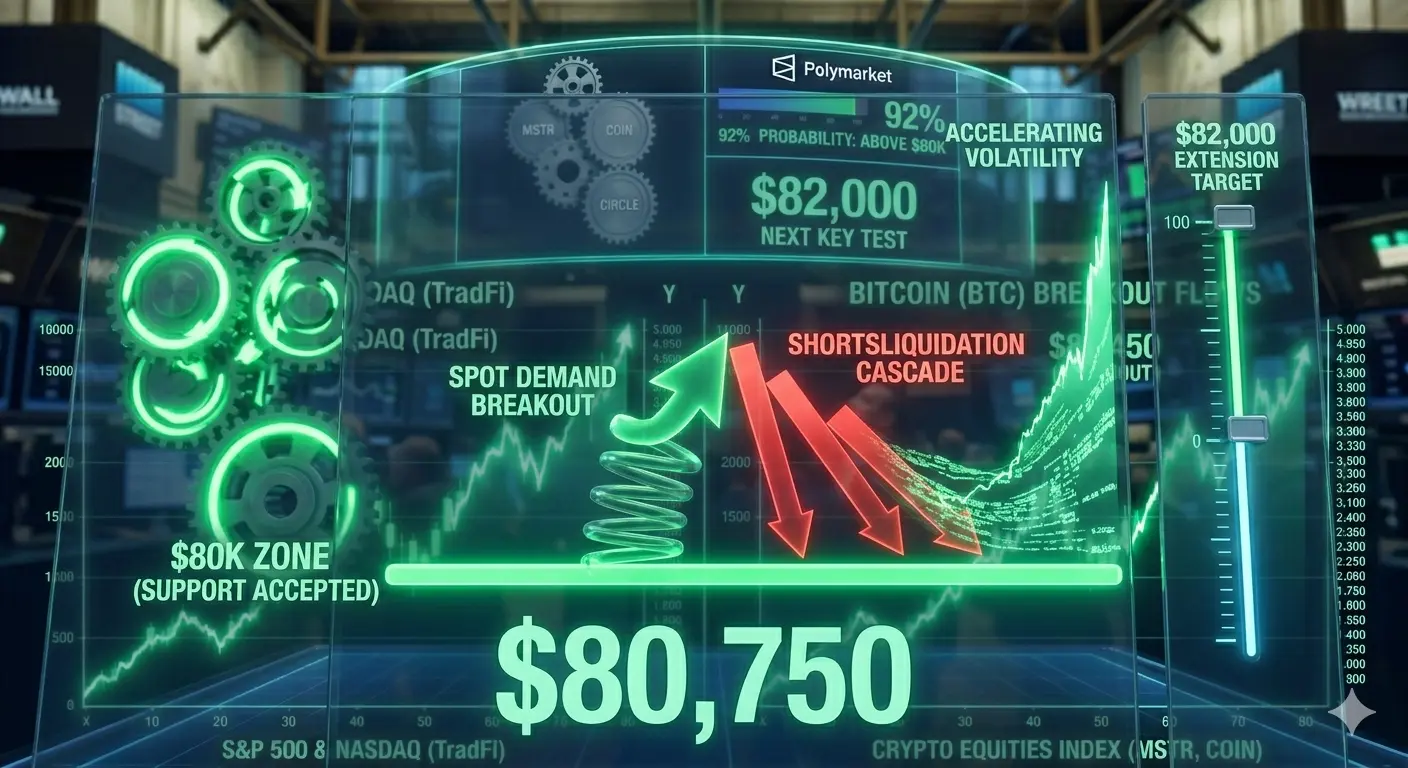
The recent surge in crypto-related equities has drawn significant attention from both retail traders and institutional investors, not because of isolated price movements, but because of what these movements represent at a structural level. When companies like MicroStrategy, Coinbase Global, and Circle Internet Group rally alongside broader U.S. equity markets, it signals a strengthening connection between traditional financial systems and the digital asset economy. This is not simply a “crypto bounce” — it is a reflection of evolving capital allocation strategies across Wall Street.
The standout theme in today’s market action is correlation strengthening between crypto equities and macro risk assets. Historically, crypto was often treated as a disconnected, high-volatility alternative asset class. However, the increasing integration of publicly listed crypto companies into major indices and institutional portfolios is changing that perception. When the S&P 500 and Nasdaq trend upward and crypto stocks outperform, it indicates that digital asset exposure is increasingly being embedded within mainstream risk-on portfolios rather than being treated as a speculative side allocation.
Among the key movers, MicroStrategy remains the most direct proxy for Bitcoin sentiment in traditional markets. Because its balance sheet is heavily exposed to Bitcoin holdings, its stock performance effectively acts as leveraged sentiment tracking for BTC itself. A strong move in MSTR typically reflects rising institutional confidence in Bitcoin’s medium-term direction, especially through regulated equity exposure rather than direct spot purchases.
Coinbase, on the other hand, represents something different — infrastructure confidence. As one of the largest regulated crypto exchanges, Coinbase’s valuation is tied less to Bitcoin direction alone and more to trading activity, regulatory clarity, and overall market participation. When Coinbase rallies, it generally reflects expectations of increased trading volumes and improved regulatory conditions, both of which are essential for sustained crypto market expansion.
Circle’s performance adds an entirely different layer to the narrative. As a major issuer of regulated stablecoins, its valuation is closely tied to the adoption trajectory of dollar-backed digital assets. With stablecoin regulation becoming a central policy discussion in the United States, investor interest in Circle reflects forward pricing of a potential structural expansion in on-chain dollar liquidity. In simple terms, the market is not just betting on crypto prices — it is betting on the expansion of the digital dollar ecosystem itself.
The most aggressive move of the session came from TRON, which posted a sharp single-day surge. While such moves can be influenced by a combination of liquidity dynamics, speculative positioning, and short-term catalysts, they also highlight a recurring feature of crypto markets: when risk appetite returns, capital rotation into higher-beta assets accelerates quickly. These types of moves often appear in the early or mid-stages of broader sentiment recovery phases.
From a macro perspective, the most important development is not the size of individual gains but the synchronization between asset classes. When crypto equities move in alignment with broader equity indices, it suggests that institutional investors are no longer isolating crypto as a separate speculative category. Instead, it is being integrated into multi-asset portfolio frameworks, where it behaves similarly to high-growth technology sectors.
This integration has two major consequences. First, it improves liquidity stability over time, because crypto exposure becomes embedded in long-term institutional allocation models. Second, it amplifies feedback loops between traditional markets and digital assets. A rally in equities can now indirectly support Bitcoin sentiment, while crypto momentum can reinforce risk-on behavior in equity markets.
For Bitcoin itself, this environment is particularly relevant. As BTC consolidates near key psychological levels, sentiment-driven flows become increasingly important in determining breakout probability. Strength in crypto equities often acts as a leading indicator for renewed spot demand, as it reflects institutional willingness to increase exposure to the sector in regulated formats before rotating into direct crypto positions.
However, it is also important to recognize that correlation is not permanent. During periods of macro stress or liquidity tightening, crypto equities can decouple sharply from digital assets, especially when equity market risk aversion increases. This means that while the current alignment is bullish in tone, it should not be interpreted as a guaranteed directional signal, but rather as a reflection of current risk appetite conditions.
Ultimately, what the market is observing is a gradual normalization of crypto within the broader financial system. Companies like MicroStrategy, Coinbase, and Circle are no longer being viewed as isolated crypto plays — they are becoming structural components of digital finance infrastructure within public markets. This shift is one of the clearest signs that the asset class is moving beyond its early speculative phase into a more institutionally integrated phase.
The key question now is not whether crypto equities can continue to rally in isolation, but whether this alignment with traditional markets can persist long enough to support a sustained expansion in Bitcoin and broader digital asset valuations. If it does, then today’s rally will be remembered not as a short-term move, but as another step in the long-term convergence of crypto and global capital markets.
#Gate13thAnniversaryLive
#GateSquareMayTradingShare
#TopCopyTradingScout
repost-content-media
  • Reward
  • Comment
  • Repost
  • Share
#GateSquareMayTradingShare
Bitcoin’s current market phase is best described as a transition zone between momentum exhaustion and structural continuation. After an aggressive upward move that briefly pushed prices toward the $83,000 region, the market has entered a cooling phase where buyers and sellers are temporarily balanced. This type of behavior is common after strong rallies, especially when price approaches historically significant resistance zones like the 200-day moving average area.
One of the key developments in recent sessions is the shift from impulsive buying to more selective ac
BTC-1.72%
MrFlower_XingChen
#DailyPolymarketHotspot
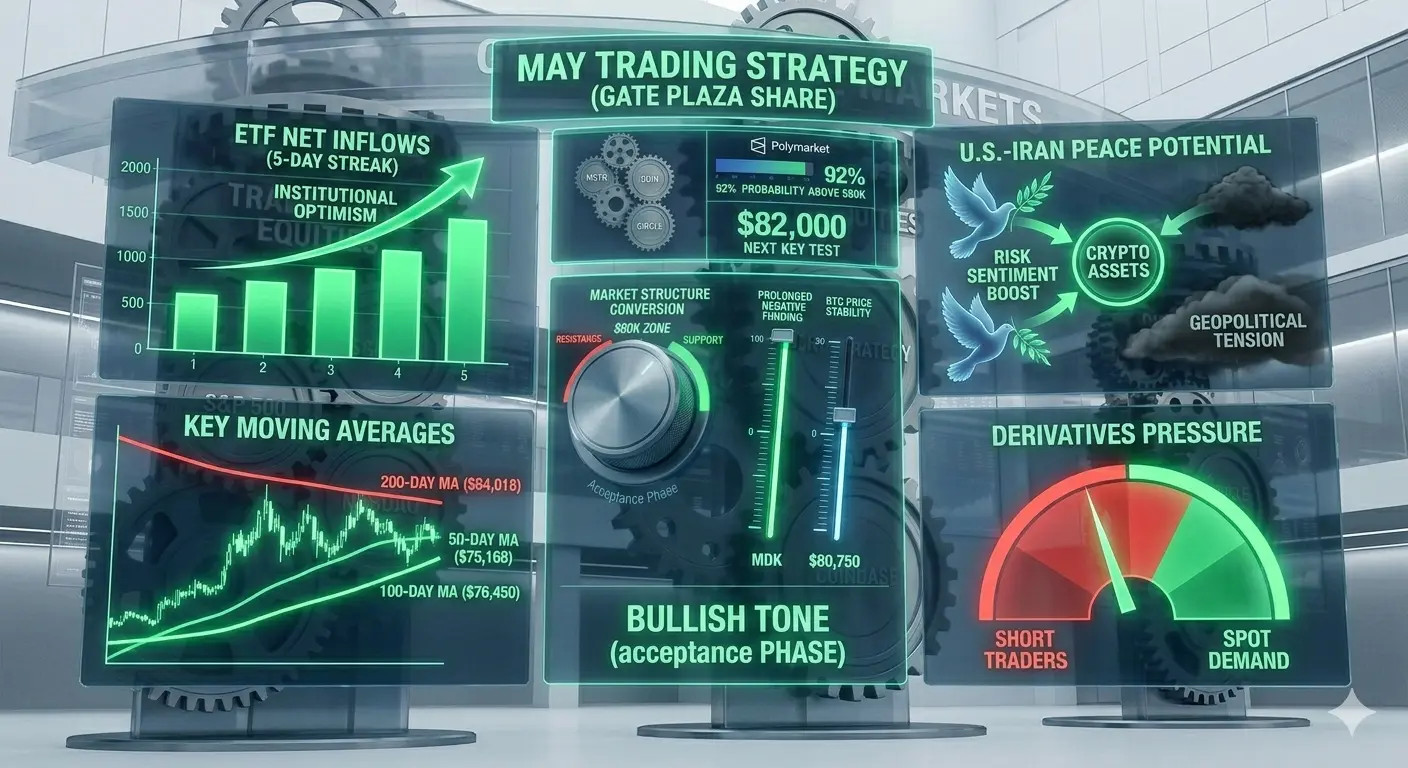
Bitcoin is currently sitting in one of those important decision zones where short-term price action and broader market structure are telling slightly different stories. After recently pushing above the $80,000 level, BTC has entered a consolidation phase around the $80,500–$81,000 region. This kind of movement is not random noise — it usually reflects a market trying to confirm whether a breakout is genuine or just a temporary liquidity sweep.
From a structural point of view, the most important development is that $80K is no longer acting purely as resistance. The fact that price has spent time above this level suggests the market is attempting to convert it into support. In many historical cycles, this “acceptance phase” after a breakout is where the real trend direction is confirmed. If buyers continue defending this zone, it strengthens the case for continuation rather than reversal.
At the same time, derivatives data adds another layer to the picture. Funding rates have remained negative for an extended period, meaning short positions are still dominant in the system. This creates an interesting imbalance. While it might seem bearish on the surface, prolonged negative funding often sets the stage for short squeeze conditions. If price stability continues above key levels, even a moderate upward push can force shorts to cover, accelerating movement without requiring massive spot demand.
Another important factor is the growing influence of crypto-related equities on sentiment. Stocks such as MicroStrategy, Coinbase Global, and Circle Internet Group have recently shown strong performance alongside broader equity market strength. This matters because these companies act as institutional bridges into the crypto ecosystem. When they rally together, it often signals that traditional finance participants are increasing exposure to digital assets through regulated channels.
Prediction market sentiment also plays a subtle but important role in shaping expectations. Platforms like Polymarket are currently pricing in a high probability of Bitcoin maintaining levels above $80,000, with very low perceived risk of a breakdown below $78,000. While not a direct trading signal, this reflects collective positioning psychology — and right now, that psychology is leaning toward stability rather than panic or reversal.
Putting all of this together, the most likely short-term scenario is continued consolidation above the $80,000 level. This is a phase where the market digests the previous breakout, reduces leverage pressure, and builds a stronger base for the next move. In this environment, volatility can still occur, but it is more likely to be directional upward rather than a full breakdown, as long as support holds.
If momentum strengthens further — especially during active U.S. trading sessions and continued strength in crypto equities — a push toward $82,000 becomes a realistic extension target. That level would likely attract both profit-taking and breakout traders, making it a natural short-term magnet for price action.
On the downside, a sustained drop below the $79,200 region would weaken the current bullish structure and suggest that the breakout has failed to attract enough follow-through demand. Until that happens, however, the broader structure still leans in favor of continuation rather than reversal.
Overall, Bitcoin is currently in a controlled consolidation phase after reclaiming a major psychological level. The market is not showing signs of exhaustion — instead, it is showing signs of rebalancing. In such conditions, the probability still slightly favors upward continuation, with $82,000 acting as the next key test if momentum persists.
#Gate13thAnniversaryLive
#GateSquareMayTradingShare
#TopCopyTradingScout
repost-content-media
  • Reward
  • Comment
  • Repost
  • Share
#GateSquareMayTradingShare
Bitcoin’s current market phase is best described as a transition zone between momentum exhaustion and structural continuation. After an aggressive upward move that briefly pushed prices toward the $83,000 region, the market has entered a cooling phase where buyers and sellers are temporarily balanced. This type of behavior is common after strong rallies, especially when price approaches historically significant resistance zones like the 200-day moving average area.
One of the key developments in recent sessions is the shift from impulsive buying to more selective ac
BTC-1.72%
MrFlower_XingChen
#GateSquareMayTradingShare
Bitcoin’s current market phase is best described as a transition zone between momentum exhaustion and structural continuation. After an aggressive upward move that briefly pushed prices toward the $83,000 region, the market has entered a cooling phase where buyers and sellers are temporarily balanced. This type of behavior is common after strong rallies, especially when price approaches historically significant resistance zones like the 200-day moving average area.
One of the key developments in recent sessions is the shift from impulsive buying to more selective accumulation. Instead of broad-based momentum buying, liquidity is now being absorbed gradually at lower levels. This suggests that larger participants are not exiting the market aggressively, but are instead waiting for clearer confirmation before pushing price into a new expansion phase. In many cases, this kind of controlled consolidation is what allows long-term trends to stabilize before the next leg upward.
A major supporting factor remains institutional participation, particularly through regulated investment vehicles such as spot Bitcoin ETFs. Continuous inflows into these products indicate that institutional demand has not disappeared despite short-term price rejection at resistance. Instead, capital is rotating more strategically, often entering during consolidation rather than chasing breakouts. This behavior is typically associated with more mature market phases, where volatility is used for accumulation rather than speculation.
At the same time, the derivatives market is adding complexity to short-term price action. Open interest remains elevated, and positioning is still skewed in a way that makes the market sensitive to liquidation cascades. When short positions dominate near resistance zones, even moderate upward pressure can trigger forced covering. However, in the absence of strong spot demand, these moves tend to be short-lived and quickly absorbed by sellers at higher levels.
Another important shift in the current environment is the increasing influence of macro sentiment rather than crypto-native catalysts alone. Risk appetite across global markets has improved due to easing geopolitical concerns and expectations of more stable macroeconomic conditions. However, Bitcoin is no longer reacting in isolation to these narratives. Instead, it is responding in coordination with broader liquidity flows across equities, bonds, and alternative risk assets.
Technically, Bitcoin remains in a structurally bullish framework, but it is not in an acceleration phase. Price is still holding above key medium-term moving averages, which suggests that the broader trend has not been broken. However, repeated failures to sustain momentum above the $83,000–$84,000 zone indicate that this area is acting as a significant supply region where profit-taking and short positioning are concentrated.
On-chain behavior also reflects a more neutral-to-constructive environment. Long-term holders are not distributing aggressively, and exchange inflows remain relatively stable rather than spiking, which would typically signal panic selling. This supports the idea that the current phase is not a distribution top, but rather a pause within a broader trend structure.
Looking ahead, the market is likely to remain range-bound in the short term unless a strong catalyst emerges. A decisive breakout above the resistance cluster around $83,000–$84,000 would likely shift momentum back into expansion mode and open the path toward higher liquidity zones. Conversely, a loss of the $80,000 area on sustained volume could extend the consolidation phase and test deeper support structures before any renewed upside attempt.
Overall, Bitcoin is currently in a consolidation phase driven by a balance of institutional accumulation, derivative market pressure, and macro-driven sentiment stability. The broader trend structure remains intact, but the market is waiting for a clear trigger to transition from compression into expansion.
#Gate13thAnniversaryLive
#GateSquareMayTradingShare
#TopCopyTradingScout

repost-content-media
  • Reward
  • Comment
  • Repost
  • Share
#GateSquareMayTradingShare
GateToken (GT) is currently trading around $7.25–$7.30, maintaining a slightly bearish tone in the short term after facing rejection near the $7.50–$7.56 resistance zone. Over the last 24 hours, price action has remained compressed, with volatility tightening further — a classic signal that the market is preparing for a directional expansion. While intraday sentiment leans cautious, the broader structure still reflects stability rather than breakdown, suggesting this is more of a positioning phase than a trend reversal.
From a short-term perspective (15m–1H), GT con
GT-2.66%
post-image
  • Reward
  • Comment
  • Repost
  • Share
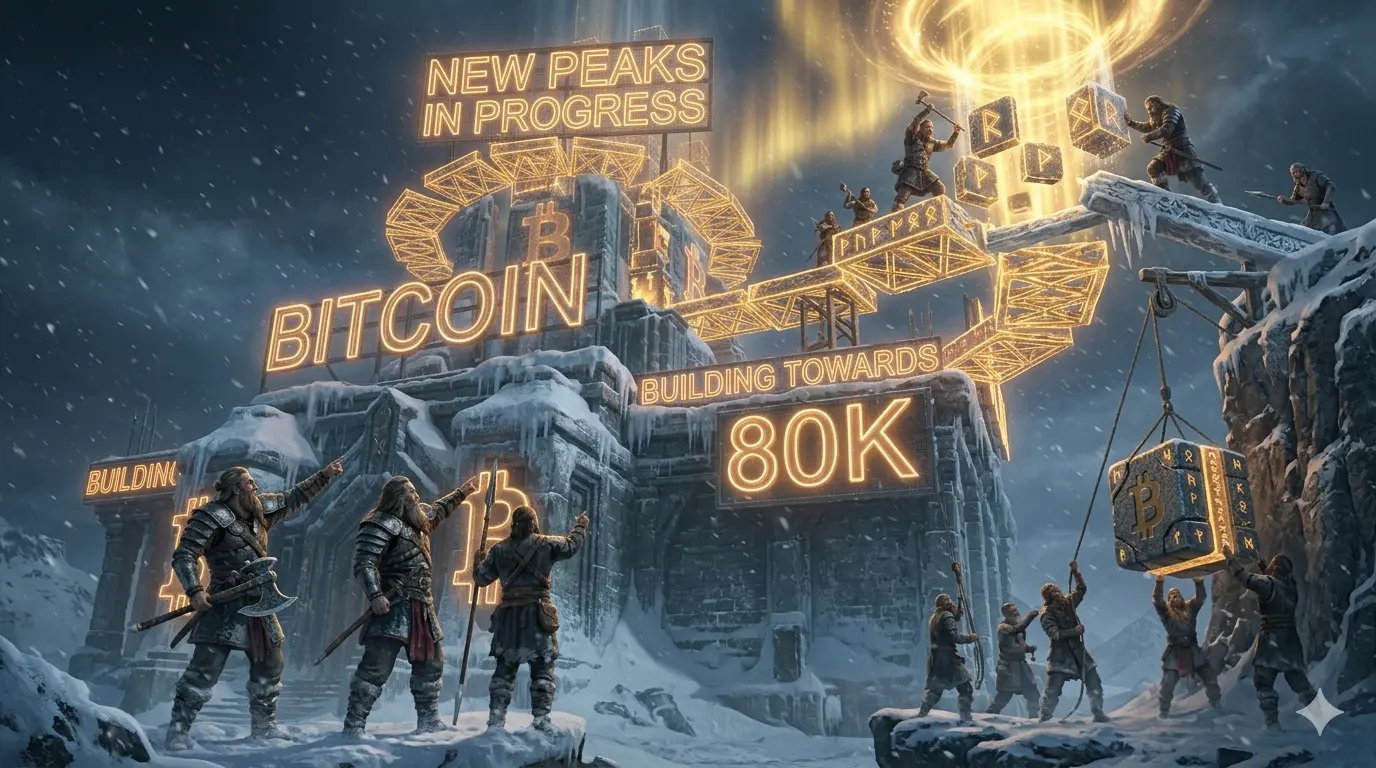
#BTCPullback
#BitcoinMarketStructure
Outlook — Liquidity Rotation Before the Next Expansion
Bitcoin is currently trading in a highly important structural zone after maintaining stability above the major $80K psychological region. The recent pullback does not yet indicate macro weakness; instead, it appears to be part of a broader liquidity rotation phase that typically occurs after aggressive bullish expansion. Market volatility has cooled slightly, but price action still reflects strong institutional participation and healthy market structure overall.
Over the last several sessions, BTC expe
BTC-1.72%
ETH-2.55%
post-image
  • Reward
  • 5
  • Repost
  • Share
CryptoDiscovery:
good information for sharing 💯
View More
#CryptoMarketRecovery
Transination Phase Deepens — Market Preparing for Expansion
As May 2026 progresses, the crypto market is moving beyond early stabilizanation into a more advanced transination phase. Price is no longer reacting sharply to downside pressure, but it is also not showing full bullish commitment. This phase reflects a deeper structural reset where capital is slowly repositioning, liquidity is reorganizing, and participants are waiting for stronger confirmanation before taking aggressive positions.
Bitcoin continues to hold within a tightening range, signaling compression rathe
MAY0.04%
MORE0.02%
post-image
post-image
  • Reward
  • Comment
  • Repost
  • Share
#GateSquareMayTradingShare
May 2026 is entering a critical phase as the crypto market shifts from simple consolidation into a potential expansion setup. Bitcoin continues to trade within the $78K–$82K range, but the structure is tightening, forming a clear compression pattern. This prolonged sideways movement reflects a balance between buyers and sellers rather than weakness. Historically, the longer this compression lasts, the stronger the eventual breakout tends to be.
A notable shift is the increasing dominance of algorithmic and high-frequency trading. With retail participation still rela
MAY0.04%
BTC-1.72%
EPT6.96%
post-image
post-image
post-image
  • Reward
  • 1
  • Repost
  • Share
Peacefulheart:
To The Moon 🌕
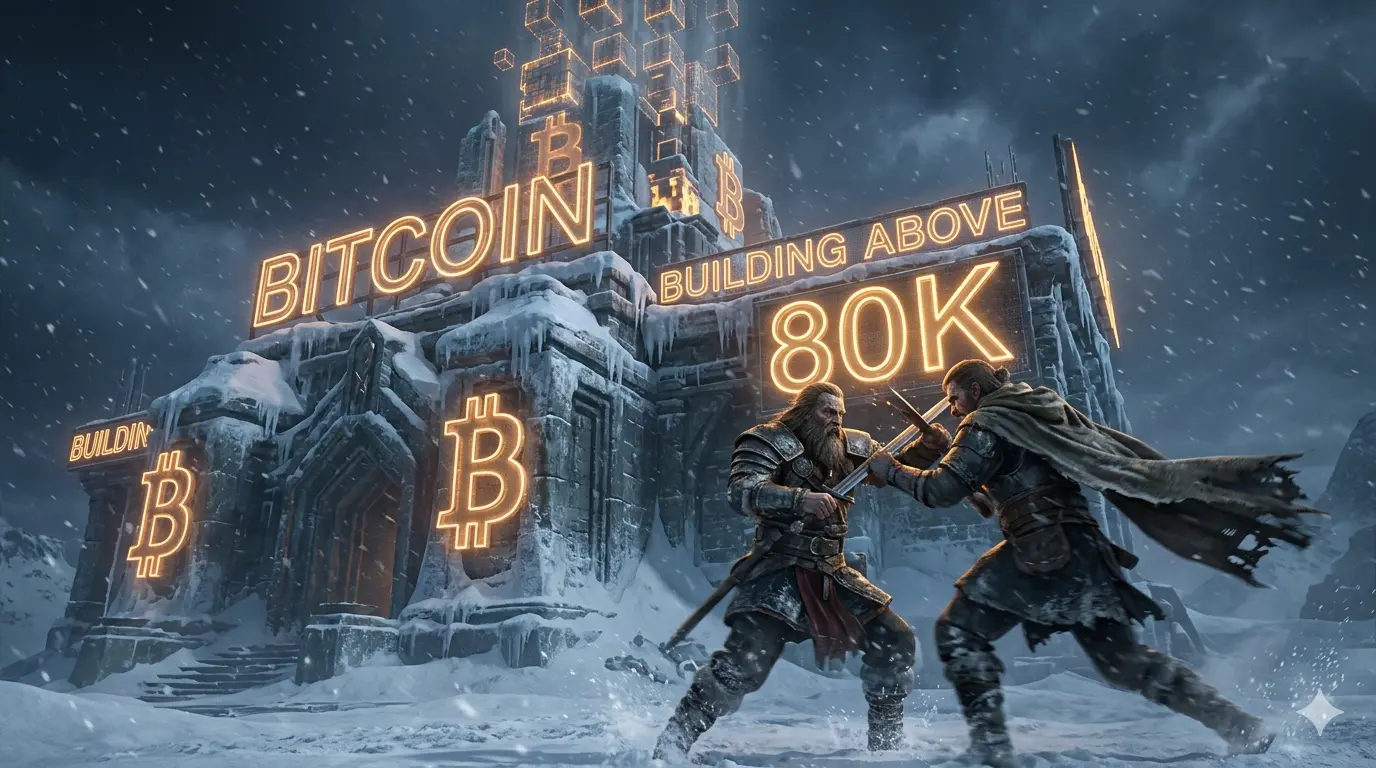
#BitcoinHoldsFirmAbove80K
Bitcoin is holding firm above the $80K level, trading in a tight $80,000–$82,200 range as market structure begins to shift from reactive volatility toward controlled consolidation. After the sharp dip to $76,400 triggered by macro pressure and geopolitical headlines, buyers stepped in aggressively, signaling that strong demand exists on dips rather than at highs. This type of behavior often appears in mid-cycle accumulation phases, where smart money quietly builds positions while retail participation remains low.
Ethereum continues to stabilize between $2,350–$2,550,
BTC-1.72%
ETH-2.55%
SOL-1.18%
post-image
post-image
  • Reward
  • 9
  • Repost
  • Share
CryptoDiscovery:
good information for sharing this crypto
View More
  • Pin